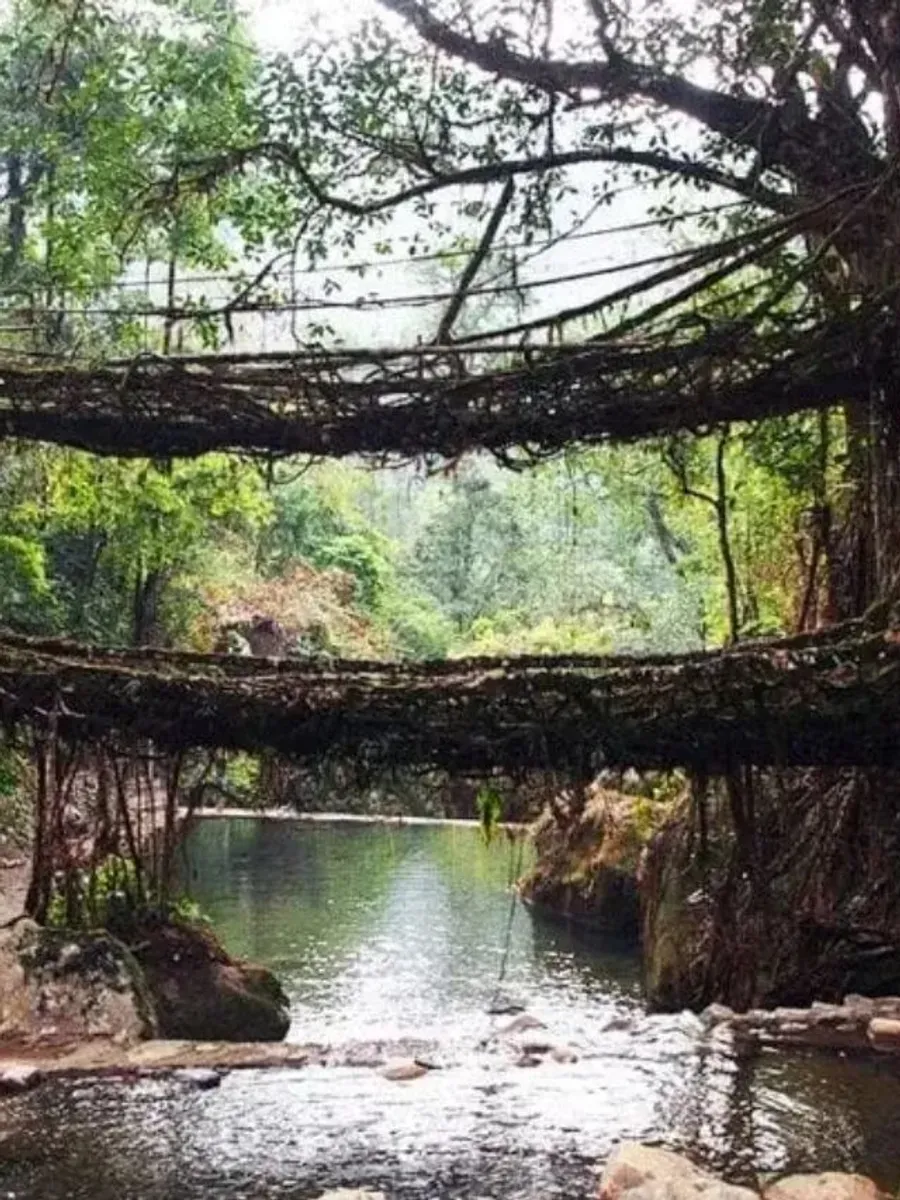
For many travelers, monsoon season means canceled plans and muddy roads. But in a remote part of Meghalaya, India, the rains transform the landscape into a major attraction. This is Nongriat, a village known for its unique living root bridges.
The Village Beyond the Forest
Nongriat is a Khasi village in Meghalaya’s East Khasi Hills, close to Sohra (Cherrapunji). There are no roads leading here. To reach it, you must walk down nearly 3,500 stone steps from Tyrna, through a thick forest.
The trail itself is part of the adventure. It takes you past suspension bridges, streams, steep steps, and stunning rainforest views.
We're a new kind of news feed.
Regular news is designed to drain you. We're a non-profit built to restore you. Every story we publish is scored for impact, progress, and hope.
Start Your News DetoxHome to Living Root Bridges
Nongriat is famous for its Double Decker Living Root Bridge. Local Khasi communities have guided the aerial roots of rubber fig trees for decades to form these bridges.
Unlike concrete bridges, living root bridges grow stronger over time. Generations of locals shape, maintain, and use them.
When to Visit?
From June to September, Nongriat is at its most vibrant. Waterfalls flow powerfully, rivers swell, and the surrounding hills turn a deep green.
Many visitors continue to Rainbow Falls from Nongriat. This path crosses smaller living root bridges and passes natural pools that stay clear even in the dense forest.
If you love rain, lush scenery, and fewer crowds, monsoon is the best season. Be ready for slippery paths, sudden showers, and high humidity.
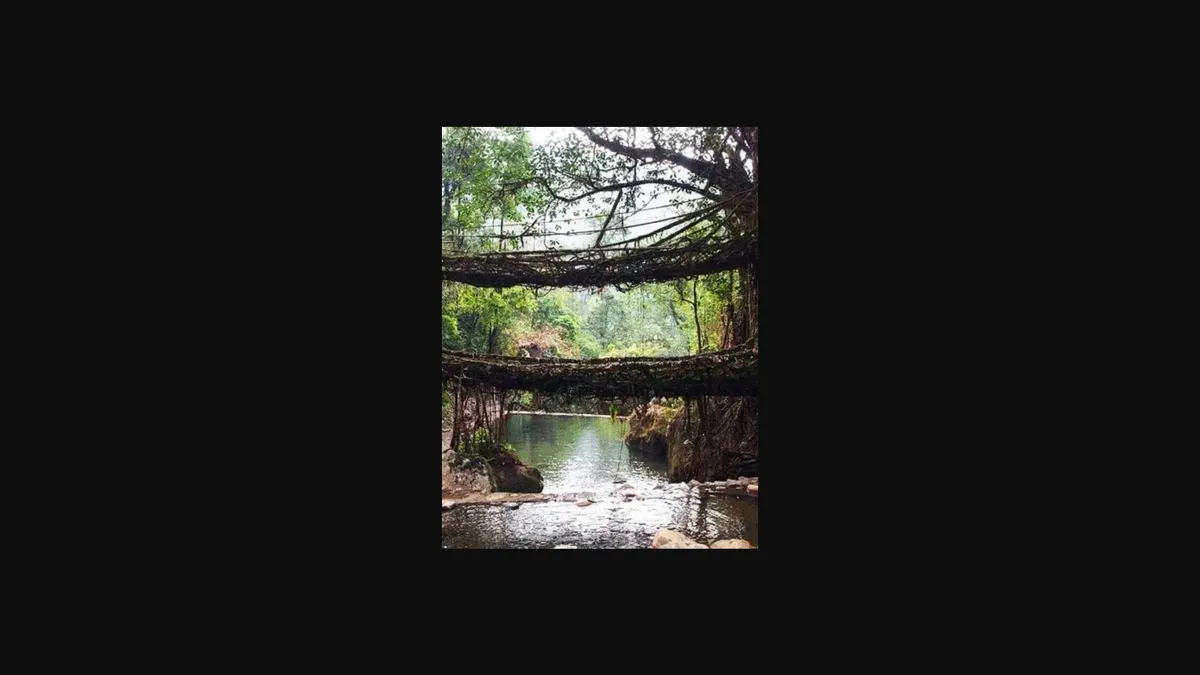 Photo Credit : Outpost Magazine
Prefer Clearer Weather?
October to April offers drier conditions and easier trekking. The forests stay green, waterfalls still flow, and the climb is much more manageable.
Travel Responsibly
Nongriat's charm comes from its simplicity. Experts recommend carrying reusable bottles, avoiding litter, staying on marked trails, and supporting local homestays.
Things to Know Before You Visit
Start your trek early. Wear shoes with good grip and carry enough water. Staying overnight gives you more time to explore the village without rushing back before dark.
Nongriat is not easy to reach, which helps it keep its unique character. Visiting during the monsoon shows the village at its greenest, fullest, and most unforgettable.