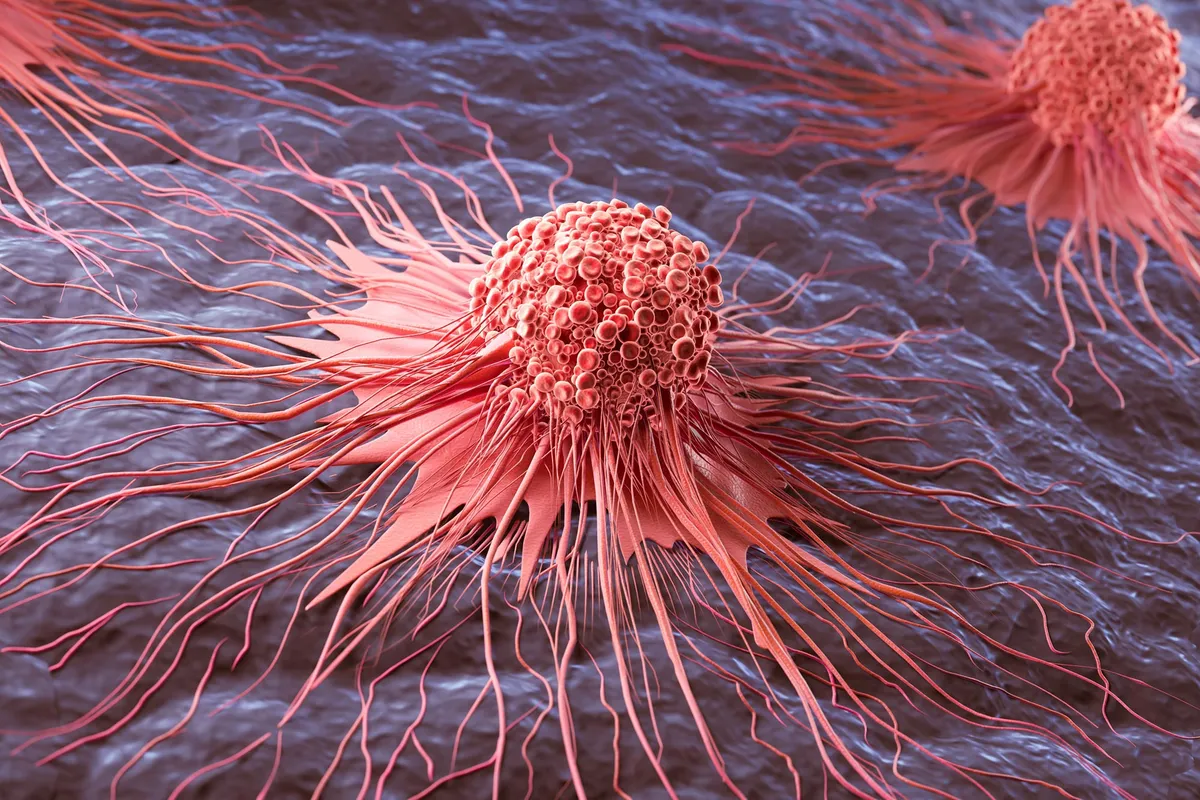
Cancer cells, bless their rule-breaking hearts, often pull off some truly wild genetic stunts. Sometimes, they just double all their genetic material, creating a version of themselves with far too many chromosomes. These abnormal cells can be the architects of some of the deadliest cancers, turning a manageable tumor into a runaway train.
Now, researchers at Virginia Tech are pulling back the curtain on this cellular mischief. Their work suggests that even a small number of these souped-up cells can completely change a tumor's trajectory. Think of them as the tiny, chaotic masterminds behind a larger, more aggressive operation. This insight could offer a new way to predict which cancers are about to get seriously unpleasant.
The Cells That Just Can't Count
At the heart of this mystery are "tetraploid cells" — cells that somehow end up with four complete sets of chromosomes, rather than the usual two found in healthy human cells. It's like a library that accidentally photocopied every single book twice. When cells divide, they're supposed to be meticulous about copying and sharing chromosomes. When that process goes sideways, you get these abnormal chromosome numbers, a condition charmingly called chromosomal instability. It's a common feature in cancer and often linked to tumors that evolve faster and laugh in the face of treatment.
We're a new kind of news feed.
Regular news is designed to drain you. We're a non-profit built to restore you. Every story we publish is scored for impact, progress, and hope.
Start Your News DetoxScientists have known for ages that these tetraploid cells show up in growing tumors. And patients whose tumors have them generally face tougher odds. But why they made things worse remained a head-scratcher. That is, until Megan Sweet and Mat Bloomfield, two graduate students at Virginia Tech, teamed up with cell biologist Daniela Cimini to dig into what happens after a cancer cell gets a double dose of chromosomes.
A Tumor's Unlikely Hype Crew
The team essentially forced cancer cells to become tetraploid, making them duplicate their chromosomes without actually finishing cell division. These super-sized cells ended up with twice the normal genetic instruction manual. Then, they compared tumors made of normal cancer cells with those containing their newly created tetraploid cells in mice.
What they found was genuinely surprising. As the tumors grew, the tetraploid cells actually became less common. You'd think fewer of them would mean less trouble, right? Nope. Even with a dwindling presence, the tumors containing these cells grew larger and faster. It was like a small group of troublemakers somehow made the whole party go wild.
The secret, it turned out, lay in the "tumor microenvironment" — the complex ecosystem of cells surrounding a cancer. The tetraploid cells, it seems, were master manipulators. They encouraged non-cancerous "stromal cells" (think of them as connective tissue cells that usually just support other tissues) to join the tumor's ranks. Tumors, as we're learning, aren't solo acts; they're expert at recruiting surrounding cells to help them grow and spread.
As Sweet explained, even a small number of these tetraploid cells can essentially send out a bat signal for non-cancerous cells, which then show up and help the tumor expand. So, the tetraploid cells might not be directly driving the growth themselves. Instead, they're changing the neighborhood in a way that makes it much more hospitable for cancer to thrive.
When Smaller Means Meaner
A second study took the team down an entirely different rabbit hole. Bloomfield created tetraploid human cancer cells and then isolated individual clones to study them up close. Because tetraploid cells have double the genetic material, the expectation was that they'd all be visibly larger. Logical, right?
Except some of these clones were 25 to 30 percent smaller than predicted. And this size difference, it turned out, was a very big deal. The smaller tetraploid cells were consistently more aggressive. They grew faster, invaded nearby tissue with unsettling ease, and resisted common anti-cancer drugs better. It was the cellular equivalent of a small, wiry street fighter.
Experiments in mice confirmed this trend across different cancer types, including colorectal and breast cancer. Tumors with the smaller tetraploid cells grew with alarming speed.
Then, the researchers checked if this pattern held true for actual patients. Using data from The Cancer Genome Atlas, a massive database of patient samples, they found that smaller tetraploid cells were indeed linked to worse survival rates and poorer outcomes in several cancer types. Which suggests that cell size itself might be whispering crucial biological secrets.
As Cimini put it, they knew tetraploidy increased a cell's tumor-forming potential. But adding cell size to the equation makes it an even more potent predictor of just how dangerous a tumor could become.
Ultimately, these discoveries from the Virginia Tech team highlight how much more there is to learn about the often-overlooked mechanics of cancer. Understanding why some tetraploid cells become supervillains could lead to entirely new ways to spot high-risk tumors earlier and, hopefully, develop better treatment strategies. All because some cells just can't count, and others are surprisingly petite.