Researchers looking back at wildlife photos from 2006 have stumbled onto something unexpected: evidence that the world's smallest possum may live far beyond where scientists thought it could survive.
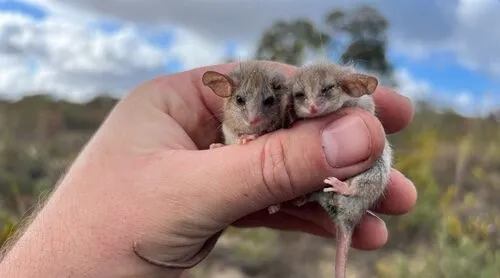
The little pygmy possum weighs about as much as a grape. It's smaller than your thumb, feeds on nectar and pollen, and until now was only known to live on Kangaroo Island off the coast of South Australia. But two photographs taken during a survey at Dhilba Guuranda–Innes National Park on Yorke Peninsula — about 500 kilometers away — appear to show the species living there too.
A 17-year-old clue
When researchers first reviewed those 2006 photos among more than 250 other pygmy possum observations, they assumed the two smaller animals with distinctive gray bellies were just juvenile western pygmy possums, the species known to live on the peninsula. It wasn't until recently, when scientists compared the photos directly with specimens at the South Australian Museum, that they realized the misidentification. The distinctive features — the size, the coloring, the proportions — all pointed to Cercartetus lepidus, the little pygmy possum.
We're a new kind of news feed.
Regular news is designed to drain you. We're a non-profit built to restore you. Every story we publish is scored for impact, progress, and hope.
Start Your News DetoxWhat makes this discovery genuinely puzzling is the geography. Yorke Peninsula and Kangaroo Island have been separated by water for 10,000 years. The little pygmy possum is cryptic and rarely seen, which means it could have been living on Yorke Peninsula all along without anyone noticing. Or it arrived more recently. Or the population died out and these photos captured the last individuals. The research, published in Australian Zoologist, doesn't answer these questions — but it raises them urgently.
For conservation, the implications shift immediately. If the species does live on Yorke Peninsula, it's no longer confined to a single island. That's good news for genetic diversity and resilience. It's also bad news if we haven't been protecting habitat in the right places. The western pygmy possum — the species that was supposed to be the only one on the peninsula — is already locally threatened. Adding another cryptic, tiny marsupial to the conservation puzzle means rethinking what Yorke Peninsula's native vegetation needs to support.
The discovery also hints at how much we still don't know about Australia's smallest mammals. A species can live in a region for centuries, feeding on flowers and insects in the dark, and we might not notice until someone pulls out old photos and looks twice. It's a reminder that absence of evidence isn't evidence of absence — especially for animals the size of a grape that only come out at night.