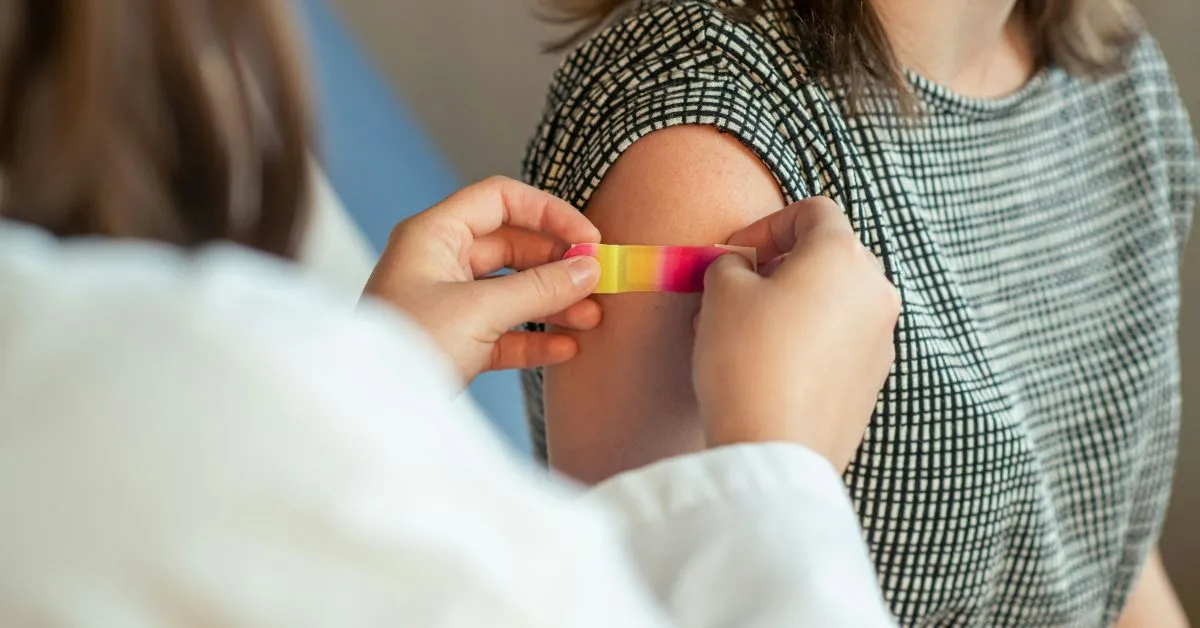
A new study shows that young women who received the HPV vaccine at ages 12 or 13 have almost no risk of dying from cervical cancer before age 30. This landmark research comes from Queen Mary University of London and was published in The Lancet.
The study looked at national health records in England. It found that deaths from cervical cancer have dropped sharply since school-aged girls began getting the vaccine in 2008. So far, the vaccine has saved about 200 lives in England.
Between 2020 and 2024, there were no recorded cervical cancer deaths for women aged 20 to 24. This was the first time this has happened in a five-year period. Without the vaccine, about 23 deaths would have been expected.
We're a new kind of news feed.
Regular news is designed to drain you. We're a non-profit built to restore you. Every story we publish is scored for impact, progress, and hope.
Start Your News Detox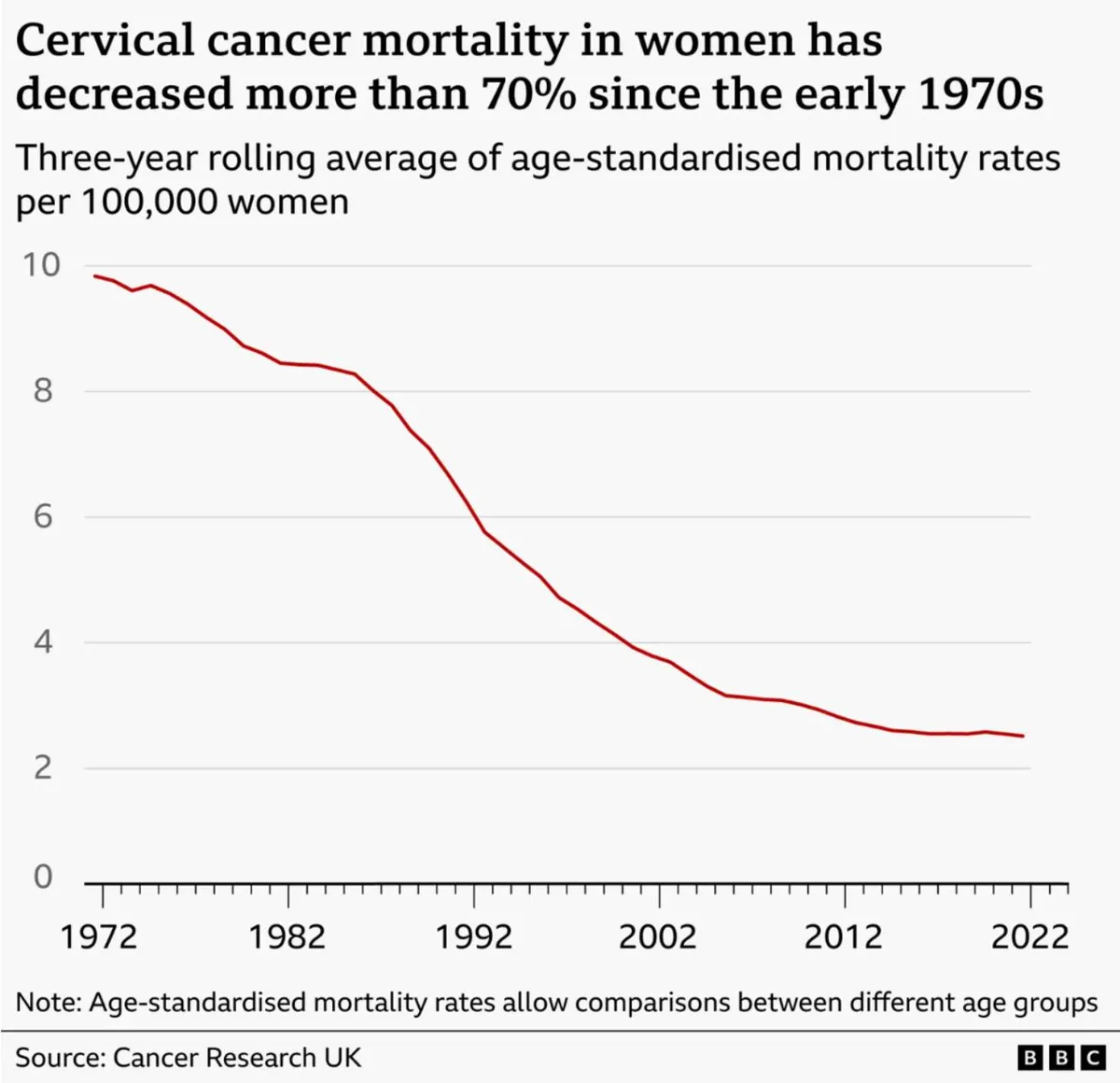 Graphic courtesy of BBC
The Impact of the HPV Vaccine
About one in three people in the United States will be diagnosed with cancer in their lifetime. While the HPV vaccine is not a "cure," it is very good at stopping cervical and other cancers from starting.
The vaccine first came out in the U.S. in 2006. It protected against four types of the virus. In 2014, it was updated to protect against nine types. These nine types cause about 90% of HPV-related cancers worldwide.
Medical experts are celebrating the vaccine's success in public health. Dr. Megan Yanny, a pediatrician at University of Wisconsin Health Kids, called the vaccine a "groundbreaking discovery." She noted that it truly changes lives by preventing cancer.
Since 2008, the number of HPV lesions and precancerous cervical lesions in young women has dropped by almost 80%. Deaths from HPV-related cancers have also fallen a lot.
Addressing Misinformation
Despite its success, misinformation about the HPV vaccine has slowed its use in the U.S. Experts recommend focusing on cancer prevention when talking about the vaccine. They also suggest making the vaccine a routine part of healthcare.
When discussing the HPV vaccine, highlight its proven ability to prevent cancer. Americans can also contact their elected officials. They can ask them to help the U.S. reach its HPV vaccination goals.
Deep Dive & References
The HPV vaccine was a groundbreaking discovery and invention - UW Health, 2024 RFK Jr. Refuses to Say HPV Vaccine Is Safe - Cancer Discovery, 2024 Ineffective messages and misinformation about the vaccine have negatively impacted its uptake in the U.S. - Journal of Cancer Education, 2020