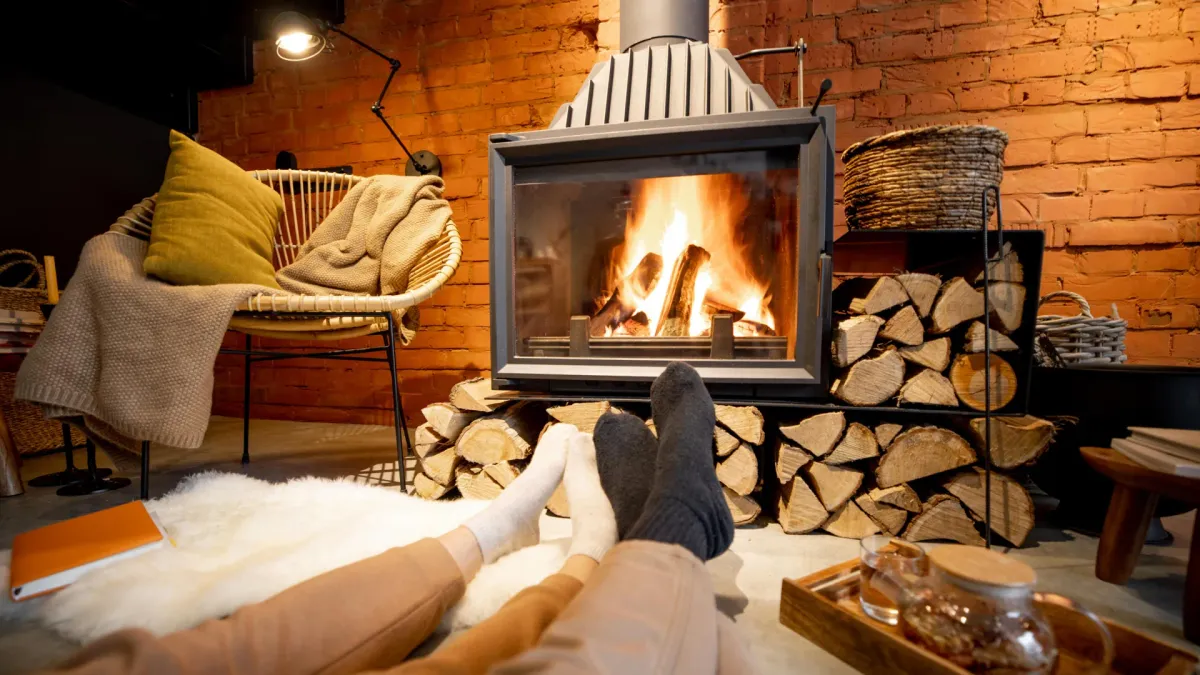
That cozy winter fire may be quietly polluting the air in ways you don't see — and the harm falls hardest on people who aren't even burning the wood.
Researchers at Northwestern University found that residential wood burning accounts for over one-fifth of Americans' winter exposure to fine particles linked to heart disease and early death. The surprise isn't just the scale — it's where the damage concentrates. People living in cities experience far more exposure than those in rural areas, and the burden falls disproportionately on communities of color, who tend to burn less wood but breathe more of its smoke.
The Urban Pollution Trap
Wood smoke drifts. When researchers mapped pollution hour by hour across the continental United States, they discovered that smoke from home heating in one neighborhood accumulates in another, often traveling into densely populated cities where it hits harder. The model showed residential wood burning accounts for roughly 22% of wintertime fine particle pollution — one of the single largest sources during winter months.
We're a new kind of news feed.
Regular news is designed to drain you. We're a non-profit built to restore you. Every story we publish is scored for impact, progress, and hope.
Start Your News DetoxThis matters because fine particles penetrate deep into the lungs and bloodstream. The health consequences are measurable and severe: respiratory disease, cardiovascular events, premature death. But the geography of harm reveals something deeper. In the Chicago metropolitan area, Black communities face more than 30% higher adverse health effects from residential wood burning compared with the citywide average — not because they burn more wood, but because of where they live and how pollution accumulates in their neighborhoods.
The researchers point to higher baseline mortality rates and the lasting effects of past discriminatory policies as key factors. When you're already dealing with worse health outcomes from other causes, wood smoke becomes another weight on an already burdened system.
Why This Stays Invisible
Wildfire smoke dominates headlines and public attention. You see the orange sky, you feel it in your lungs, you know to stay inside. Residential wood burning operates quietly — a few logs in a fireplace, a wood stove in a basement — and the cumulative effect across thousands of homes gets buried in broader air quality data. Cities and counties report average pollution levels that can mask neighborhood-by-neighborhood hotspots where exposure is far worse.
The findings suggest that even modest reductions in residential wood burning could deliver significant public health benefits, potentially saving thousands of lives. That doesn't mean eliminating fireplaces — it means rethinking how many homes rely on wood heat, especially in urban areas where the pollution concentrates and the vulnerable populations are densest.
As heating demands shift with climate and technology, this research offers a concrete target: a source of pollution that's large, measurable, and within reach of policy and individual choice.