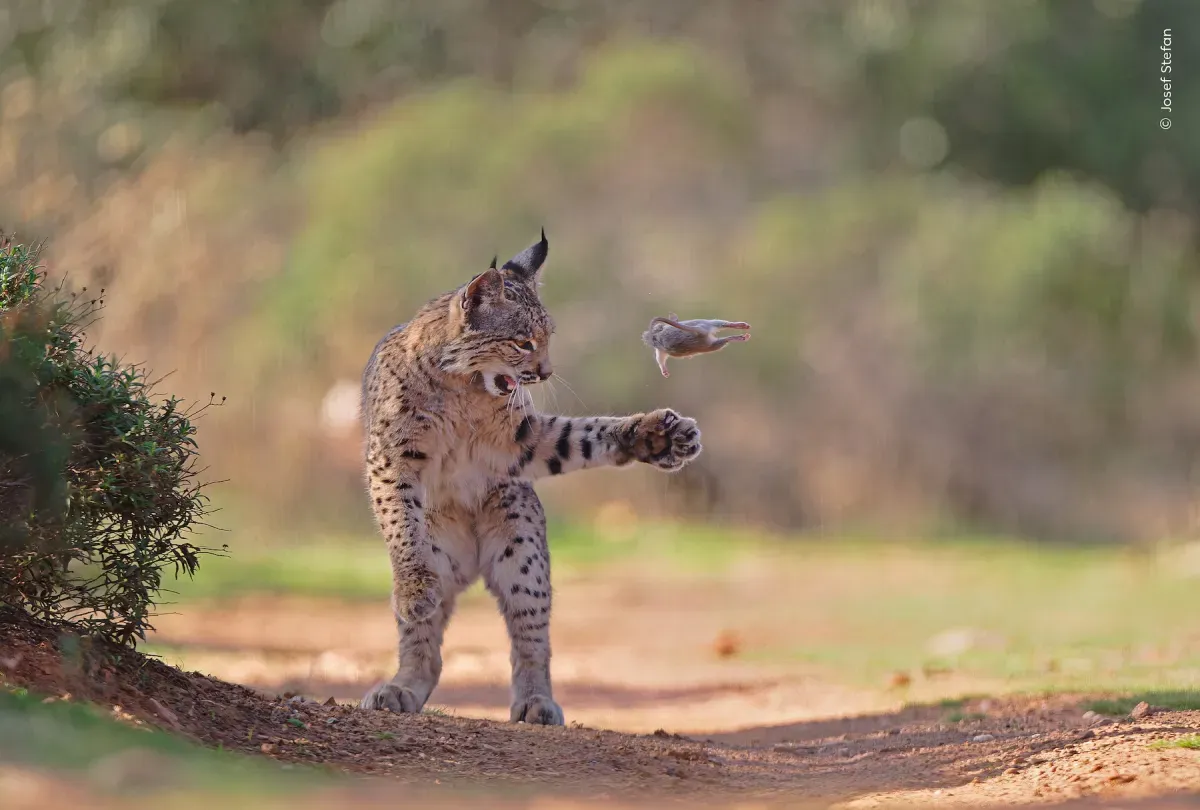
More than 60,000 images arrived from 113 countries for the 2026 Wildlife Photographer of the Year awards. A panel of experts narrowed them to 24 finalists now competing for the Nuveen People's Choice Award — and what they captured tells the story of a natural world in motion, under pressure, and still fighting.
Intimate moments and hard truths
In a rice paddy in Thailand, a sarus crane leans toward her one-week-old chick and makes beak-to-beak contact, a moment of tenderness that photographer Ponlawat documented by lying still for hours each day to avoid disturbing the birds. The image sits in sharp contrast to another finalist: the last known photograph of a polar bear cub on the coast of Svalbard, taken just before the cub's mother died from internal injuries and the cub itself was shot. These 24 photographs don't look away from difficulty. They sit with it.

In Canada's Jasper National Park, bear cubs play in the headlights of parked cars, silhouetted against the glow. In India's Similipal Tiger Reserve, a tiger named T12 — the only known male a decade ago when fewer than seven tigers remained — now roams as a symbol of recovery. He's fathered new generations. Photographer Prasenjeet spent months tracking his trails with hidden cameras to capture this rare glimpse.
We're a new kind of news feed.
Regular news is designed to drain you. We're a non-profit built to restore you. Every story we publish is scored for impact, progress, and hope.
Start Your News DetoxThe small and overlooked
A cellar spider in Southampton, England, carries her eggs in her mouth. A mother three-toed sloth in Costa Rica shelters her baby in her arms during a downpour, the infant asleep with its arms wrapped around its own feet. A neotropical river otter with leucism — a genetic condition that leaves it pale instead of camouflaged — feeds on a catfish in the Pantanal, comfortable enough to return to the same branch day after day.

These images remind us that the wildlife we notice — the big cats, the polar bears — exist alongside thousands of smaller stories. A purple-shimmer bird hunts cicadas in the chaos of the forest floor, a predator so secretive it's rarely photographed. A male sika deer in Japan survived an entire winter with his antlers locked to another deer's, dragging the weight for days before tearing free. Life persists in forms we rarely witness.
Resilience and pressure
Dolphins herd lanternfish near Costa Rica, so many of them that a free-diving photographer could barely keep up. But these massive groups are becoming rarer due to pollution and overfishing. A marvellous spatuletail hummingbird, one of the world's most fascinating birds, is now restricted to a small area in Peru's northern Andes after deforestation eroded its habitat. Endangered macaques in India's Western Ghats live in fragmented populations, their future uncertain as human activity shrinks their world.

Lesser flamingos fly gracefully over Namibia's Walvis Bay sanctuary, their beauty framed by power lines and the smell of a nearby open-air dump — a stark reminder that even protected spaces carry the marks of human expansion. Sun bears in Thailand have learned to visit campsites for easy meals, an adaptation that photographer Mogens sees as evolution, but also as a conflict waiting to happen.
Polar bears rest on the Hudson Bay coast after their long journey north, a fleeting moment of rest in a world where shrinking sea ice makes survival harder each season. These images aren't propaganda for either despair or false hope. They're documentation: here's what we've done, here's what remains, here's what's changing. The public votes until March 18.