In an era where a 30-second TikTok can feel like a commitment, 140 people recently packed the Harvard Film Archive for a nearly 7.5-hour movie. Yes, you read that right. A seven-and-a-half-hour movie. And when the credits finally rolled on Béla Tarr's 1994 masterpiece, "Sátántangó," the sold-out crowd apparently didn't want it to end.
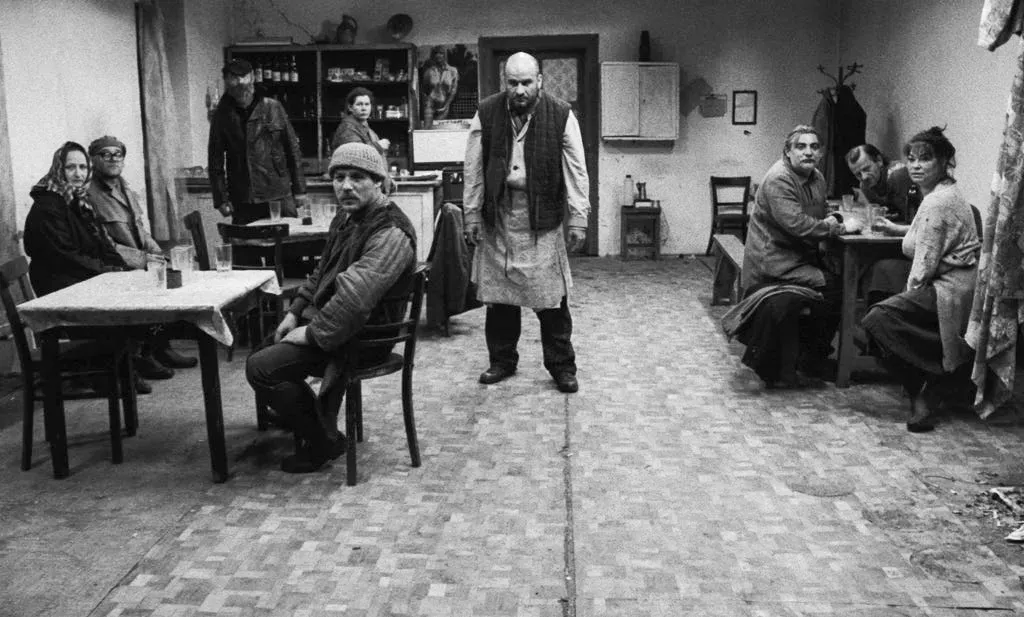
This isn't your average Sunday matinee. "Sátántangó" is a black-and-white, Hungarian epic known for its "slow cinema" style. Think long takes, characters slogging through mud and rain, and ten-minute scenes of drunken dancing set to repetitive accordion music. It's less a film, more an endurance sport for your eyeballs. Which, if you think about it, is both impressive and slightly terrifying.

Stephanie Tuerk, a Somerville resident, called the experience a "pressure test" and a "meditation exercise." Because apparently, few things in modern life demand this level of sustained focus. She noted that it helps her just let the inevitable feelings of boredom or sleepiness… pass. Like a very, very long cloud.
We're a new kind of news feed.
Regular news is designed to drain you. We're a non-profit built to restore you. Every story we publish is scored for impact, progress, and hope.
Start Your News DetoxThe Unlikely Draw of an Epic
The film, based on László Krasznahorkai’s 1985 novel, follows the bleak goings-on at a secluded Hungarian farm after the Iron Curtain falls. It’s also famously hard to see – rarely shown in theaters, and definitely not streaming. So, a recently restored 4K version was a genuine event.
The screening itself was a tribute to Krasznahorkai, who's up for a 2025 Nobel Prize, and to Tarr, who passed away in January. Filmmaker Patrick Marshall, a former mentee, introduced the film, noting that even for him, a three-time veteran of "Sátántangó," this viewing felt different — more impactful, more poignant, and surprisingly, funnier.

Robbie Rhodes, from Harvard Divinity School, saw a "shimmer of hope" in the marathon viewing experience. Tyler Sprouse, also from Divinity, was struck by how deeply he became immersed in the characters' world, simply because he'd spent so much time with them. It turns out, seven hours is enough to start caring about fictional people slogging through mud.
Marshall shared Tarr's belief that cinema should be transformative, leaving you either weaker or stronger, but always changed. Post-screening, even some attendees who'd joined halfway through sent in postcards with their thoughts. Tarr, who famously ignored film "rules," would have appreciated that, Marshall said.
"It asks more of you," Marshall concluded about Tarr's work. And maybe, just maybe, we could all use a few more things in life that do exactly that.
For those who missed out, "Sátántangó" gets another workout on June 7 at 11 a.m. at Coolidge Corner Theater as part of "Bleak Week." Because apparently, some people just can't get enough.