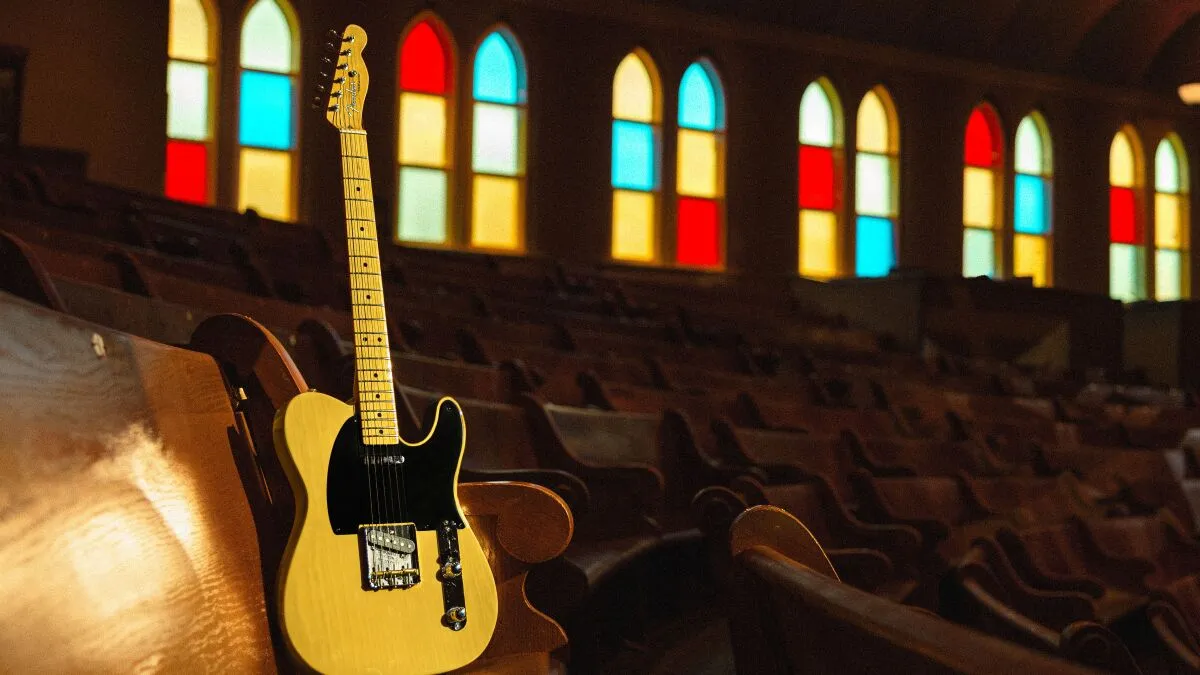
Before it became a legend, the Fender Telecaster was apparently called a "snow shovel." Yes, a snow shovel. Because nothing says "future icon" like a derogatory nickname for your simple, slab-bodied design. Introduced in 1951, this unassuming guitar somehow managed to become the backbone of rock, country, blues, funk, and indie music for three-quarters of a century. Let that satisfying number sink in.
Now, as the Telecaster celebrates its 75th birthday, it's worth a moment to appreciate the maestros who took this utilitarian instrument and bent it to their will, creating some of the most iconic sounds in music history.
The Architects of Awesome
First up, Albert Collins, a man so synonymous with the instrument he was dubbed "The Master Of The Telecaster." He wielded his 1966 Custom Telecaster with a cool that could freeze water, even with the guitar practically around his ears. Meanwhile, Muddy Waters, the literal father of modern Chicago blues, used his red 1957 Tele, "The Hoss," to electrify the Delta and create an entirely new genre. Which, if you think about it, is both impressive and slightly terrifying.
We're a new kind of news feed.
Regular news is designed to drain you. We're a non-profit built to restore you. Every story we publish is scored for impact, progress, and hope.
Start Your News DetoxThen there's James Burton, the guy who played for both Elvis Presley and Elvis Costello. He also laid down the licks on Suzie Q, considered by many to be the first Tele-powered Top 40 hit. His paisley-patterned Telecaster probably deserves its own fan club.
Steve Cropper's Telecaster was practically another member of Booker T. & the M.G.'s, fueling 60s soul hits like Sittin’ On The Dock Of The Bay. He even brought it along for his star turn in The Blues Brothers movie, because why mess with perfection?
Keith Richards, a man who probably has more guitars than most small countries have citizens, has a special place for "Micawber," a butterscotch Tele gifted by Eric Clapton. It's the sound of Honky Tonk Women and Brown Sugar, which is a pretty good resume for any guitar.
Jimmy Page, often associated with a different guitar brand, actually used his 1958 Telecaster on Led Zeppelin's debut album and for that solo in Stairway To Heaven. The guitar was a gift from Jeff Beck, and Page, being Page, painted a dragon on it. Because of course he did.
Bruce Springsteen’s "The Mutt" is a Frankenstein's monster of a Telecaster body and an Esquire neck, famously gracing the cover of Born To Run. It’s probably seen more American highways than most people.
And then there's Prince. The man was a musical force of nature, and his Telecaster solo on While My Guitar Gently Weeps at George Harrison’s Rock And Roll Hall Of Fame induction in 2004 is legendary. He ended it by casually tossing the guitar into the air, because he could. The guitar, presumably, landed safely.
Joe Strummer of The Clash thrashed his 1966 Telecaster with raw energy in the London Calling video, probably freezing his fingers off by the Thames. Wilko Johnson of Dr. Feelgood and The Blockheads developed a unique, frantic sound by scraping his fingernails against the strings of his black Tele. It was less conventional, more visceral, and entirely unforgettable.
Chrissie Hynde of The Pretenders found her blue 1965 Telecaster in a New York shop, drawn to its Corvette-like paint job. It then proceeded to help craft hits like Brass In Pocket. And finally, Jonny Greenwood of Radiohead coaxes sounds from his Telecaster that no one else seems capable of. Startling squeals and bends, as seen in his 1997 live performance of Paranoid Android — it's less playing, more sonic alchemy.
So, from a "snow shovel" to the hands of these legends, the Telecaster has proven that sometimes, the simplest designs yield the most extraordinary results. And probably the most interesting stories.