Wallace Chan, a Hong Kong artist, once spent six months living as a Buddhist monk in the 1990s, shedding all his earthly possessions. Fast forward a few decades, and he's now channeling that spiritual journey into something... maximalist. Think less plain robes, more dazzling, multi-story titanium sculptures.
Chan's latest exhibition, "Vessels of Other Worlds," is currently gracing both the historic Pietà Chapel in Venice and the Long Museum in Shanghai. It's an artistic statement on a grand scale, literally. Because apparently, that's where we are now.
Bigger, Bolder, Buddhist
The showstopper? Three colossal vessel-shaped artworks, each a meticulously crafted marvel made from over 5,500 individual titanium parts held together by a mind-boggling 22,000 screws. The Shanghai versions are particularly impressive, towering nearly 10 meters (about three stories) tall. A live video stream connects the two locations, because why not make it a global event?
We're a new kind of news feed.
Regular news is designed to drain you. We're a non-profit built to restore you. Every story we publish is scored for impact, progress, and hope.
Start Your News DetoxIt's a striking contrast to the commonly held image of Buddhism as having a simple, understated aesthetic. But as art critic Francesca Tarocco has pointed out, a lot of modern Buddhist-inspired art challenges that notion. The Buddha's story might include renunciation, but that act is often depicted with immense beauty. Chan's work certainly leans into that.
He's packed these sculptures with layers of meaning, each of the thousands of parts carefully chosen. While in Venice, he explained some of his symbols. Two years prior, he'd seen a stone carving in another Venice church, St. Anthony's, and recognized universal symbols — like oil vessels — that transcend any single religion. He decided to take that shared imagery and make it monumental, reflecting on his own life and aiming for a universal message about existence.
"Vessels of Other Worlds" follows the cycle of life: birth, growth, and rebirth. Chan wanted to combine all the ways humans try to grasp existence, time, and life's essence. This explains the clocks embedded in the pieces. He believes death, often seen as a somber precursor to rebirth, can actually be a cause for celebration. Energy, after all, only changes form; it isn't destroyed. To die is to embrace a new life. Let that satisfying thought sink in.
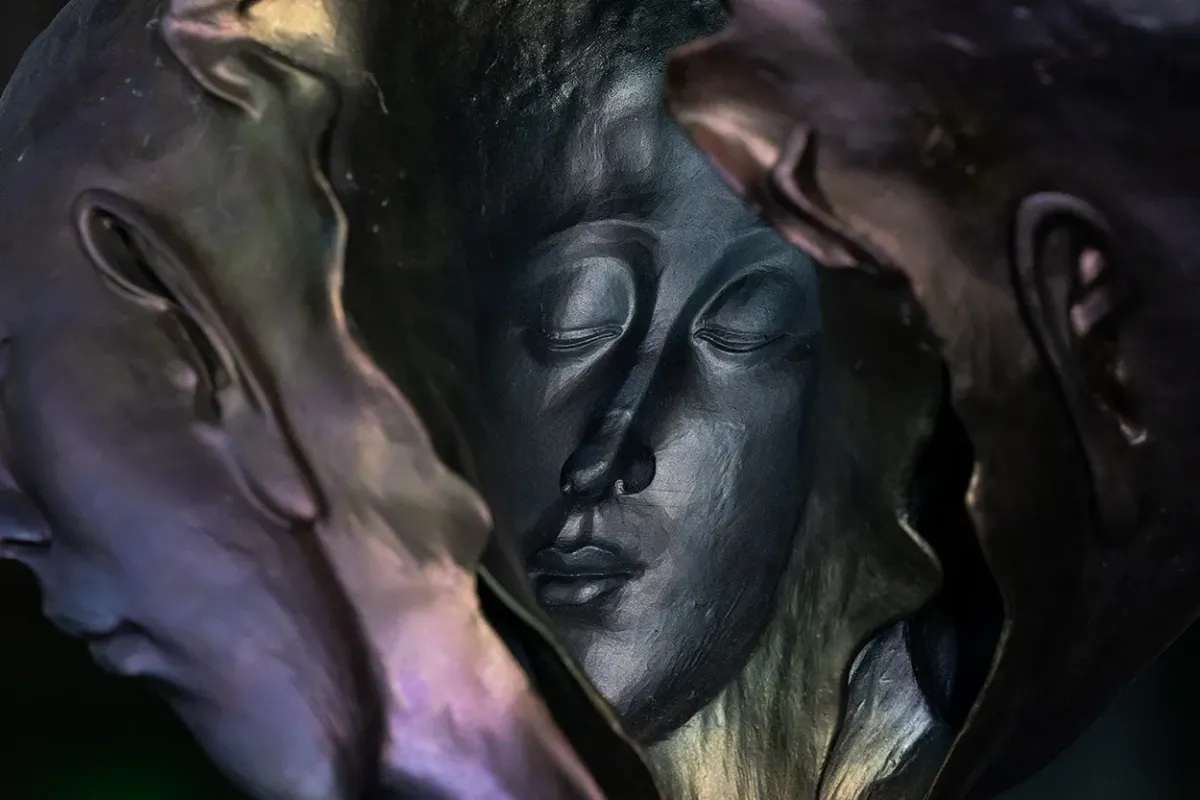
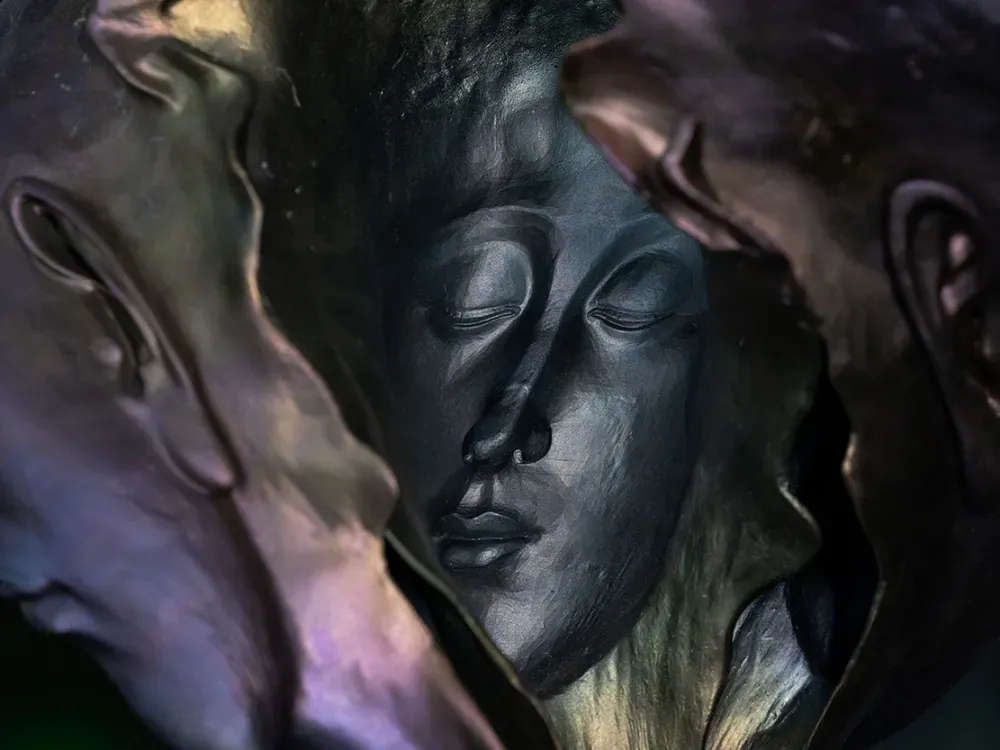
To bridge cultural divides, Chan chose bells as a common language. The sculptures are bell-shaped because bells appear in churches, schools, and temples worldwide, always asking for a moment of your attention. These vessels also feature both Western Zodiac signs and Chinese Zodiac animals, intertwined in a DNA-like structure, symbolizing the deep, often overlooked connection between East and West. These characters sit on lotus leaves, much like those the Buddha meditated on, alongside lotus flowers and serene, genderless, ageless human faces — Chan's ideal state of being, the face of the universe itself.
The Stubborn Strength of Titanium
Chan's material of choice, titanium, is as fascinating as his vision. It's incredibly light and biocompatible, used in everything from pacemakers to rocket ships. He spent eight years mastering this notoriously stubborn metal, which boasts a melting point of over 3,000 degrees Fahrenheit. He sees its resilience as a reflection of himself, confident that his work will outlast him, standing strong for a millennium. Because if you're going to make a statement about eternity, you might as well pick a material that truly means it.