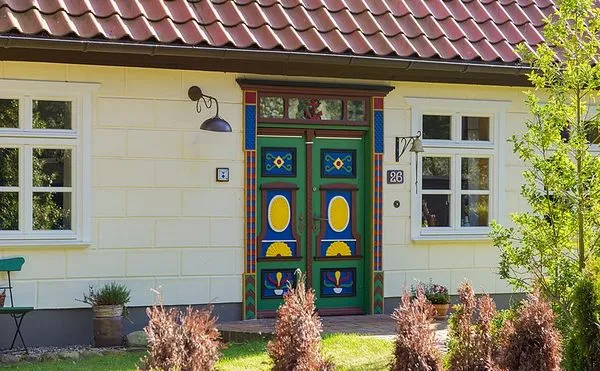
Imagine a front door so captivating, so ridiculously ornate, that it practically demands you stop and stare. Now imagine an entire German peninsula dotted with them, each one a riot of color and carving, whispering stories of ancient mariners and forgotten beliefs. Welcome to Fischland-Darß-Zingst, where even the entryways are UNESCO World Heritage sites.
These aren't just any doors. Dating back to the 18th century, these vibrant, deeply carved masterpieces were born from a very specific kind of prosperity. Because apparently, when your small fishing village suddenly gets rich off sailing, you don't just upgrade to a bigger boat; you turn your front door into a work of art.
From Islands to Art Gallery
Before it was a peninsula famous for its architectural flair, Fischland-Darß-Zingst was three distinct islands, slowly, stubbornly merging with the mainland over centuries. First Fischland and Darß in the 14th century, then Zingst in the 19th. This geographical evolution set the stage for a unique cultural blossoming, particularly on the Darß section.
We're a new kind of news feed.
Regular news is designed to drain you. We're a non-profit built to restore you. Every story we publish is scored for impact, progress, and hope.
Start Your News DetoxWhen sailing boomed in the 18th century, wealth poured into these coastal communities. And what do you do with newfound riches? You make a statement. The front door, typically facing the street, became the ultimate canvas. Carved with everything from flowers and "trees of life" to inverted lightning bolts (presumably to ward off actual lightning bolts) and suns, these doors were more than just pretty. They were talismans, meant to protect homes from evil and bless sailors with safe returns. Some even sported exotic columns and meanders, brought back by globe-trotting seamen, because nothing says "I've been places" like an ancient Greek pattern on your entryway.
Originally, these doors were a bit more subdued, sporting colors like green or reddish-brown. But the tradition, thriving from about 1775 to 1850, waned as sailing's importance faded. For a while, the doors were just... doors.
Then came 1931. The mayor of Prerow, Heinrich Bierbaum, decided the new town office needed a dose of history. He tapped local carpenter Rohloff to craft a symbolic door, but with one crucial twist: make it colorful. And just like that, the vibrant Darß door revival was born. Old doors were lovingly restored, and new homes embraced the tradition, each door still a unique, handmade testament to local artistry.
Today, you can embark on the "Darßer Haustürenpfad" (Front Doors Path Darß) in Prerow. This little over six-kilometer circular route takes you past doors from 1790 to the present day, starting at the very building that sparked the colorful comeback (now the Tourist Information Office). Because sometimes, the most fascinating history is literally right on your doorstep. And sometimes, it's a very, very pretty doorstep indeed.