
Felandus Thames's studio in West Haven, Connecticut, is a vibrant space filled with art and history. It's a place where he creates beaded portraits of important Black figures.
In his studio, Thames has many works in progress. These include beaded curtain portraits of Black luminaries. He also displays earlier pieces, like a green beaded curtain spelling "pleasure" in orange, similar to a Newport cigarette ad. The walls feature his hairbrush sculptures, which have sayings from his own poems or those of Black poets he admires.
Thames also keeps personal items in his studio, such as a "ghetto blaster" radio from the 1980s and a vintage bottle of Colt 45 malt liquor. He hopes to get the bottle signed by actor Billy Dee Williams. The studio reflects the rich history and everyday objects of Black Americans.
We're a new kind of news feed.
Regular news is designed to drain you. We're a non-profit built to restore you. Every story we publish is scored for impact, progress, and hope.
Start Your News DetoxFrom Mississippi to Yale
Thames was born and raised in Jackson, Mississippi. He began to take his art seriously after a conversation with artist Torkwase Dyson in 2001 at the Tougaloo Art Colony. He first attended the School of the Art Institute of Chicago but found it too expensive. He then returned to Jackson and graduated from Jackson State University in 2008.
Inspired by his earlier interaction with Dyson, Thames applied to Yale’s MFA program and earned his degree in 2010. During his time at Yale, he studied with art historian Robert Farris Thompson and attended lectures by cultural critics, sociologists, and filmmakers. He also met many visiting artists and critics. Thames described this period as "an incredibly exciting time."
Thames chose to stay in Connecticut because it gives him access to Yale's academic resources, including lectures and visiting scholars. He also values the strong artist community in the area.
The Aldrich Decennial
Thames is currently featured in the first Aldrich Decennial exhibition. This show highlights the work of 40 artists living and working in Connecticut. The Aldrich Contemporary Art Museum in Ridgefield organizes the exhibition. Chief curator Amy Smith-Stewart explained that the show aims to understand "what is happening locally" in the art world. The Decennial will happen every ten years to keep up with the local art scene.
Smith-Stewart wants to address the criticism that museums outside major cities often overlook local artists. She believes artists don't need to be in big cities like New York or Los Angeles to make an impact.
The exhibition is titled "I Am What Is Around Me," inspired by a poem by Wallace Stevens, who lived in Hartford. Smith-Stewart visited about 100 studios to find artists for the show. She was drawn to Thames's work because of how he uses materials to "convey meaning and memory." She also noted how he highlights "Black identities and histories that maybe are not well known or histories that deserve more attention."
The exhibition includes two of Thames's beaded portraits: She did what she could (Dorie Ladner), which depicts a social worker and civil rights advocate, and Jubilee (Margaret Walker), a portrait of the author who taught Thames's teachers.
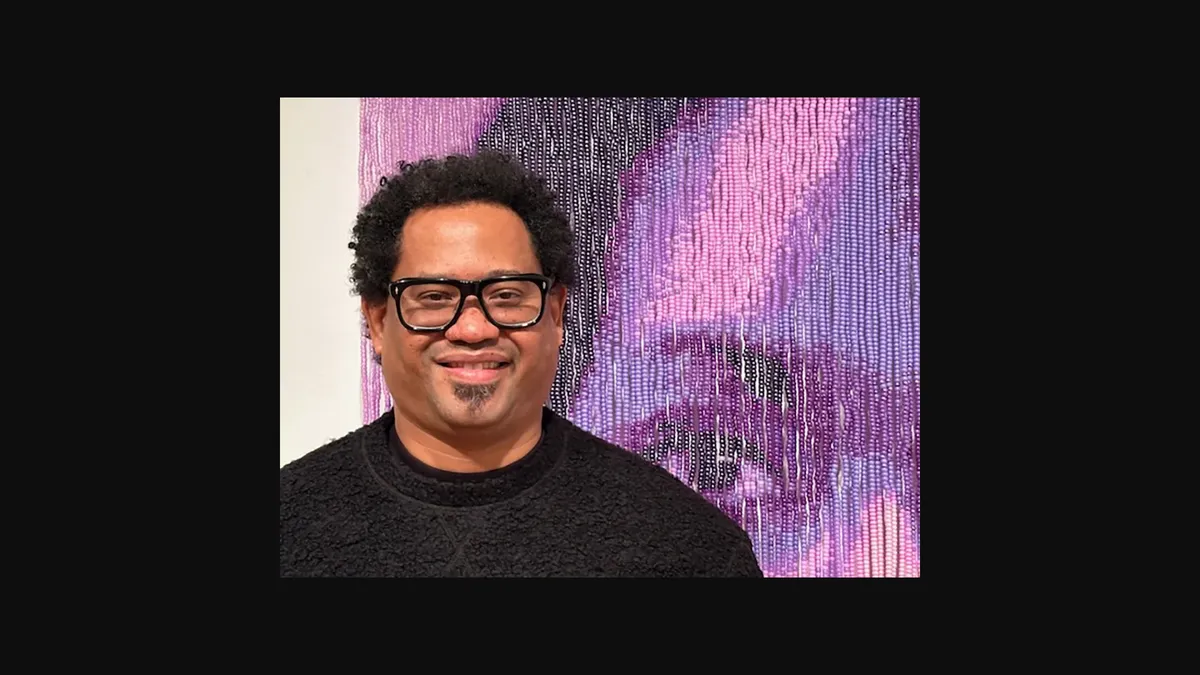
Thames sees the Decennial as a way to give "visibility and exposure to many artists who do not have New York representation." He hopes it will show that world-class art can also be local. A requirement for the Decennial is that participating artists have never had a solo museum exhibition. Thames has been included in major traveling shows, such as "The Dirty South" and "Get in the Game."
Beaded Portraits and Memory
Since his time at Yale, Thames has used materials from beauty supply stores. Earlier works included durags and hairbrushes. More recently, he uses beads often found in Black girls' braided hair. He also connects his beaded curtains to those he remembers from his parents' Afrocentric home, which were common in African American decor since the 1970s.
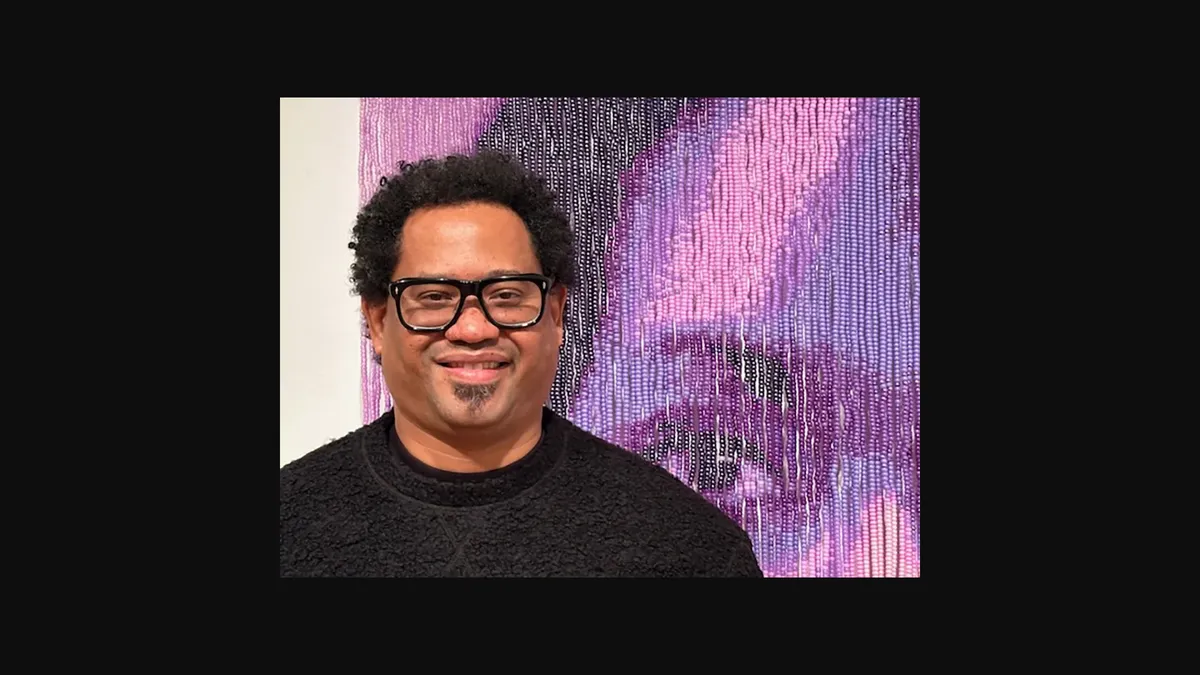 Courtesy the artist
Thames explained that he wants to connect people back to memory with his beaded curtains. He feels the beaded curtain can represent "Black interiority" and also refer to "Black liberation theology" through pro-Blackness and Black hair.
His first beaded portrait, made in 2016, depicted Penny from the TV show Good Times. He destroyed it because it didn't meet his standards. Two years later, he returned to the medium to prove he could make a beaded portrait, creating one of Anita Hill.
The intense labor involved in Thames's work is important. A six-foot by four-foot curtain can take about 400 hours to make. He wants viewers to appreciate the craftsmanship and the artist's hand in the work.
 Courtesy the artist
Ultimately, Thames hopes his beaded portraits bring joy and spark curiosity. He wants people to learn about the subjects, whether by reading Margaret Walker or tracing Alvin Ailey's work.