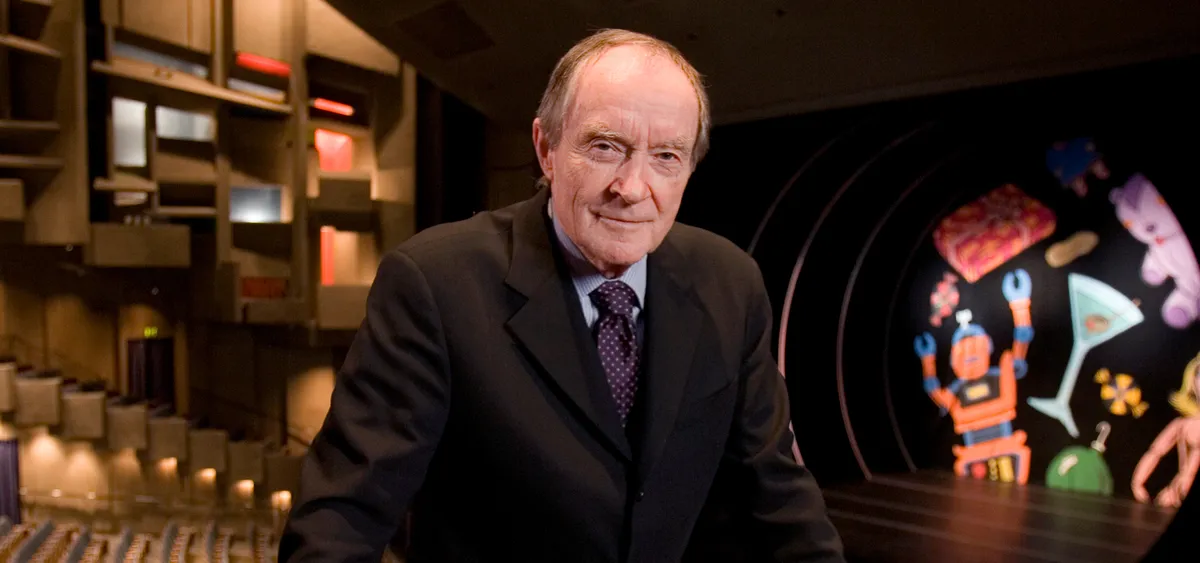
The performing arts world is raising a glass (and probably a baton) to Robert Cole, the visionary who steered Cal Performances from 1986 to 2009. A trained conductor with a performer's soul, Cole didn't just book shows; he built an empire of culture, transforming a respected regional group into an international powerhouse.
Think about it: for over two decades, he didn't just shape what happened on Berkeley's stages; he fundamentally changed how the entire region experienced live performance. And he did it with a quiet determination that left a legacy few could ever dream of matching.
Berkeley's Big Leap to Broadway (and Beyond)
When Cole arrived at Cal Performances in '86, they were a solid operation, hosting around 45 events a year. But Cole wasn't content with 'solid.' Over the next 23 years, he orchestrated a transformation so profound, it put Berkeley squarely on the global arts map.
We're a new kind of news feed.
Regular news is designed to drain you. We're a non-profit built to restore you. Every story we publish is scored for impact, progress, and hope.
Start Your News DetoxBy the time he took his final bow in 2009, Cal Performances was presenting a staggering 130 shows annually. The budget had more than tripled, and ticket sales? They'd shot up tenfold. Cole's secret sauce? Strong relationships, a willingness to take artistic risks, and an unwavering commitment to giving audiences nothing but the absolute best. He famously declared in 2005 that his goal was to make Berkeley rival London, New York, or Paris as a magnet for the world's greatest artists. Mission accomplished, maestro.
He forged legendary partnerships, like the one with choreographer Mark Morris, who first graced Berkeley in 1987 and has been back every single year since. Cole premiered Morris's World Power (1995), Falling Down Stairs (1997), and Rhymes With Silver (1997), among others. He also commissioned new works from giants like Peter Sellars, Twyla Tharp, and the Kronos Quartet, bringing us the world premiere of John Adams's I Was Looking at the Ceiling, and Then I Saw the Sky (1995) and the U.S. premiere of Pina Bausch's Nur Du (Only You) (1996).
Under his watch, international titans like the Bolshoi Ballet graced Berkeley stages, and the Alvin Ailey American Dance Theater performed there more than anywhere else outside their New York home. Yo-Yo Ma, Mikhail Baryshnikov, Ravi Shankar – they were all regulars. Yo-Yo Ma himself noted that Cole just got what artists needed to thrive, which probably explains why they kept coming back for more.
From Ancient Notes to Edgy Beats
Cole's vision wasn't confined to grand stages. In 1990, he launched the Berkeley Festival & Exhibition, a biennial deep dive into early music that cemented Berkeley as the place for historical sounds. Then, in 2003, he flipped the script with the Berkeley Edge Fest, showcasing the cutting edge of contemporary performing arts with works by John Adams, John Zorn, and Terry Riley. He believed all music, from the ancient to the avant-garde, deserved a home in Berkeley. And he built it.
Even after stepping down from Cal Performances, Cole continued to champion the arts, proving that once a builder, always a builder. He expanded education programs when national funding dwindled, offering over 100 initiatives annually that became models for arts education.
Perhaps his proudest achievement was the Berkeley/Oakland AileyCamp, a free summer program started in 2002 that gives young people a chance to dance and learn life skills. Over 1,300 kids have benefited, proving Cole's unwavering belief that the arts aren't just for the elite; they're for everyone.
He was honored with UC Berkeley's highest administrative award, the Berkeley Citation, and even named a Chevalier by France. Because, of course, France recognizes a true cultural force when they see one.
Before all this, Cole studied conducting with none other than Leonard Bernstein. So, yeah, he knew a thing or two about making an impact. When he announced his departure, Chancellor Robert J. Birgeneau lauded how Cole had elevated Cal Performances' profile and its service to the university. Cole, ever forward-looking, said his accomplishments were "only the beginning." He was right. The thriving organization he built is a living, breathing testament to his vision and dedication. And that, if you ask us, is a pretty good mic drop.
Robert Cole is survived by his sons, Alex Julian Cole and Thomas Montgomery Cole; his grandsons, Charles Cole and Daniel Cole; and his wife, Susan Muscarella.