Turns out, the Surrealists weren't just about melting clocks and lobster telephones. When fascism started flexing its terrifying muscles in the 1930s and '40s, this dream-obsessed art movement became an unlikely, and incredibly witty, resistance force.
Take Claude Cahun and Marcel Moore, a French couple living on the English island of Jersey during WWII. They waged a psychological war against the Gestapo with what they called "paper bullets." Imagine German soldiers finding notes like, "I don't want to spend my whole life in a uniform," signed "SOLDAT OHNE NAMEN" (soldier with no name), tucked into their pockets or left on their vehicles. The goal? Encourage defection, or at least, a really bad day.
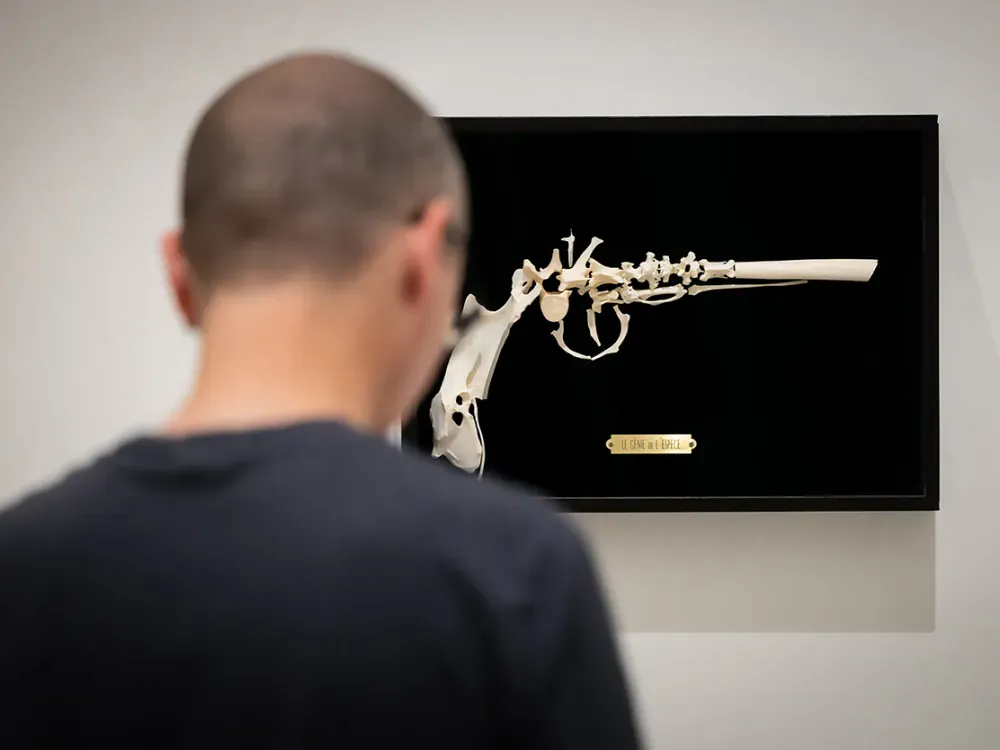
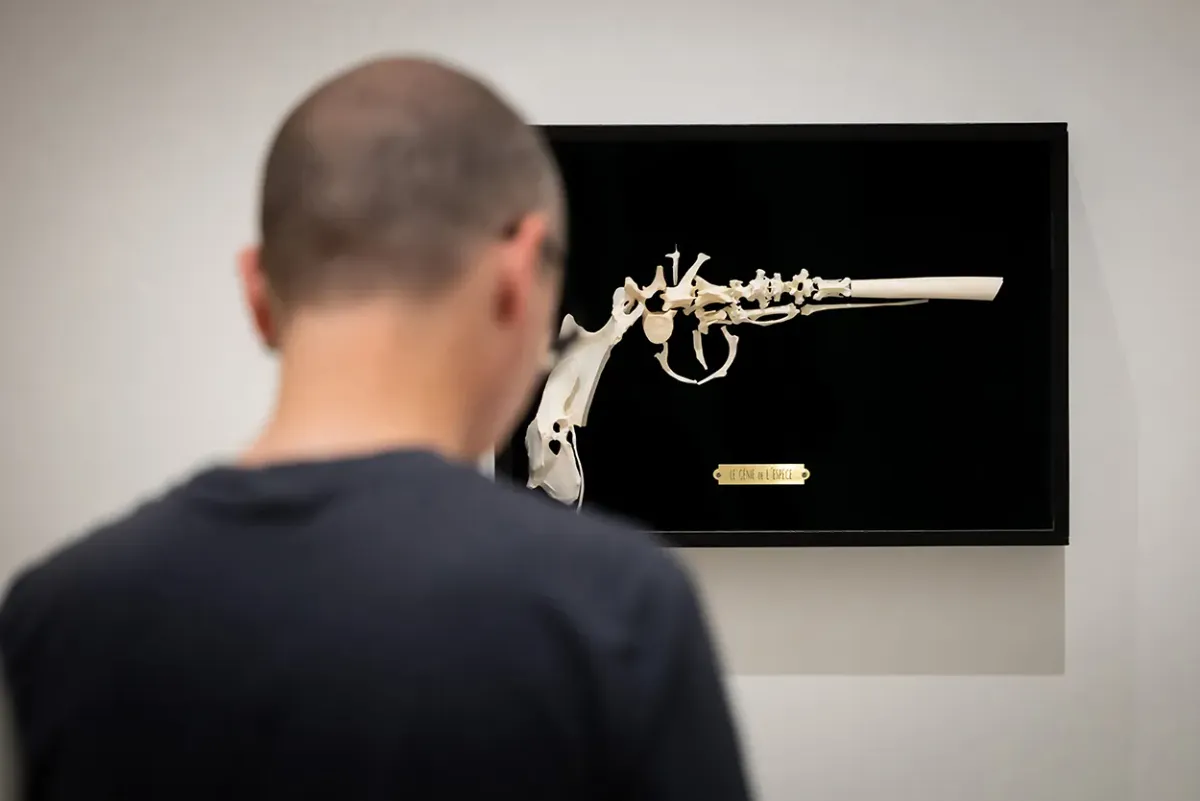
These subversive little notes are now part of a Warsaw exhibition, "In the Very Bowels of Change: Surrealism and Antifascism." It's a deep dive into how Surrealism wasn't just a trippy aesthetic, but a full-blown political stance.
We're a new kind of news feed.
Regular news is designed to drain you. We're a non-profit built to restore you. Every story we publish is scored for impact, progress, and hope.
Start Your News DetoxCahun and Moore were eventually caught and sentenced to death. Cahun, ever the provocateur, reportedly asked which sentence should be carried out first. Luckily, the war ended before they could find out. The exhibition even features a photo of Cahun biting a Gestapo officer's badge, because apparently, that's how you do defiance.
When Art Became a Weapon
The Surrealists' beef with the right wing actually kicked off much earlier. In 1930, Luis Buñuel's film Golden Age satirized the sexual hypocrisy of the wealthy and the Catholic church. The Antisemitic League of France, naturally, lost their minds. They stormed a Parisian theater, trashing works by the likes of Dalí, Miró, and Max Ernst. It was a clear declaration: Surrealism was the enemy.
Soon after, the Nazis helpfully labeled Surrealist art "degenerate," confirming its power to challenge authority. When the Spanish Civil War erupted in 1936, Surrealists like Cahun and André Breton formed Contre-Attaque, aiming to rally the working class. They believed that by freeing the mind from repression, you could spark a much larger liberation.
The exhibition doesn't shy away from the darker side, either, exploring how some artists like Georges Bataille examined fascism's seductive allure. Because understanding the monster is part of fighting it.
Global Dreams, Local Fights
The show tracks Surrealism's journey from interwar Paris into the 1950s, featuring lost artworks and publications. There’s a gallery dedicated to the Spanish Civil War, with a photo of Salvador Dalí in an aquanaut suit at a 1936 London exhibition. Nearby, Picasso's Monument to the Spaniards Who Died for France (1946–47) stands as a testament to the movement's enduring international spirit.
When "degenerate art" was officially condemned in 1937, Egyptian artists responded with a defiant manifesto: "Long live degenerate art!" The movement became a visual language for depicting a world gone utterly, horrifyingly irrational. Hans Bellmer, imprisoned at Camp des Milles, drew undulating brick walls—a subtle protest against Nazi eugenics and their obsession with order. His iconic dolls, too, were anatomically unnatural, a direct middle finger to the regime.
After the war, a Berlin cabaret called Die Badewanne (The Bathtub) used Surrealist ideas to cope with the city's destruction. They argued that bombed-out Berlin was wilder than any imagined Surrealist landscape. Instead of creating new art, they translated "degenerate" texts and performed homages to banned artists. Because sometimes, the most surreal act is simply to rebuild.
Later galleries feature Eastern European artists like Erna Rosenstein and Emil Filla, Holocaust survivors whose paintings used Surrealist visuals to reflect unspeakable horrors. For them, Surrealism wasn't just art; it was a challenge to Socialist Realism, asking: Does art serve the party, or does it free the viewer?
Many Surrealists went into exile, landing in places like Mexico, New York, and Martinique. In Marseilles, while awaiting boats and visas, they passed the time creating "exquisite corpses" and playing cards. Their playing cards, of course, replaced traditional Kings and Queens with liberatory thinkers like Freud and de Sade. Because even in the darkest times, the mind finds a way to play, and to subvert.
And if that's not enough to make you rethink your art history textbooks, what is?