Protecting a Mythical Island
The Greek island of Othonoi is said to be the real-life inspiration for Ogygia, the home of the nymph Calypso in Homer's epic poem, "The Odyssey." This island, located in the Ionian Sea, is a place of ancient legends. However, it now faces a modern threat: potential oil drilling by companies like Chevron and ExxonMobil.
Oil drilling is a process that can harm the environment. It contributes to climate warming, releases toxic wastewater and greenhouse gases, and puts marine life at risk from oil spills.
Art as a Protest
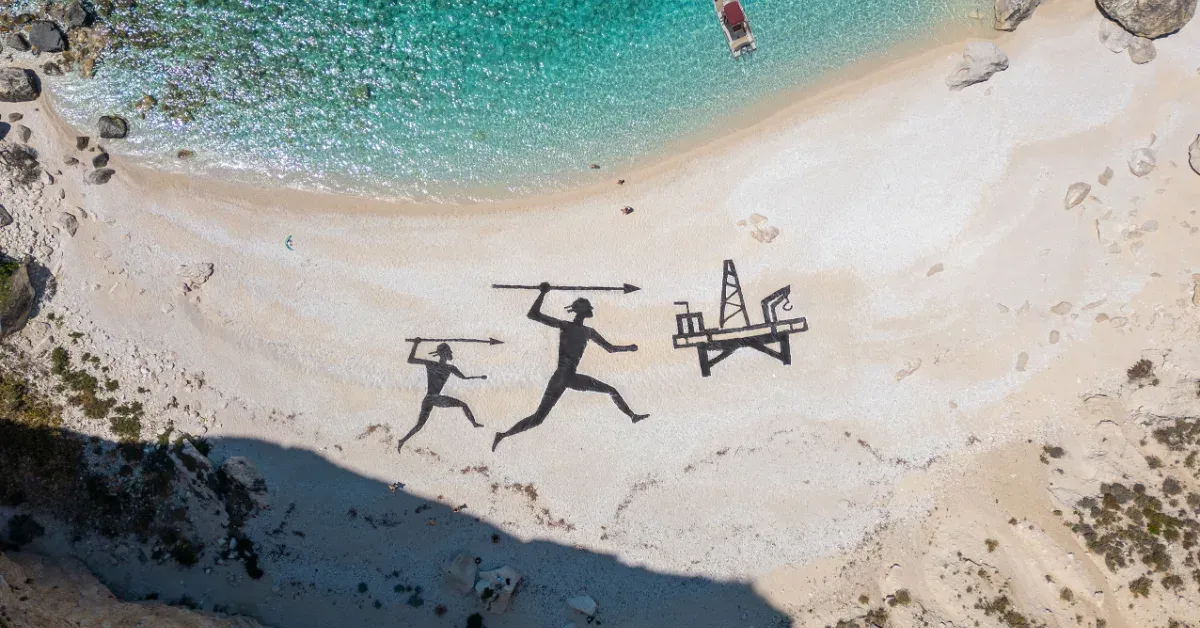
To protest these potential drilling projects, visual artist The Krank created a large public artwork called "The Hunt." This 1,640-square-foot installation was placed on Aspri Ammos Beach as part of the Ionian Lab residency program.
We're a new kind of news feed.
Regular news is designed to drain you. We're a non-profit built to restore you. Every story we publish is scored for impact, progress, and hope.
Start Your News Detox"The Hunt" shows two hunters with a spear aimed at an offshore oil platform. It's designed in the style of ancient cave drawings. The artwork was placed about six miles from the proposed drilling area and was made to be environmentally friendly.
The artist used black geotextile strips and secured them with pebbles found on the beach.
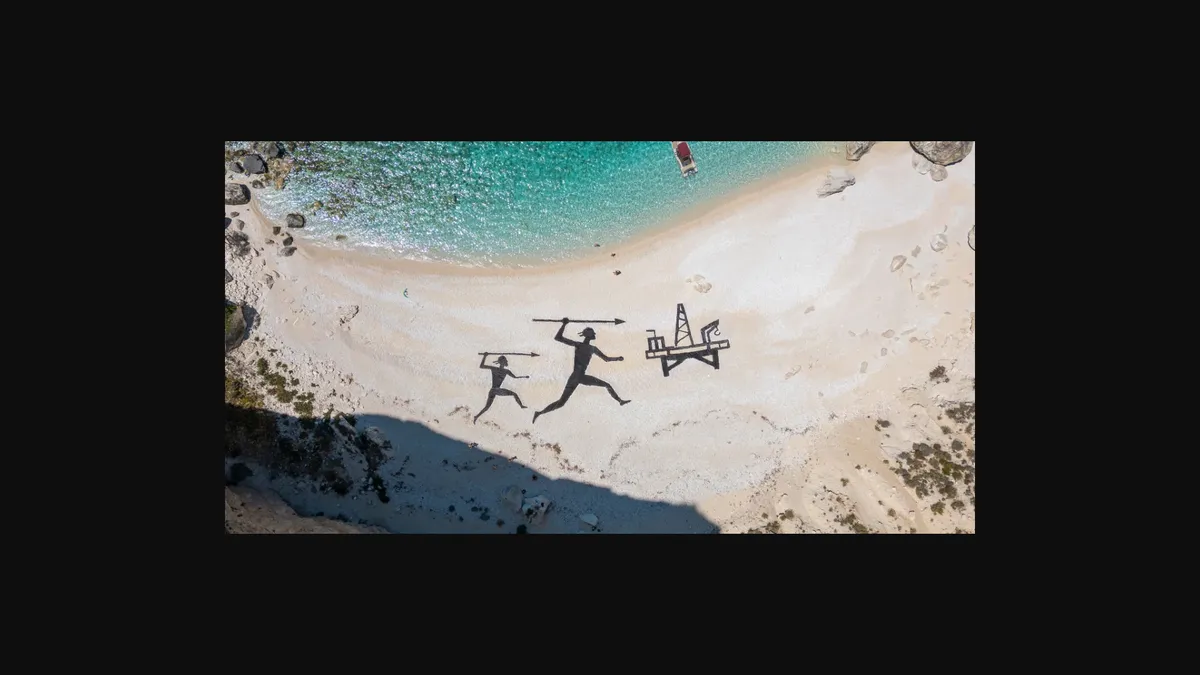
The Krank explained that the piece connects early human survival with today's resource extraction. The temporary installation was only on the beach for documentation. It left no permanent changes to the site. Instead, it invited people to think about the connection between the landscape, energy, and shared memory.
The Krank is a Greek artist known for large, site-specific installations, especially land art. He noted that most offshore exploration projects are understood through maps and technical documents. "The Hunt" offers a different way to look at the same geography.
The artist shared that the installation introduces a temporary visual idea while the future of the landscape is still uncertain. Even though the artwork was temporary, it sparked conversations about the potential harm to the ancient ecosystem.
The Krank observed that visitors initially worried if the black material would harm the beach. But once they looked at the artwork from a distance, their focus shifted to the offshore exploration area on the horizon.