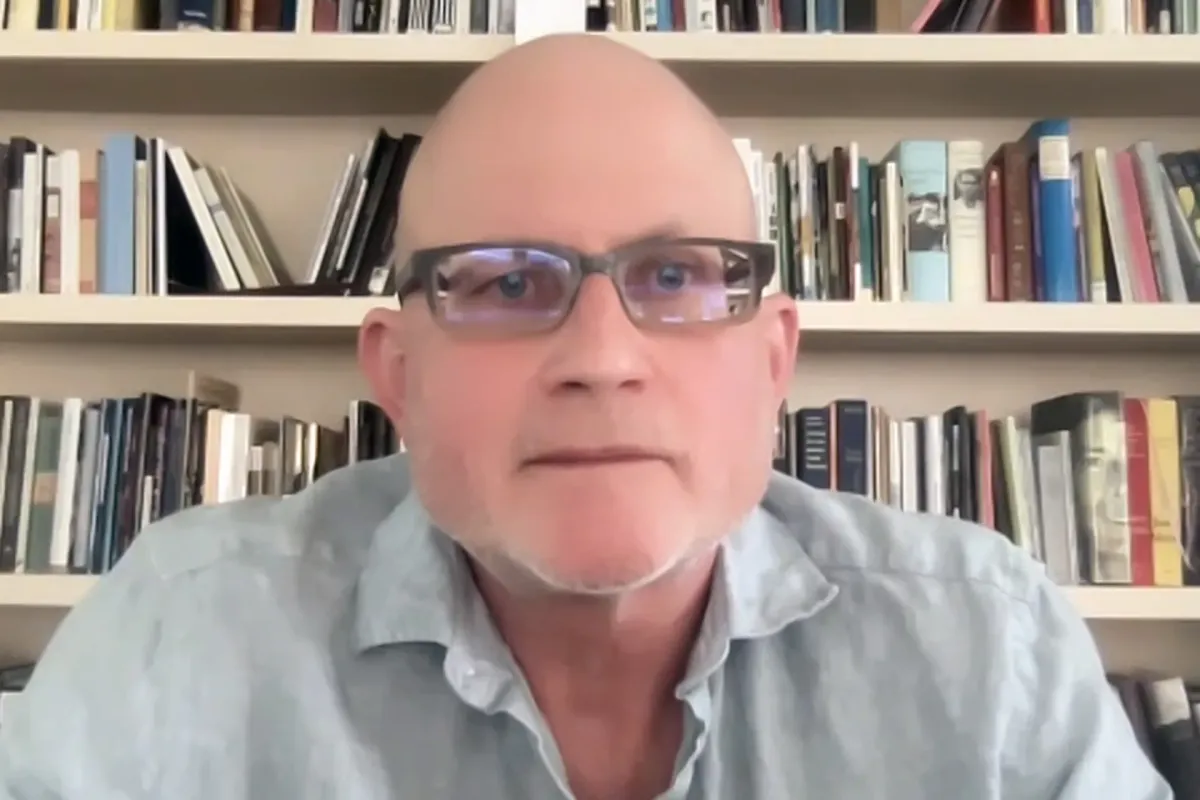
Christian Wiman has been dancing with a rare blood cancer for 14 years. He’s also a poet, memoirist, and teacher who recently dropped some wisdom bombs about his craft at a Harvard Radcliffe Institute event. His big idea? Poetry isn't just words on a page; it's a direct line to the divine.
Wiman calls poetry "structured sound" — a kind of linguistic preservation society for the self. It can also, he believes, channel something bigger. Ideally, both at once. The creative process? A lot like waiting for a bus that may or may not show up, followed by a sudden burst of inspiration. Because apparently, that's where the good stuff lives.
In a world where "the eradication of individual consciousness" feels like a daily threat, Wiman argues poetry is a "balm." He quotes his friend, poet Kevin Young, who describes poems as a "fragrant, resinous" substance, effective for a time against decay. Which, if you think about it, is both impressive and slightly terrifying.
We're a new kind of news feed.
Regular news is designed to drain you. We're a non-profit built to restore you. Every story we publish is scored for impact, progress, and hope.
Start Your News DetoxWiman's work is full of rhyme, rhythm, and the kind of wordplay that makes you reread a line just for the sheer cleverness of it. He even finds God in the subtle shifts of punctuation, because why not? If it’s not in a comma, where is it?
The Tune of Everything
For Wiman, who hangs out at Yale Divinity School, faith is essentially a form of attention. Like French philosopher Simone Weil, he believes God's work is in the unexpected spark — an image, a feeling, a stray thought that blossoms into a poem. It's the universe whispering, and you just happen to be listening.
When fellow poet Major Jackson asked about the "spiritual significance" of poetry, Wiman pointed to Kay Ryan's poem "Tune." It suggests a hidden music humming beneath everything, a melody only occasionally audible. Wiman's take: "There is a tune of things that I think is consciousness, and is God, and that somehow those things are linked." Let that sink in.
His early work often wrestled with his cancer, because, as he put it, in your 30s, "it can seem like suffering is the only authentic thing." But now, nearing 60, his perspective has broadened. He's moved beyond himself, exploring other characters in his new book, The Dance, which he finds even more "personal" than his earlier, more introspective work.
And here’s the kicker: Wiman is now in "great health" and has lost his fear of death, having been "dead on the table" three times during treatments. He even recalls his family being distraught after he was dropped from a clinical trial, while he "just went out and played with the dog." Because sometimes, you just need a good dog. His new collection reflects a man comfortable in his unexpected "afterlife" on Earth, enjoying family and connecting with a God he perceives not as a noun, but as a verb or a tune. And that's a pretty good way to live.