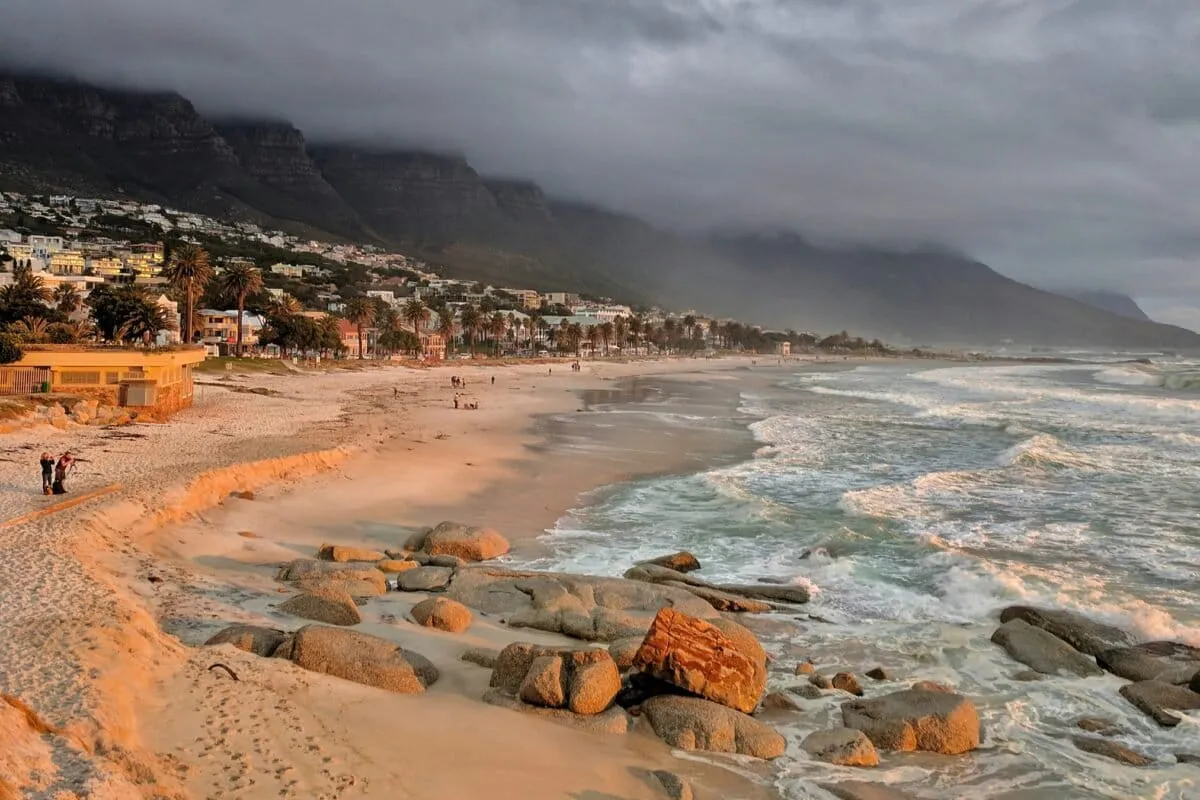
A new study has pinpointed something scientists have long suspected but now can measure precisely: sea levels around Africa are rising dramatically faster than they were just two decades ago.
Researchers from the University of Manitoba analyzed satellite data and found that since 2010, African coastlines have experienced sea-level rise four times faster than the rate seen in the 1990s. The culprit is straightforward—melting ice sheets and glaciers at the poles are sending water toward the equator, and Africa's tropical coastlines are absorbing much of that influx.
"When you have ice-free summer at high latitudes, it means that the water went somewhere," explains Franck Ghomsi, the study's lead author. "The glacier moved from ice to water, and it started migrating. And it is the tropics that are now getting this outflow of water."
We're a new kind of news feed.
Regular news is designed to drain you. We're a non-profit built to restore you. Every story we publish is scored for impact, progress, and hope.
Start Your News DetoxThis acceleration matters urgently because sea-level rise doesn't announce itself with drama—it compounds quietly. Coastal communities already face flooding during high tides. Saltwater creeps into freshwater aquifers that people depend on. Farmland erodes. Entire neighborhoods become uninhabitable, forcing families inland.
What makes this story particularly sharp is the inequity woven through it. Ghomsi, who is from Cameroon, calls this a "climate injustice." Africa accounts for roughly 4% of global carbon emissions, yet its coastlines are experiencing some of the fastest sea-level rise on the planet. The emissions from wealthy nations are reshaping the geography of poorer ones.
The acceleration is real
The study, published in Communications Earth & Environment, doesn't just confirm what models predicted—it establishes a new baseline. Four times faster isn't a small margin of error. It's a signal that the pace of change is outrunning many coastal adaptation plans. Cities like Lagos, Dar es Salaam, and Maputo are already grappling with these impacts. The research suggests they'll need to grapple harder, faster.
The trajectory forward depends partly on global emissions cuts—which remain uncertain—and partly on whether coastal nations get the funding and support to adapt. Some African countries are beginning to invest in seawalls and mangrove restoration. Others are exploring planned relocation. None of it is cheap, and none of it is simple. But the alternative—doing nothing while water rises—isn't an option either.