Before America was America, its citizens had a pretty clear idea of who they didn't want in charge. Case in point: a colossal statue of King George III, which once presided over Bowling Green in New York City. In 1776, a rather spirited crowd decided they’d had enough, yanked him down, and melted most of him into musket balls. Because, apparently, nothing says 'freedom' like turning your oppressor's likeness into ammunition.
Now, fragments of that very statue—along with some of those musket balls—greet visitors at "Democracy Matters," the inaugural exhibit in the New York Historical's new Tang Wing. It’s a fittingly dramatic welcome for a show that dives headfirst into two-and-a-half centuries of American contradictions, just in time for the nation’s 250th anniversary. Because what’s a birthday without a little existential dread?
Curated by Wendy Nālani E. Ikemoto, the exhibit posits that America isn't just a country; it's a perpetual argument. A project defined by the glorious, messy tension between wanting things to stay exactly the same and demanding everything change, right now. It's less a fixed identity and more a constantly evolving, occasionally shouting, group therapy session.
We're a new kind of news feed.
Regular news is designed to drain you. We're a non-profit built to restore you. Every story we publish is scored for impact, progress, and hope.
Start Your News DetoxThe Flag, the Birds, and the Ballot Box
The exhibit's genius lies in its knack for pairing the unexpected. Take Mel Chin's Flag of America (2020), which splits the usual 50 stars into two blocks of 25—a visual representation of division that hangs above the Declaration of Independence and a petition from 547 loyalists, dubbed the "declaration of dependence." Because why have one foundational document when you can have two that fundamentally disagree?
Then there’s the particularly poignant display that juxtaposes John J. Audubon’s iconic bird prints with brooches of the same birds. The twist? These delicate brooches were crafted from found materials by Yoneguma and Kiyoka Takahashi, a Japanese American couple, while they were interned during World War II. Audubon, an immigrant himself, became an American icon. The Takahashis, American citizens, were locked away. Same birds, wildly different cages.
And what about the right to vote? A transparent ballot box from the 1800s sits beside a map of Seneca Village, a predominantly African American community displaced to make way for Central Park. Back then, Black men needed to own at least $250 in property to cast a ballot—a neat little detail that reminds us 'democracy' has always come with some rather exclusionary fine print.
Jefferson, Washington, and the Uncomfortable Questions
The show doesn't shy away from the giants, either. A large painted cast of a Thomas Jefferson statue, commissioned by the first Jewish commodore in the U.S. Navy, Uriah P. Levy, stands prominently. It celebrates Jefferson's push for religious freedom, but the label doesn't pull punches, noting his "complex legacy—including his history as an enslaver." It's a massive object that forces you to ask: how much context can a plaque really provide for such a monumental figure?
And while George Washington’s inaugural Bible makes an appearance, alongside a Torah scroll vandalized by British soldiers, the exhibit largely sidesteps religion. A curious omission for a nation whose leaders increasingly seem to forget its founding principles of secularism. Especially in a city as religiously diverse as New York.
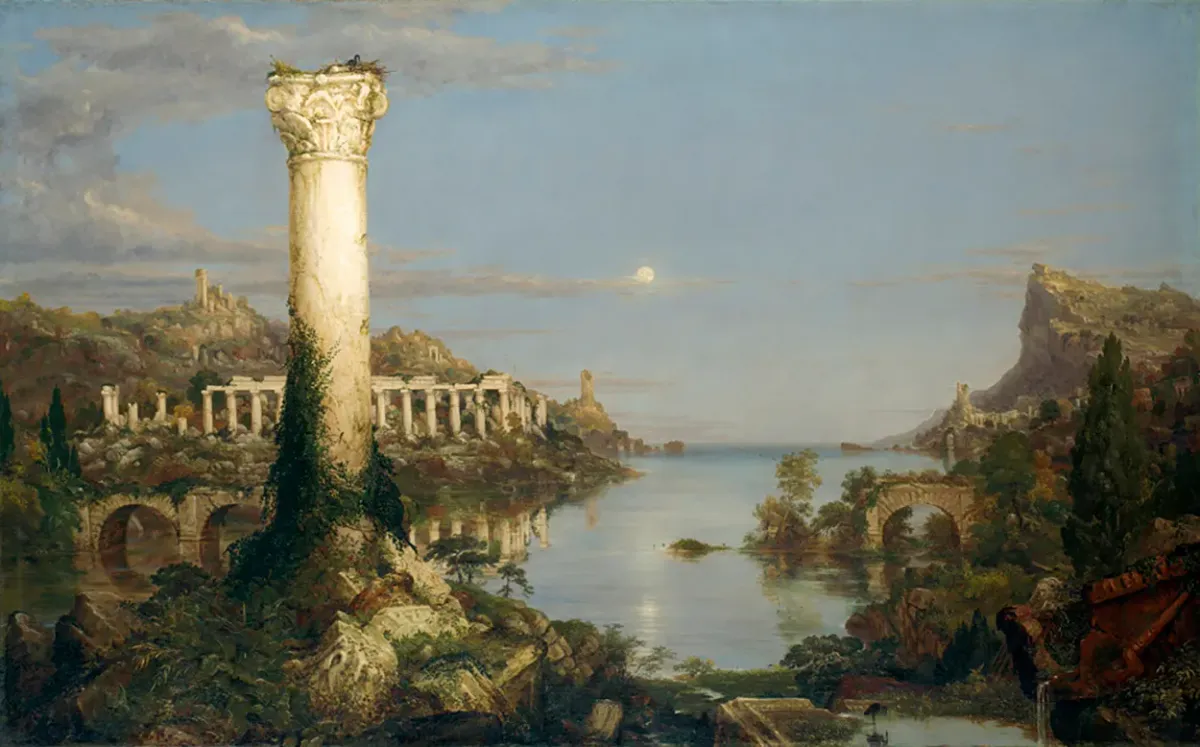
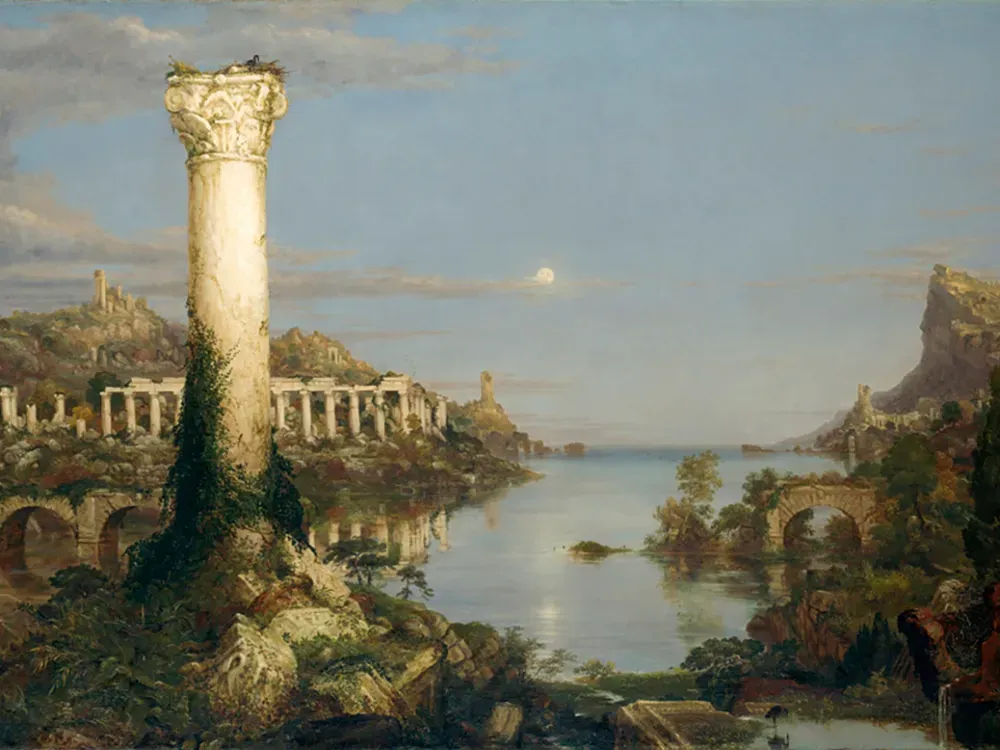
"Democracy Matters" isn't here to give you easy answers or a neat, bow-tied vision of America. It's here to show you the knots, the fraying edges, and the constant tug-of-war that has defined the nation from day one. It leaves you to ponder whether Thomas Cole’s Course of Empire paintings, depicting the rise and fall of civilizations, are a dire warning for America, or just a really good excuse for some dramatic landscapes. Either way, you’ll be thinking about it long after you leave.