NASA is celebrating America's 250th birthday with four new cosmic images. These images, colored red, white, and blue, show everything from an exploded star to a galaxy cluster shaped by dark matter. They were created using data from the Chandra X-ray Observatory.
Stellar Explosions and Nurseries
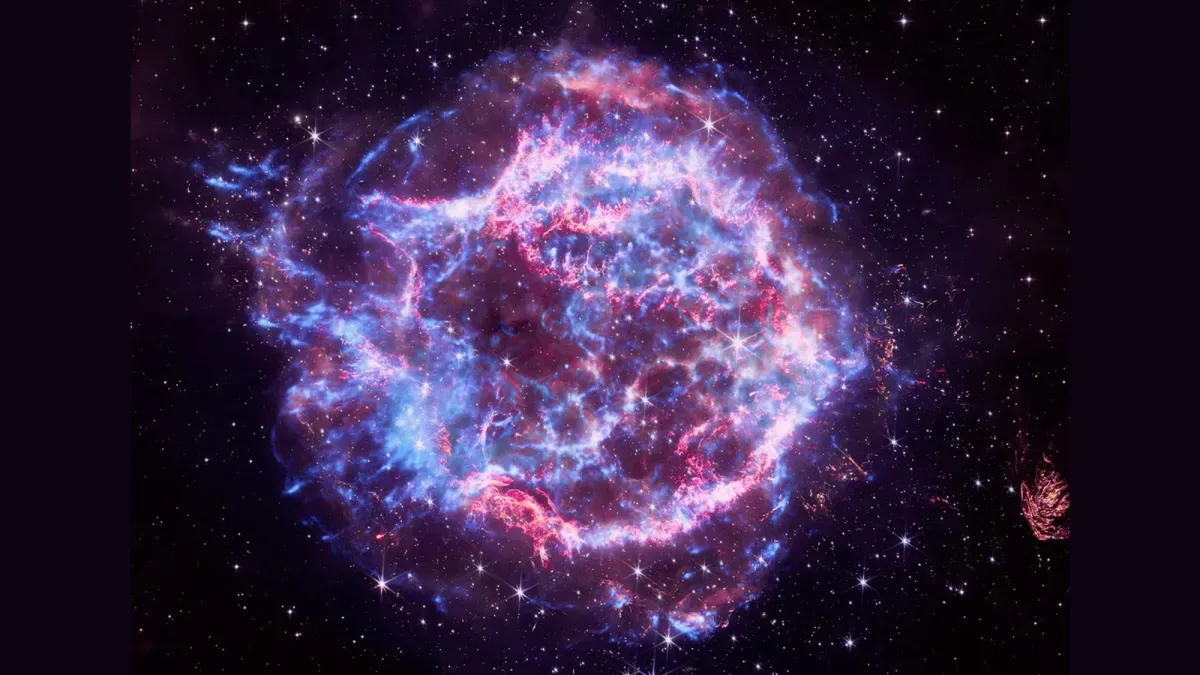
The first image shows Cassiopeia A, the remains of a star that exploded. X-ray data from Chandra (blue and purple) reveals the blast wave and elements like iron, calcium, and oxygen. Infrared data from the James Webb Space Telescope (red and white) shows the expanding shell of material and cosmic dust.
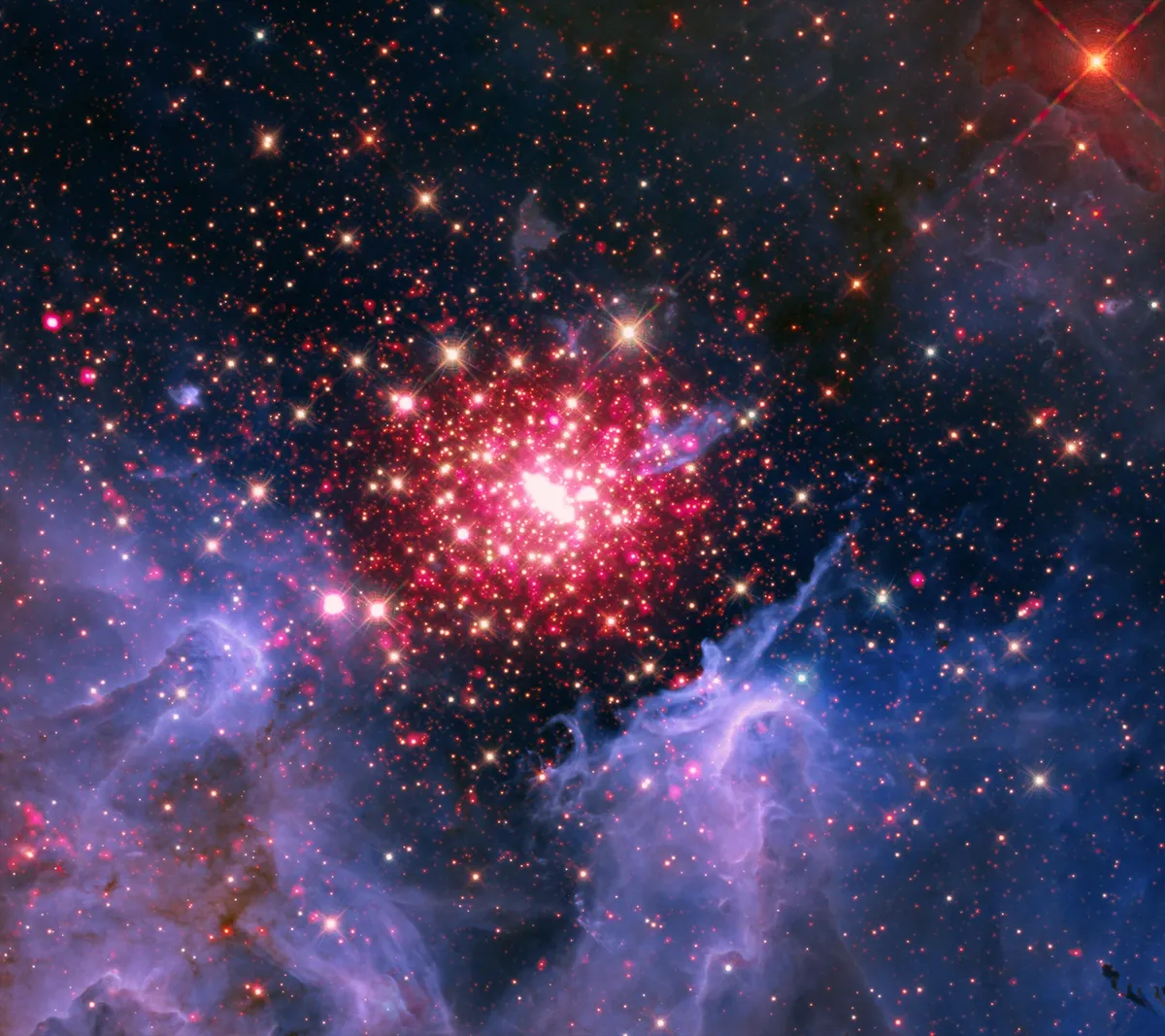
Next, NGC 3603 is a nebula in the Milky Way, home to one of the galaxy's largest clusters of young stars. Chandra's X-ray data (red and white) shows diffuse emission and many point-like X-ray sources. Hubble Space Telescope data (red-orange, green, blue, and yellow) shows stars, dust, and gas. The X-rays highlight the bright glow of newly formed stars.
We're a new kind of news feed.
Regular news is designed to drain you. We're a non-profit built to restore you. Every story we publish is scored for impact, progress, and hope.
Start Your News Detox
Galaxies and Dark Matter
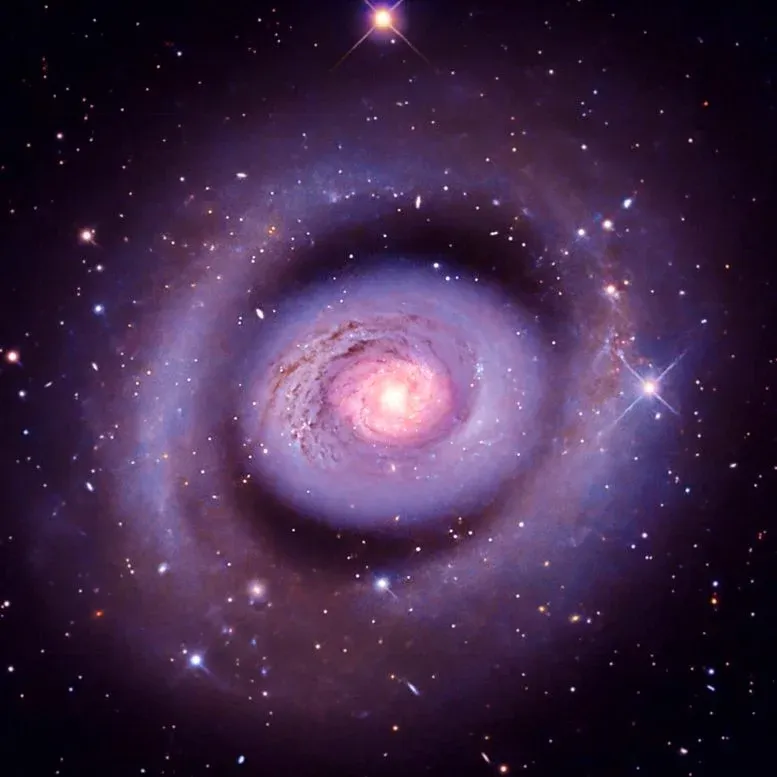
The third image features the spiral galaxy NGC 4736, also known as Messier 94. This image combines Chandra X-rays (red, orange, and blue) with visible light from ground-based telescopes (red, green, and blue). Messier 94 has a bright inner "starburst ring" where new stars are forming. Scientists believe gas flowing inward through the galaxy's oval shape fuels this star formation.
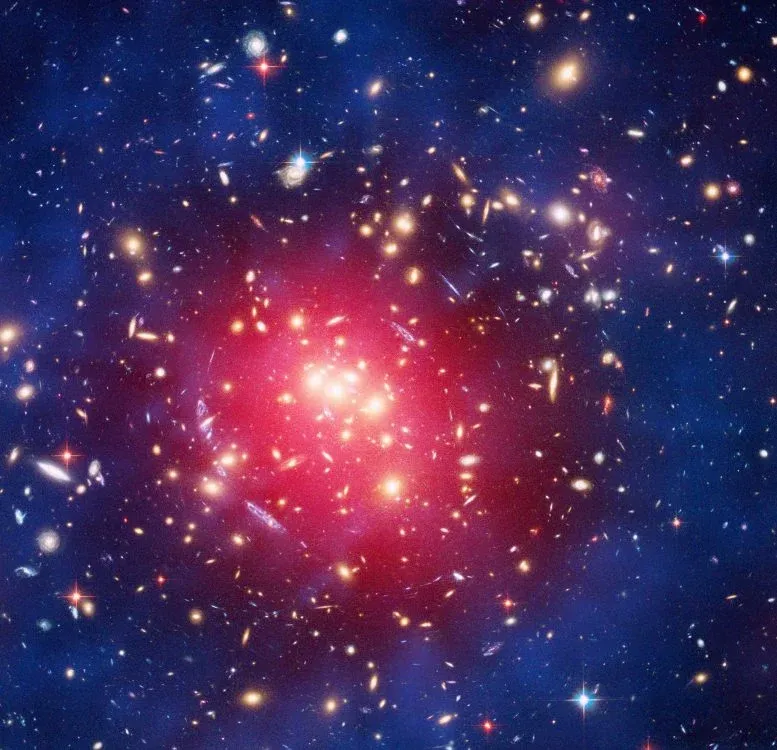
Finally, the image of ZwCl 0024+1652, a distant galaxy cluster, provides evidence for dark matter. Hubble data (blue) shows the effects of dark matter, while another Hubble image shows individual galaxies (yellow and white). Chandra's X-ray observations (red) reveal a huge cloud of superheated gas within the cluster. This hot gas has more mass than all the galaxies combined, offering a look into one of the universe's largest structures.