For decades, scientists have pointed to a very specific carbon signature in ancient rocks as proof of a massive, global upheaval in Earth's early atmosphere. Basically, our planet took a huge gulp of oxygen between 2.5 and 2 billion years ago, setting the stage for all the complex life we enjoy today (like, say, us). This oxygen boom supposedly triggered a worldwide shift in the carbon cycle, leaving behind a tell-tale isotopic fingerprint in buried microbial matter.
But a new study from Caltech is now suggesting that this fingerprint — found in rocks from Karelia, Russia, a site considered a cornerstone of the theory — might not be a global signal at all. Instead, it could be the geological equivalent of a very localized fender bender, not a planet-wide pile-up.
The Case of the Misunderstood Rocks
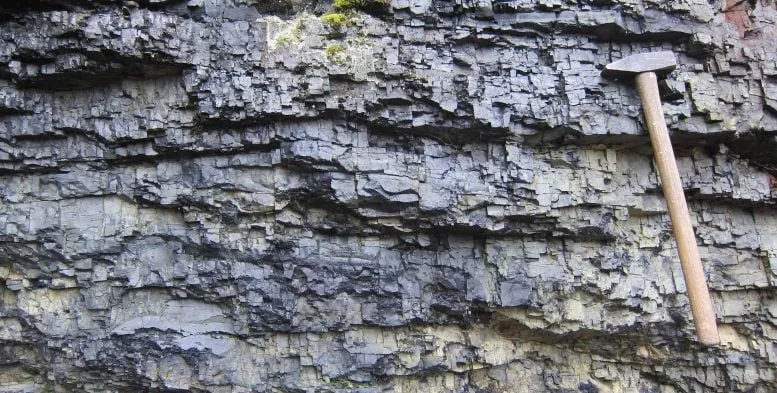
Nivedita Thiagarajan, a Caltech researcher, explains that the big debate revolves around an "unusual carbon-isotope signal" that was long seen as definitive proof of a worldwide environmental change. Her team decided to get up close and personal with gases trapped in tiny pockets within rocks from Russia's Zaonega Formation – which, fun fact, is one of the oldest known fossil oil fields. Because apparently that's where we are now: looking for clues about Earth's distant past in ancient oil fields.
We're a new kind of news feed.
Regular news is designed to drain you. We're a non-profit built to restore you. Every story we publish is scored for impact, progress, and hope.
Start Your News DetoxThey found that the quirky carbon signature in these rocks could be explained by some seriously dramatic local events. Think: a giant sheet of magma muscling its way into marine sediments, heating them up to a scorching 350 degrees Celsius. This cooked up hydrocarbons like methane and propane, which then bubbled towards the seafloor. Methane-munching microbes had a field day, creating biomass with a very specific, light carbon isotope signature.
Thiagarajan notes that this whole geological-biological chain reaction can perfectly explain the unusual signature. And here's the kicker: some of these 2-billion-year-old signals are eerily similar to what you'd find in modern oil and gas basins. Which, if you think about it, is both impressive and slightly terrifying.
Global Event or Local Drama?
The prevailing theory, called the Shunga–Francevillian event, has relied heavily on these Russian and Gabonese rock samples to argue for a global disturbance. But if the Zaonega anomaly can be chalked up to a localized magma intrusion and subsequent microbial feast, it throws a rather large wrench into the "worldwide event" idea. As Thiagarajan puts it, because Zaonega is such a key site, their findings "raise questions about whether it was truly a worldwide event."
So, what's next? The team is now turning its attention to Gabon, where similar isotopic anomalies have been found. Aivo Lepland from the Geological Survey of Norway, who co-authored the study, spent four months coordinating drilling there. Those rock cores just arrived in Norway in February, ready to be poked and prodded by an international research group later this year. The goal? To see if Gabon's rocks tell a similar story of local drama rather than global catastrophe.
It's a reminder that even when we're talking about billions of years, the devil is often in the details – and sometimes, those details are hiding in tiny gas pockets in ancient oil fields.