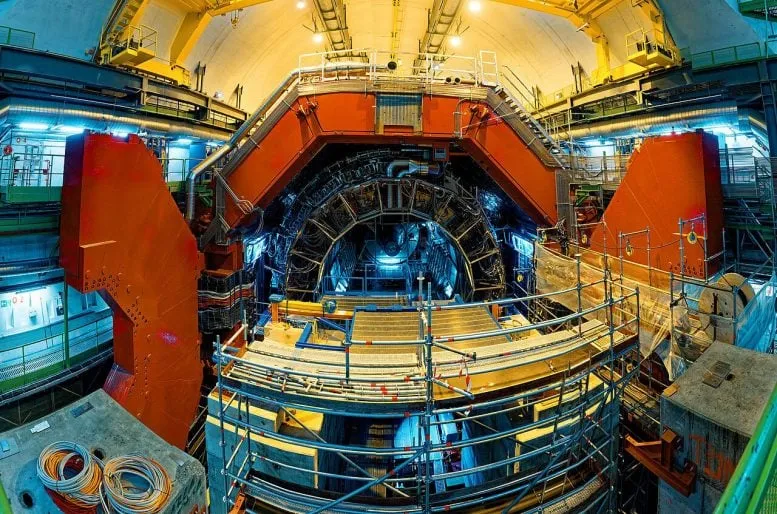
You know how most of the universe's mass just is? Like, the fundamental stuff that makes up everything around us? Well, a new study from CERN's ALICE experiment just peeled back another layer of that mystery, and it turns out the tiniest particles inside atomic nuclei are acting a little... strange.
We're talking about gluons here. These are the particles that basically glue quarks together, and quarks are the building blocks of matter. But here's the kicker: most of the actual mass in the universe doesn't come from the quarks themselves, but from the energy these gluons carry and the super-strong force they create. Understanding their bizarre behavior is a pretty big deal if you want to know why anything has mass at all.
The Ultimate High-Res Scan
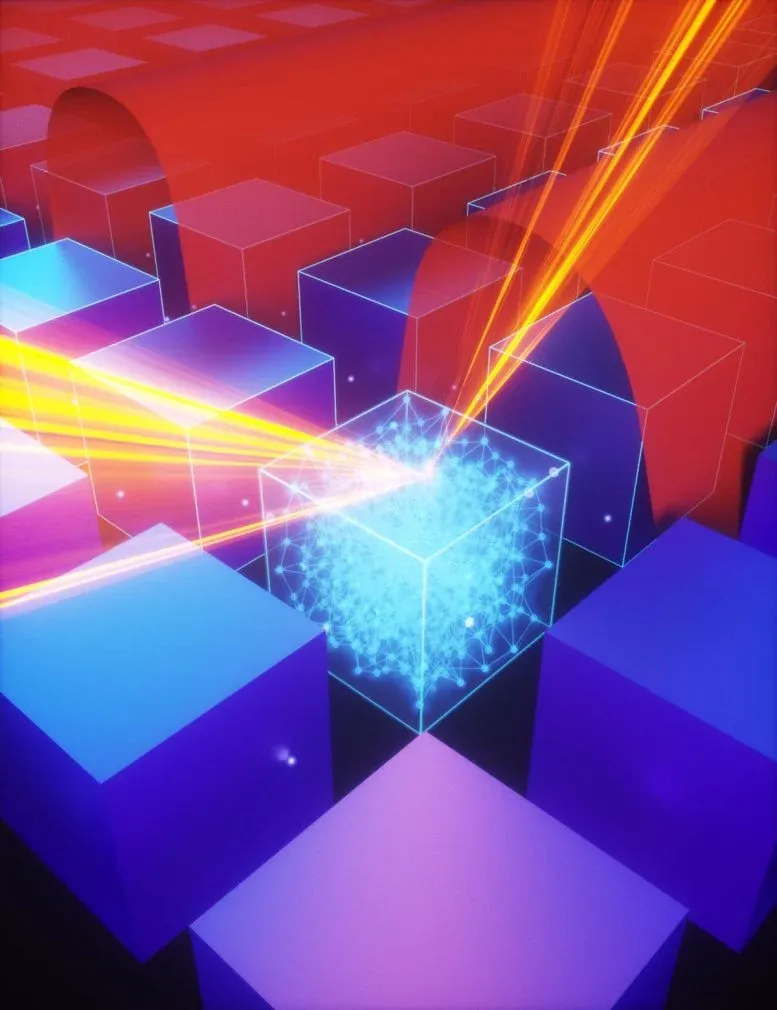
Imagine trying to see something smaller than a proton. That's what ALICE did. Researchers used a method called "incoherent J/ψ photonuclear production." (Yes, it's a mouthful, but stick with it.) Basically, they let lead nuclei zoom past each other in the Large Hadron Collider without actually crashing. This created powerful electromagnetic fields that acted like super-high-energy photons.
We're a new kind of news feed.
Regular news is designed to drain you. We're a non-profit built to restore you. Every story we publish is scored for impact, progress, and hope.
Start Your News DetoxWhen one of these "photons" grazed another nucleus, it briefly popped out a J/ψ particle. And that particle was the key. It let scientists study the gluon structure, not as a blurry average, but with unprecedented detail. Daniel Tapia Takaki, a physicist at the University of Kansas and part of the ALICE team, described it like switching from a pixelated photo to a microscope with a crazy high resolution. They could see features as small as one-quarter the size of a proton. Let that sink in.
When Gluons Get Too Cozy
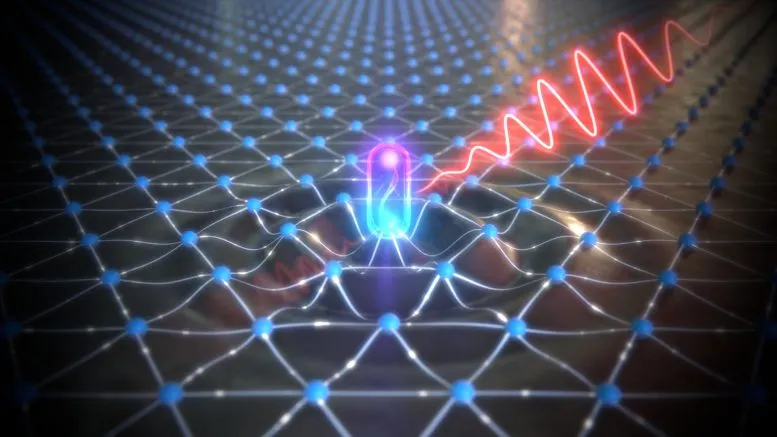
What they found at these ridiculously tiny scales is where things get interesting: gluons start behaving collectively. This phenomenon is called "gluon saturation." It's like they're getting so tightly packed they start bumping into each other and doing a little dance.
Previous theories, like "nuclear shadowing," suggested gluons just overlapped and blocked each other out. But the ALICE data told a different story. At the smallest scales, the production rate of those J/ψ particles was significantly lower than expected by the old models. Instead, it supported gluon saturation – a quantum chromodynamics theory where gluons get so dense they actually limit how many can exist in a given space.
So, instead of just a simple overlap, we're looking at a dynamic, collective behavior deep within matter. Which, if you think about it, is both impressive and slightly terrifying. The universe is always full of surprises, even at its most fundamental level.