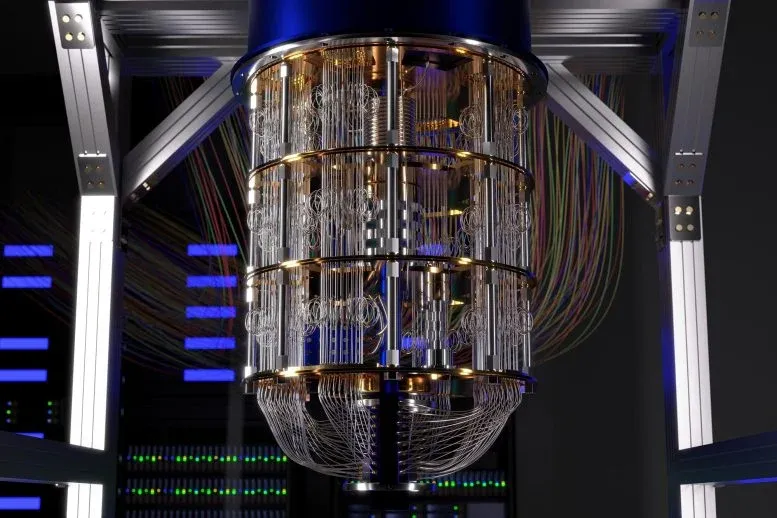
Scientists have used a new error correction method to make a quantum computer solve a problem in about 15 minutes. This problem is too complex for even the best classical computers to handle practically.
This experiment is important because it not only shows a quantum computer solving a tough problem but also includes a way to check if the answer is correct. This has been a big challenge in quantum computing.
Quantum Advantage Achieved
IBM and University of Chicago researchers announced this breakthrough on July 30, 2026. They say it meets the main requirements for "quantum advantage." This means a quantum computer can do a task that classical methods can't, and we can trust the quantum computer's results.
We're a new kind of news feed.
Regular news is designed to drain you. We're a non-profit built to restore you. Every story we publish is scored for impact, progress, and hope.
Start Your News DetoxThe researchers published their findings on arXiv. They designed new quantum circuits that allowed them to achieve both speed and verification. This experiment is one of the largest demonstrations of logical quantum computing to date. The details are also available publicly through the Quantum Advantage Tracker.
Associate Professor Bill Fefferman from UChicago noted that this experiment helps better understand how well quantum states perform even with noise. This increases confidence that the quantum computer is solving a truly difficult problem.
Overcoming Verification Challenges
For a long time, "random circuit sampling" (RCS) has been used to test if quantum computers can beat classical ones. In RCS, a quantum computer creates complex patterns that classical computers struggle to reproduce efficiently.
However, as these calculations get harder, it becomes very difficult to confirm if the quantum computer's output is correct. Eventually, checking the answer itself becomes impossible without making big assumptions about the quantum machine.
The IBM and University of Chicago experiment tackled this by using a more structured approach instead of RCS. They showed that this new method keeps the problem just as hard for classical computers but allows errors to be found during the calculation.
Soumik Ghosh, a PhD student at UChicago, believes that better verification methods will not only strengthen experimental results but also help unlock real-world uses for future quantum computers.
Error Correction with 70 Logical Qubits
The researchers performed one of the largest quantum error correction demonstrations ever, using 70 logical qubits. Logical qubits protect quantum information from errors by spreading it across multiple physical components.
The system completed 2,415 logical two-qubit operations and 468 logical "T gates," which are measures of how complex a quantum circuit is. By encoding the circuit, they reduced the error rate to one-tenth of the physical error rate. This allowed the complex calculation to remain highly accurate despite many operations.
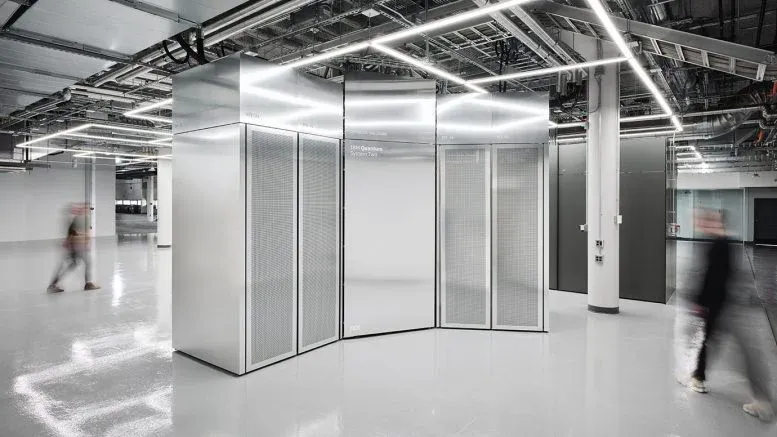
Jay Gambetta, Director of IBM Research, stated that we are now firmly in the quantum advantage era. He highlighted that this milestone gives scientists and businesses a new foundation to trust quantum computers as they tackle problems far beyond classical capabilities.
The IBM quantum computer finished the task in about 15 minutes. Researchers found that many leading classical simulation methods would take an impractical amount of time to complete the same task.
For quantum systems to work on larger scales, reliable error correction and confidence in the results are essential. This experiment, by combining a classically difficult calculation with a way to check its accuracy, marks a significant step toward that goal.
Deep Dive & References
Sampling hard circuits with verifiably high fidelity - arXiv, 2026