Remember that diagram in your science textbook? The one showing two giant water bulges on opposite sides of Earth, caused by the Moon's gravity, through which our planet spins to create high and low tides? Yeah, about that...
A new study, armed with a truly staggering amount of satellite and tide-gauge data, suggests that classic explanation might be, well, completely off-base. Because apparently, that's where we are now: questioning the very fabric of how the ocean moves.
For decades, the two-bulge model has been the go-to. The Moon pulls, water bulges, Earth rotates, and voilà, tides. Even big names like NOAA and NASA have presented variations of this idea. It's elegantly simple, which, as it turns out, might be its undoing.
We're a new kind of news feed.
Regular news is designed to drain you. We're a non-profit built to restore you. Every story we publish is scored for impact, progress, and hope.
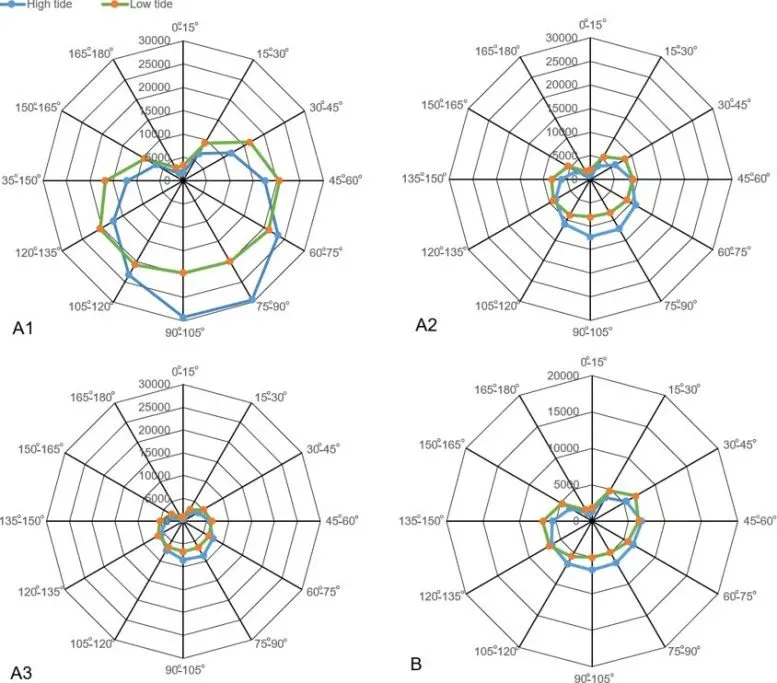
Start Your News DetoxResearchers Yongfeng Yang, Jiajia Yuan, and Mingyuan Fan decided to actually check this model. They used data from the Jason-3 satellite, looking at 362,370 ocean spots over an entire year (2021). They tracked when high and low tides actually occurred, and compared it to the Moon's position relative to each spot.
And the results? Let's just say the bulges weren't bulging where they were supposed to. In the areas where the model predicted high tides (the supposed bulges), a shocking 56.84% of the time, there were actually low tides. And only 43.16% had high tides. The opposite was true in the areas where the model predicted lower water, with high tides occurring 56.38% of the time. The authors, in a beautifully understated scientific jab, stated these findings "directly contradict the physical existence of two water bulges on the Earth’s surface."
When the Gauges Agree
Just to be sure, the team cross-referenced their findings with data from 166 tide-gauge stations, from way back in August 2014. Same pattern. Low tides where the bulges should be, high tides where they shouldn't. It's almost like the ocean decided to play a prank on every textbook writer.
Now, scientists have quietly grumbled about the bulge model for a while. After all, real oceans have continents, varying depths, friction, and the Coriolis force messing with any perfectly symmetrical bulges. But those were theoretical quibbles. This new study provides the observational receipts.
So, if not giant water bulges, then what? The study points to a newer, far more intriguing idea: the ocean basins themselves are doing the heavy lifting. The Moon's gravity subtly deforms the solid Earth, causing the ocean floor to repeatedly rise and fall. This movement of the basin then sloshes the water around, creating our daily tides. Which, if you think about it, is both impressive and slightly terrifying.
This "solid Earth deformation drives seawater to move" concept aligns perfectly with the new data. Low tides happen when the solid Earth rises, making the water shallower. High tides occur when the Earth is compressed, deepening the water. It's a subtle, almost imperceptible dance of geology and hydrodynamics, and it means we might need to update a few diagrams.
Just something to ponder the next time you're at the beach, watching the tide roll in, and realizing the very ground beneath you is part of the show.