Turns out, your mom's age when you were conceived might have left a little note in your cells, influencing everything from your lifespan to how many kids you have. Scientists call these "maternal age effects," and while they're common across the animal kingdom (yes, including us), exactly how they work has been a bit of a mystery.
Kristin Gribble, a scientist at the Marine Biological Laboratory, is on the case. And here's the kicker: most of these age effects aren't exactly a party, especially when mom is on the older side. It's like a biological inheritance you didn't ask for.
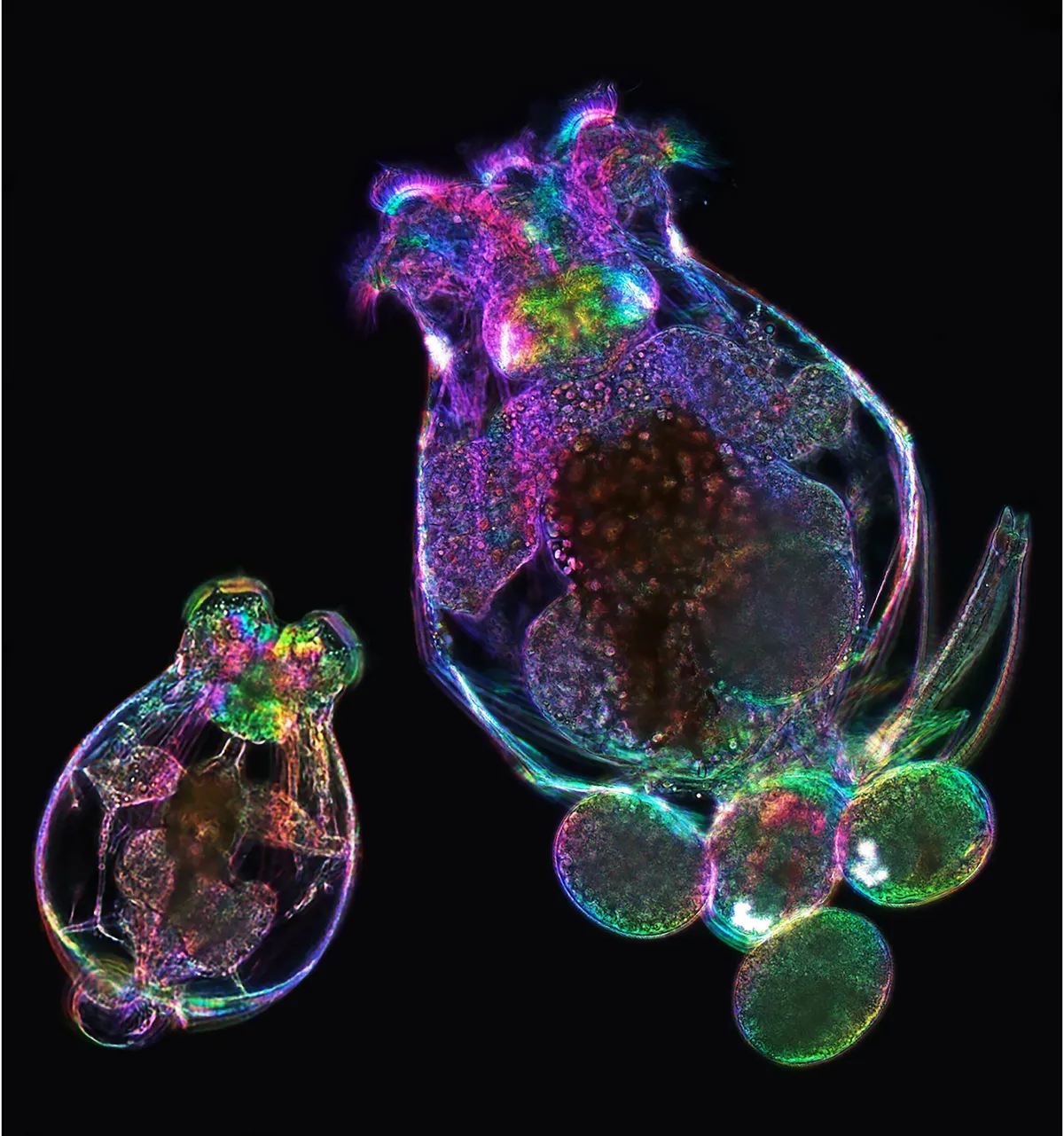
Her lab uses rotifers—tiny, fast-reproducing aquatic critters—as their go-to subjects. Think of them as the speedy little lab rats of the micro-aquatic world. They zip through generations so quickly, researchers can see effects that would take decades (or centuries) in humans. The hope is that what they learn from these microscopic marvels will shed light on our own family trees.
We're a new kind of news feed.
Regular news is designed to drain you. We're a non-profit built to restore you. Every story we publish is scored for impact, progress, and hope.
Start Your News DetoxNot Your Grandma's DNA Damage
Now, here's where it gets really interesting. Gribble's team found that in rotifers, these maternal age effects don't always build up over time, getting worse with each generation. Sometimes, they hit the brakes and even reverse in just one generation. Which, if you think about it, is both impressive and slightly terrifying.
This rapid reversal suggests that the changes aren't due to the usual suspects: DNA damage or cellular wear-and-tear from aging. Instead, the team suspects something called an epigenetic mechanism. This is where genes get switched on or off without actually changing the DNA sequence itself. It's like the instruction manual is being re-read with different emphasis, rather than having words deleted.
Specifically, they're zeroing in on "histone modifications"—tiny chemical tags that can turn genes up or down. They're also looking at mitochondrial DNA, which is almost exclusively passed down from the mother and could be a carrier pigeon for maternal age information.
And just to complicate things, it seems some rotifer strains are better equipped to handle older moms. In one strain, offspring from older mothers actually lived longer. Because apparently, some genes just want to defy expectations.
Why Does This Even Happen?
Here's the head-scratcher: if offspring from older mothers often have shorter lives and fewer babies, natural selection should have ironed out these traits ages ago. Yet, these effects persist across countless species.
Gribble's theory? Natural selection just isn't that concerned with what happens later in life. Most rotifers (and many other animals) do their major reproducing when they're young and spry. By the time they're older, they've already had most of their offspring. So, there's less evolutionary pressure to produce perfectly healthy babies at an age when you're mostly just trying to remember where you left your glasses.
Gribble is now fascinated by how information leaps across generations. How does a grandmother's environment really affect her grandchild? Understanding these molecular whispers could unlock new insights into human health and even lead to more personalized medicine. Because, as Gribble points out, your health isn't just about your genes; it's also a story told by your mother, grandmother, and great-grandmother. Let that sink in the next time you blame your genes for something. It might be your great-grandma's genes instead. You're welcome.