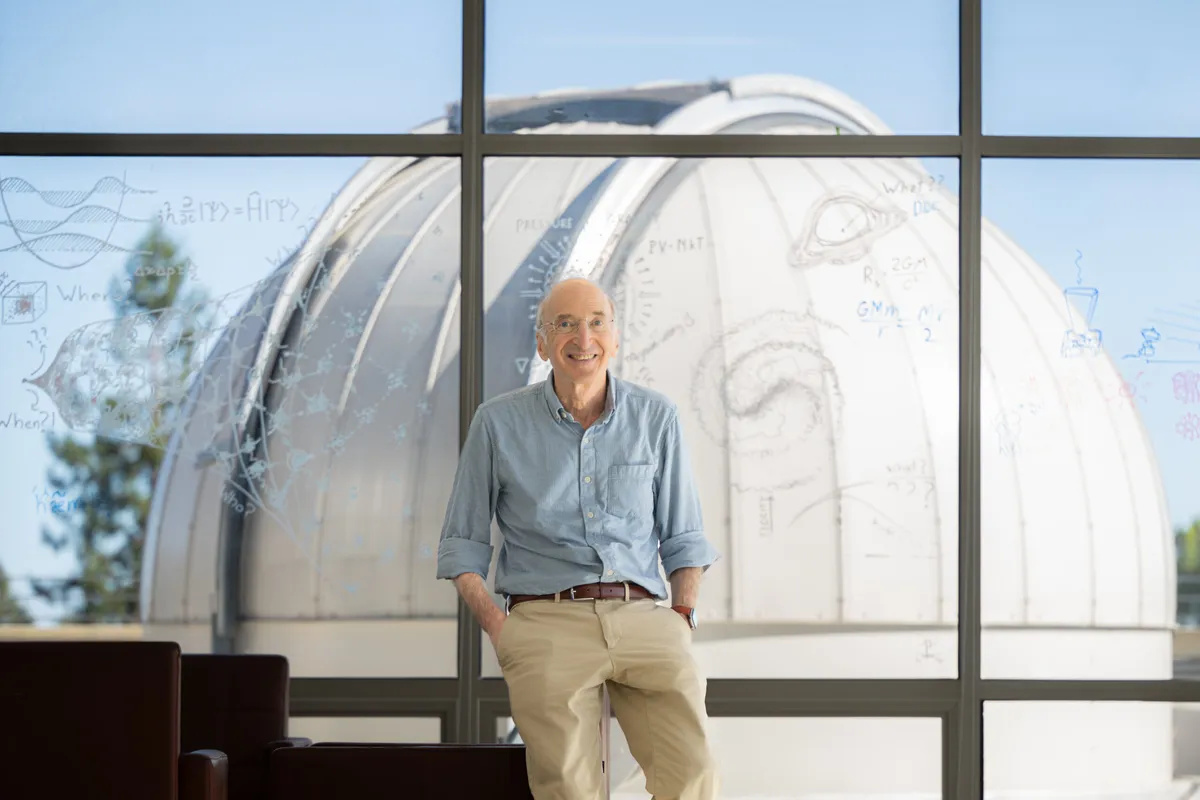
For years, physicists were pretty sure the universe was hitting the brakes. Slowing down, cooling off, taking it easy. Then, in 1998, UC Berkeley's Saul Perlmutter and his team dropped a cosmic bombshell: the universe isn't slowing down; it's flooring it. Accelerating. Expanding faster than ever. Which, if you think about it, is both impressive and slightly terrifying.
This discovery wasn't just a fun fact; it completely upended our understanding of the cosmos, gave birth to the concept of "dark energy" (because what else do you call an invisible force pushing everything apart?), and earned Perlmutter a Nobel Prize. Not a bad day at the office.
Perlmutter recently shared the origin story of this mind-bending moment in UC Berkeley News's "After Office Hours" series. Turns out, even Nobel laureates have their "aha!" moments, often preceded by a healthy dose of doubt and meticulous cross-checking.
We're a new kind of news feed.
Regular news is designed to drain you. We're a non-profit built to restore you. Every story we publish is scored for impact, progress, and hope.
Start Your News DetoxThe Universe's Unexpected Plot Twist
The big reveal came when Perlmutter's team crunched data from distant exploding stars — supernovae. They expected to see a curve indicating a decelerating universe. Instead, the graph showed something entirely different: a universe speeding up. Imagine baking a cake, expecting it to rise, and finding it's somehow levitating out of the oven. That kind of surprise.
Scientists, it seems, live for these kinds of cosmic curveballs. They're the universe's way of saying, "You thought you knew me? Think again." But accepting such a monumental shift in understanding isn't instant. It took months of rigorous testing, re-testing, and head-scratching before the team finally believed their own data.
Now, the entire field of cosmology is scrambling to figure out what this "dark energy" actually is. It makes up roughly 68% of the universe, yet remains stubbornly invisible and unidentifiable. It's like the universe's most powerful, most elusive ghost.
Learning to See What's Really There
Perlmutter also shared a crucial insight: early on, his team would (unconsciously) tweak computer bugs until the results matched what they expected to find. It's a common human tendency, even for brilliant scientists, to look for confirmation of existing beliefs.
This led to a pivotal change: they started using "blind analysis." Essentially, they hid the results from themselves during the analysis phase. It's the scientific equivalent of putting on a blindfold while solving a puzzle, just to ensure you're not cheating yourself. This practice is now standard, keeping scientists open to whatever reality throws at them, no matter how wild.
And that's where we are now: the universe is expanding at an accelerating rate, driven by a mysterious dark energy we can't see, touch, or explain. It's a puzzle so profound, it makes you wonder what other secrets the cosmos is holding back. And frankly, we're here for the next surprise.