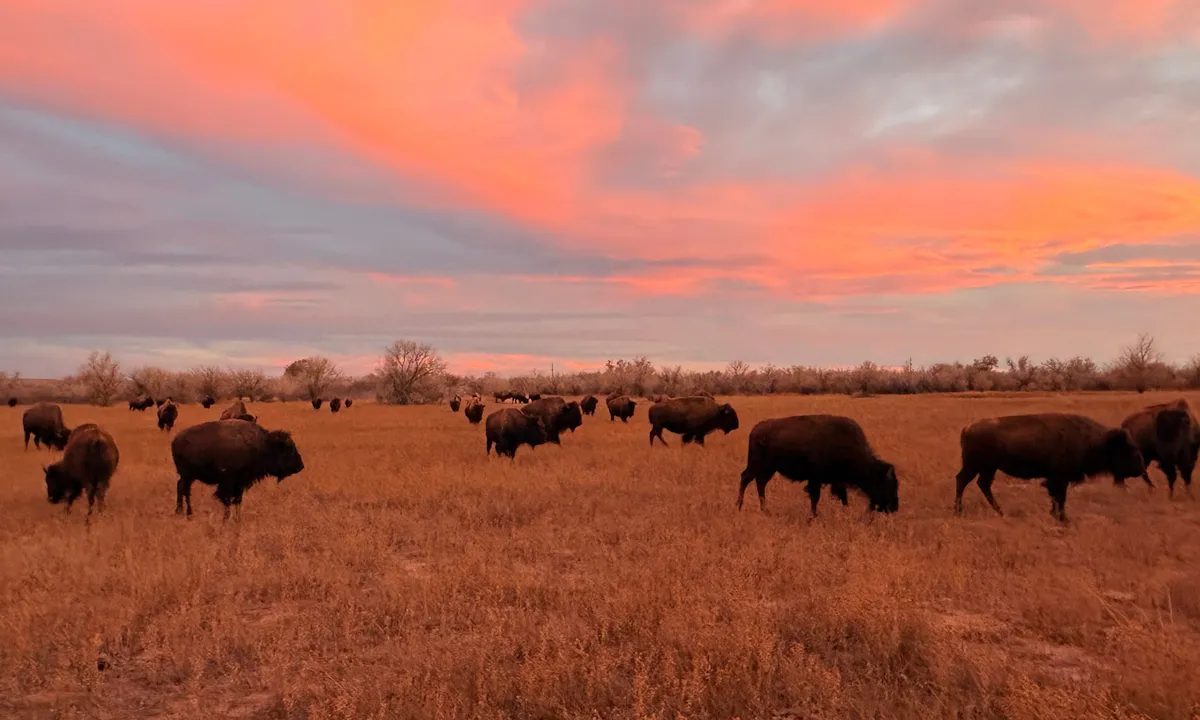
In 2015, the Ute tribe in northeastern Utah had a problem that most ranchers would envy: their bison herd was simply too large. These magnificent, shaggy giants, culturally central to the Ute people, were starting to wander off tribal lands. Something had to give.
Enter AJ Kanip, a tribal leader then tasked with figuring out how to manage a thousand-pound, free-roaming asset. Now Chief Operating Officer for Ute Tribal Enterprises, Kanip faced the kind of challenge that keeps you up at night: how to turn a beloved, spiritually significant animal into a profitable enterprise without, well, losing its soul.
“How do I balance that out, a respectful balance between this animal that is very special towards our people, and how do I follow within the business plan for profit?” Kanip asked. “It’s not easy.”
We're a new kind of news feed.
Regular news is designed to drain you. We're a non-profit built to restore you. Every story we publish is scored for impact, progress, and hope.
Start Your News DetoxMore Than Just Meat
Kanip and his team didn't just find a solution; they built a thriving business. They navigated federal regulations, constructed the necessary facilities, and created the Ute Bison Meat Company. Today, it's not just generating income for the tribe; it's providing food security for local communities. Which, if you think about it, is both impressive and slightly terrifying when you consider the sheer logistics of moving a bison.
This success wasn't built on standard ranching practices alone. For the Ute, bison aren't just livestock. They're a living connection to their heritage. “Our elders tell us that the bison is not cattle or beef,” Kanip explained. “They remind us that the animal comes from the open range. There’s a certain spirit that comes with them.”
So, the Ute management team blends modern Western ranching techniques with deep Indigenous knowledge, focusing on observing the animals and their innate connection to the land. Kanip recalls a wildfire that swept dangerously close to their ranch. He braced for the worst, but the fire, almost miraculously, barely touched their land.
Kanip sees this as a sign that their unique, respectful approach is working for everyone involved – the tribe, the land, and the bison themselves. “It was then that we started to realize…what we’re doing must be approved by the bison,” he said. And who are we to argue with a bison?
This blend of tradition and science, Kanip stresses, is crucial for sustainable growth. Bison, after all, have survived centuries of challenges. Their continued presence, and the Ute's innovative approach, offer a powerful lesson for the future. As Kanip puts it, “The American bison, a resilient animal, will continue to teach as long as we listen.” And probably as long as they don't wander into someone's backyard.