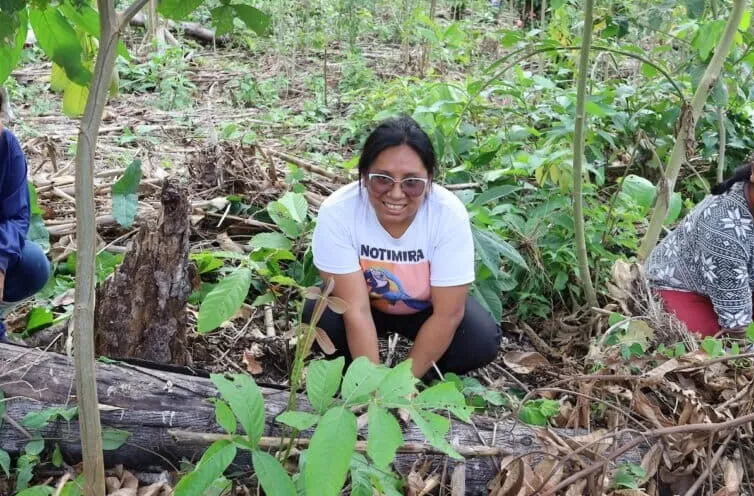
In the remote corners of Peru, where the Andes meet the Amazon, a silent agricultural battle is brewing. Indigenous Machiguenga women are on a mission to save their ancestral potato crops, not just from the usual pests, but from the relentless march of modern farming. Because apparently, even potatoes need a superhero.
Take Gabriela Loaiza Seri from San José de Koribeni, a Machiguenga community nestled in Cusco. She'll tell you the origin story of these crops, and it's not what you'd find on a seed packet. It involves Kashiri, the Moon, who once taught a young woman how to plant sacred seeds. From those celestial lessons sprang yuca, magona potatoes, and shonaki (a sweet corn root). Since then, it's been the women's job to keep these vital plants thriving. No pressure.

The Potato Problem
Fast forward a few millennia, and that ancient knowledge — and the crops themselves — are facing a very earthly threat. Loaiza Seri points to the rise of monocultures, where farmers plant just one crop, and intensive agriculture as the villains in this story. These practices are shrinking the genetic diversity of native species, including the yucas that once fed Indigenous communities year-round. It's like someone decided a buffet was too much work and just started serving plain toast.
We're a new kind of news feed.
Regular news is designed to drain you. We're a non-profit built to restore you. Every story we publish is scored for impact, progress, and hope.
Start Your News DetoxEven well-intentioned external projects have, ironically, pulled communities away from their chacras, those small, traditional farming plots that are the heart of their food system. But where there's a problem, there's often a determined group of women ready to tackle it. Enter the Mujeres Emprendedoras association, stepping in to ensure these ancient potatoes, and the stories behind them, don't become just another footnote in agricultural history.