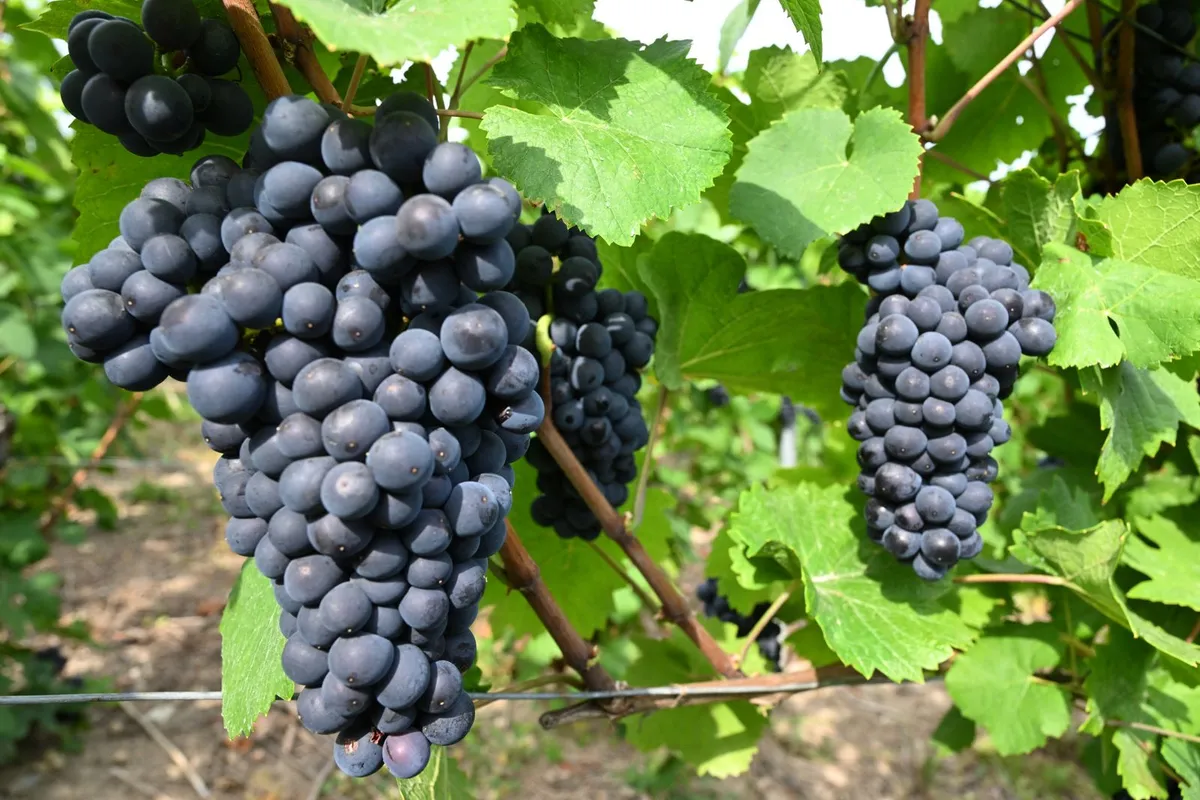
Pinot noir is a popular red wine. It comes from the Vitis vinifera grape, which has thin skin. These grapes are hard to grow, earning pinot noir the nickname "heartbreak grape."
Despite the challenges, many people love pinot noir. New research suggests this love has lasted for generations.
Ancient Grapes and Modern Wine
Researchers looked at grape seeds from old sites in France and Spain. These seeds, called pips, date from the Bronze Age to the late Middle Ages. This covers about 4,000 years, from 2300 B.C.E. to 1500 C.E.
We're a new kind of news feed.
Regular news is designed to drain you. We're a non-profit built to restore you. Every story we publish is scored for impact, progress, and hope.
Start Your News DetoxScientists took DNA from 49 seeds and compared it. They looked at the ancient pips and modern grape types.
The oldest seeds were from wild grapes. But around 500 B.C.E., some seeds started to have very similar DNA. This suggests people stopped growing wild grapes. Instead, they began taking cuttings from plants they liked. This method, called "clonal propagation," is still used today.
Jazmín Ramos Madrigal, an evolutionary genomicist, noted that people like what they like. Once they found a good grape, they kept growing it. Ancient civilizations were good at this, and we benefit from it today.
One of these cloned seeds was "genetically identical" to today's pinot noir grapes. This seed was found in a medieval hospital toilet in France. It dates back to the 15th century, when Joan of Arc lived.
Ludovic Orlando, a geneticist who led the study, said Joan of Arc could have eaten the same grapes we do.
Laurent Bouby, an archaeobotanist and co-author, said they don't know if the pinot noir fruit was eaten or made into wine. However, the seed was found in France, a country known for wine. So, it's possible winemakers used this clone 600 years ago.
A Long History of Favorite Grapes
An earlier study in 2019 found a 900-year-old seed from central France. It was a perfect match for the modern Savagnin blanc grape.
These findings show that growers have been happy with pinot noir grapes for centuries. They haven't felt the need to change them much. Orlando explained that the grape was kept and propagated as a clone, like a photocopy, for centuries.
Michele Morgante, a geneticist, noted that some grapes today are only a few generations from their original domestication. This is unusual. For example, modern corn hybrids are thousands of generations away from their start. Wine grapes are only five to ten generations away.
Scientists don't know if wines from centuries ago tasted the same as today's. Many things affect wine flavor, like where it grows and how it ferments.
Looking to the Future
Researchers plan to keep studying old grapes. They want to learn more about how humans and grapes have evolved together.
They also hope to find old grape types or traits. These could help make modern grape plants stronger against climate change.
The scientists believe studying genes linked to traits like flowering and ripening could show how grapes adapted to past climates. This could also reveal changes in farming practices over time.