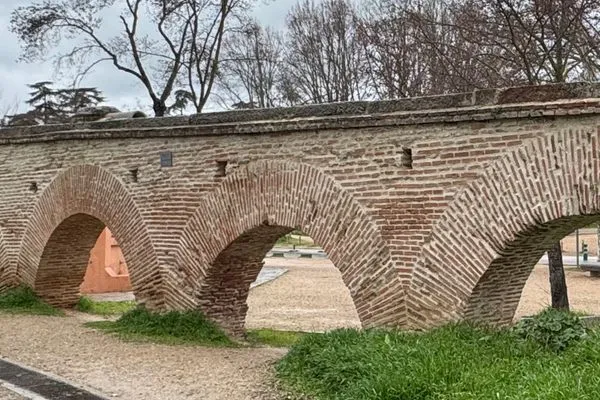
Madrid, city of grand plazas and even grander fountains, holds a secret in plain sight. Tucked away in the sprawling Casa de Campo park, a rather modest 18th-century aqueduct quietly goes about its business – or rather, went about its business, moving water for royal gardens.
Built in 1778, the Acueducto de La Partida was designed to ferry water from the park's lake to the royal orchards at Huerta de la Partida. Its architect? None other than Francisco Sabatini, the same royal design wizard responsible for some of Madrid's most iconic structures, like the Puerta de Alcalá. Because apparently, even master builders have to deal with plumbing.
Sabatini's Side Hustle
Sabatini wasn't just about the big, flashy palaces. He also dabbled in bridges within Casa de Campo, like the Puente de la Culebra, though historians still debate just how much credit he deserves for those. It's a charming thought: the architect behind the city's glittering showpieces also meticulously planned how to get water from here to there across a stream.
We're a new kind of news feed.
Regular news is designed to drain you. We're a non-profit built to restore you. Every story we publish is scored for impact, progress, and hope.
Start Your News DetoxWhat's truly wild is how many Madrileños, even those who frequent Casa de Campo (one of Europe's largest urban parks), have no idea this historical gem exists. The park actually boasts several old aqueducts, all part of a larger, forgotten irrigation network. So, while folks are out jogging, cycling, or just trying to find a quiet spot for a picnic, they're often blissfully unaware they're trotting over centuries of engineering.
The Acueducto de La Partida is the oldest of these surviving water-movers. It got a spiffy restoration in 2016 and now stands proudly near the lake's paths. It might not rival the colossal Roman aqueduct in Segovia, but it's a delightful reminder that Madrid always has another layer to peel back. And this one comes with a Sabatini original label.