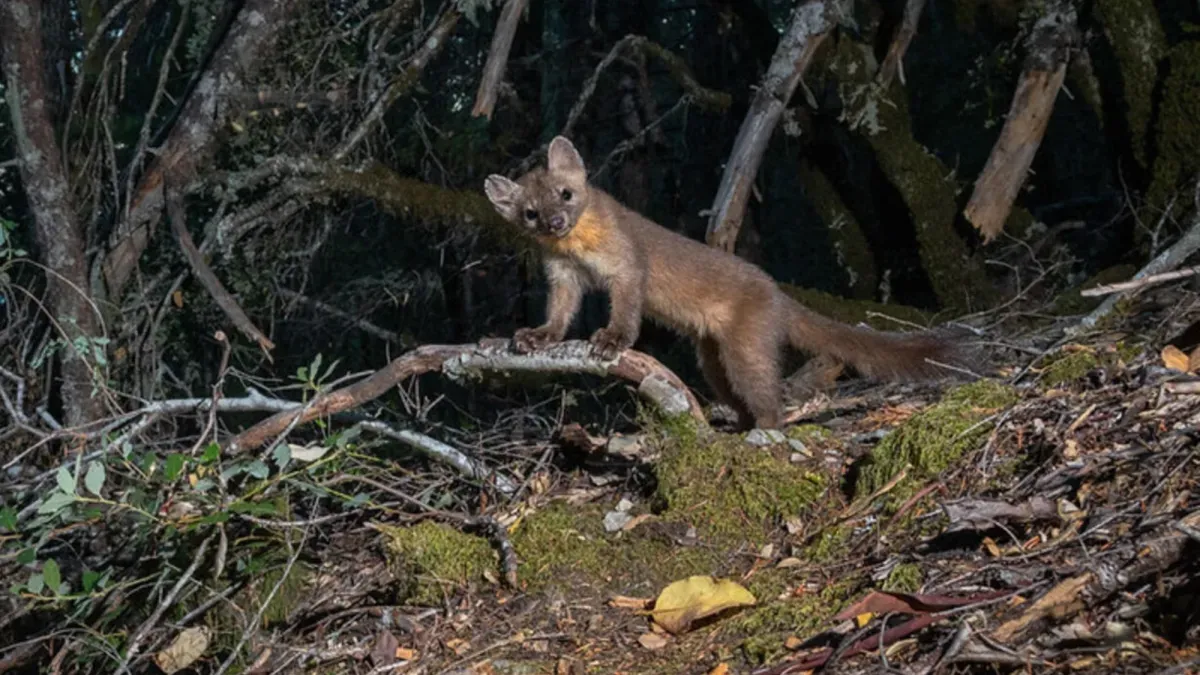
A small ferret-like carnivore that nearly vanished in the 20th century is quietly recovering in California's coastal forests. Researchers tracking the coastal marten—a weasel relative weighing just 1.5 to 3 pounds—found 46 individuals living in the Klamath region of northern California, a sign that conservation efforts are beginning to work.
These secretive animals were once spread across northern California, southern Oregon, and Washington. But fur trapping and logging devastated their populations so thoroughly that by the 1990s, scientists thought they might already be gone. A U.S. Forest Service biologist's discovery of a small surviving population in coastal northern California in 1996 changed that trajectory. Today, coastal martens are listed as threatened under the Endangered Species Act, and researchers from Oregon State University are working to understand what these animals need to survive.
Over three months, OSU scientists used non-invasive methods—remote cameras and hair snares—to document the marten population without disturbing them. What they found reveals why these animals are so particular about where they live. At higher elevations, martens cluster along forested ridgetops where winter snow is reliable. Lower down, they prefer ravines and wetlands in coastal forests. Across all elevations, they demand old-growth conditions: forests with canopy cover above 50%, large-diameter trees, snags, and hollow logs. This structural complexity gives them the cover they need to hunt birds and small mammals like chipmunks, and the hiding spots they need to avoid predators.
We're a new kind of news feed.
Regular news is designed to drain you. We're a non-profit built to restore you. Every story we publish is scored for impact, progress, and hope.
Start Your News DetoxThat specificity is both the problem and the opportunity. Martens can't adapt to simplified, logged-over forests. But it also means their recovery is measurable: protect the right kind of forest, and the martens will return. The population remains small and fragmented, and threats persist—rodent poison, vehicles, disease, and ongoing habitat loss. Yet the fact that researchers can now count individual martens, study their movements, and identify what forests support them suggests the species has moved from the edge of extinction to something more stable. The slow rebound is a reminder that recovery from near-extinction takes decades, but it's possible.