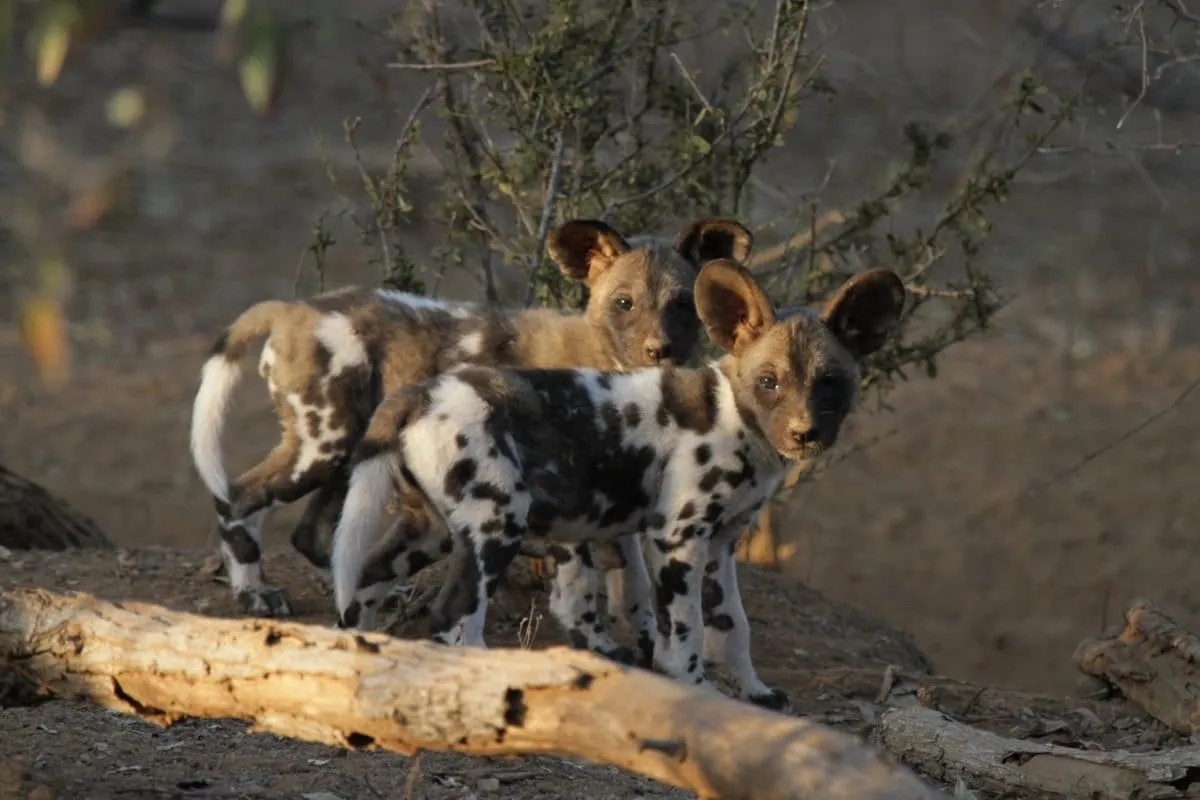
For the first time, researchers have watched African wild dogs do something their teeth were never supposed to let them do: eat fruit. In Botswana's Okavango Delta, all 11 members of a wild dog pack were observed picking up jackalberries—the fruit of the African ebony tree—with their teeth and swallowing them almost whole, day after day from July to August 2022.
Wild dogs are built for one thing. Their teeth are shaped to snap through bone and flesh with ruthless efficiency. The idea that they'd turn to fruit seemed almost contradictory to what we know about them. Yet here they were, doing exactly that.
Megan Claase, a researcher with the NGO Wild Entrust's Botswana Predator Conservation program, documented the behavior and published the findings in Canid Biology & Conservation. She noticed something revealing about when the fruit-eating happened: much of it occurred near the pack's den, just before the adults set out to hunt. Her hypothesis was simple—they were fueling up. The older dogs lower in the pack hierarchy, who had less access to fresh kills, were eating fruit throughout the day, likely stretching their nutrition further than meat alone would allow.
We're a new kind of news feed.
Regular news is designed to drain you. We're a non-profit built to restore you. Every story we publish is scored for impact, progress, and hope.
Start Your News DetoxWhy This Matters
This isn't just a quirky animal fact. It suggests something deeper about how wild dogs adapt when circumstances shift. The pack's pups would eventually learn this behavior too, since wild dogs raise their young cooperatively and regurgitate food back at the den—meaning jackalberries could become a learned survival skill passed down through generations.
Safari guide Duncan Rowles had actually witnessed a neighboring pack eating the same fruit a year earlier, though the observation hadn't been formally recorded. It took Claase's systematic study to bring the behavior into the scientific record.
The Okavango Delta, where this was documented, is one of Africa's most intact wilderness areas. But even here, wild dog populations face pressure. Understanding how they adapt—what they'll eat when meat is scarce, how they stretch resources across a pack—matters for conservation. It's a reminder that animals we think we fully understand still have surprises in them, and that survival often looks more flexible than our categories suggest.