After years of staring at falling test scores like they were a particularly bad stock market chart, there's finally some good news on the education front. The latest federal numbers show that the youngest students are making real gains in reading and math. Which, let's be honest, is a relief.
Matthew Soldner, acting commissioner of the National Center for Education Statistics, practically did a happy dance, calling the new report an "optimistic release." And honestly, after the last few years, we'll take it.
The Nine-Year-Olds Are Alright
These are the old-school, paper-and-pencil tests given to 9- and 13-year-olds every few years, many of the questions unchanged since the 1970s. Over 30,000 students sat for them between October 2024 and March 2025. And the 9-year-olds? They're practically acing it.
We're a new kind of news feed.
Regular news is designed to drain you. We're a non-profit built to restore you. Every story we publish is scored for impact, progress, and hope.
Start Your News DetoxThey showed solid progress in both reading and math, across the board. Even the kids who typically struggle showed improvement, which Soldner found "just so encouraging." Why the breakthrough? These kids were only four when the pandemic hit. They started school mostly after the chaos of remote learning, meaning they likely dodged the bullet of missing crucial early lessons.
It's a glimmer of hope that we might actually be able to claw back some of the learning losses that, let's face it, started even before COVID-19 decided to crash the party.
The Thirteen-Year-Old Problem
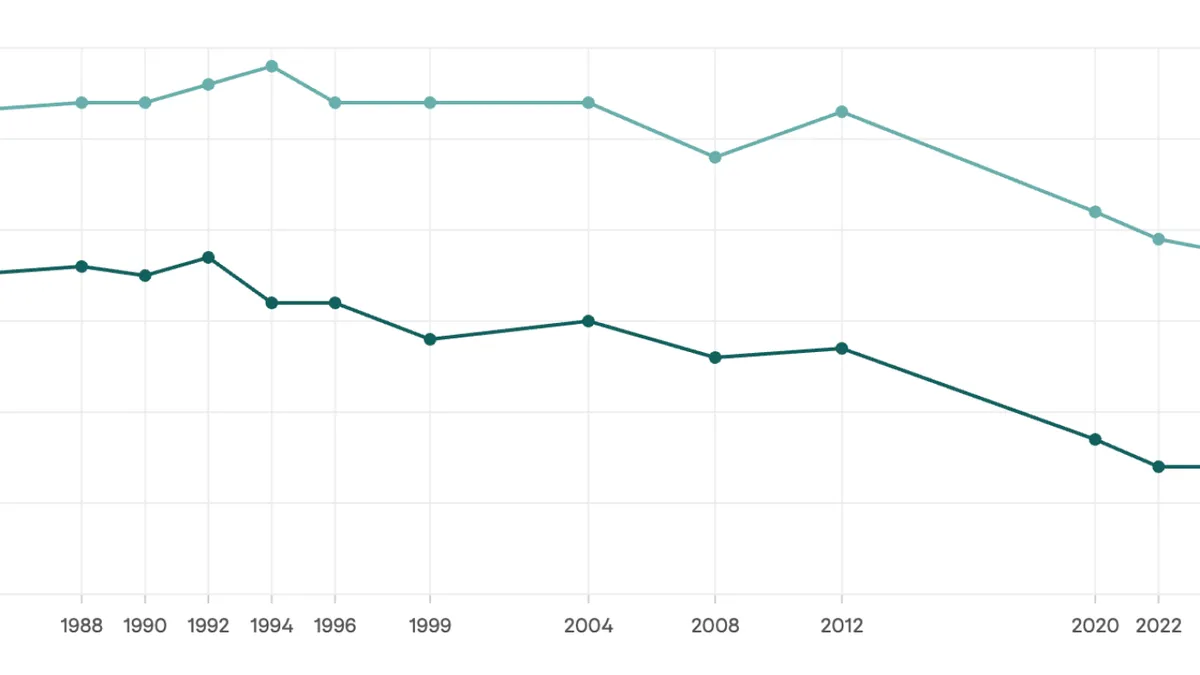
Now, for the slightly less celebratory news. The 13-year-olds? Their scores haven't budged an inch since the last assessment. Their reading scores are still chilling below pre-pandemic levels, a dip that includes everyone from Hispanic and white students to economically disadvantaged and suburban kids. On average, their current reading performance is roughly equivalent to what students were doing back in 1971. Let that sink in.
Lesley Muldoon, executive director of the National Assessment Governing Board, didn't mince words, saying the lack of progress "raises huge questions" and should "serve as a catalyst for change." Unlike their younger counterparts, these 13-year-olds were in second or third grade when the pandemic slammed schools shut. Those crucial years for foundational reading and math skills were disrupted, and it shows.
Beyond the scores, there's another eyebrow-raising trend: fewer students are reading for fun. In 1984, a respectable 35% of 13-year-olds picked up a book for pleasure daily. In 2025? Just 14%. For 9-year-olds, it's 37%, which is still a significant drop from past decades. Maybe they're just too busy doomscrolling, but it's a thought.
And for the 13-year-olds, most of the math progress made between 1978 and 2012 has evaporated. The lowest-performing students are back to where they started in '78. Muldoon stressed that we need to throw some serious focus on the middle school years, because, she argues, progress is possible.
Here's the kicker: this will be the last of these specific long-term trend reports for a while. Budget cuts to the U.S. Education Department mean these tests are on hiatus until 2033. So, we'll have to wait a decade to see if those middle schoolers finally catch up. No pressure.