


Most plants follow the script: they photosynthesize, they reproduce sexually, they make seeds the traditional way. Balanophora plants tore up that script entirely. They've abandoned photosynthesis, ditched sexual reproduction, and somehow thrived as underground parasites feeding off tree roots across tropical Asia—all while breaking nearly every rule biologists thought plants had to follow.
These aren't your garden variety rebels. Balanophora species spend most of their lives hidden beneath soil in the steep, mossy forests of Japan, Taiwan, and Southeast Asia. They emerge only during flowering season (July through October) looking more fungal than botanical—small, alien, almost unrecognizable as plants at all. Some species have evolved to reproduce entirely asexually, creating seeds without any fertilization required.
"My long-standing aim is to rethink what it truly means to be a plant," says Kenji Suetsugu, a botanist at Kobe University who has spent years tracking these organisms through humid forest floors. "For many years I have been fascinated by plants that have abandoned photosynthesis, and I want to uncover the changes that occur in the process."
We're a new kind of news feed.
Regular news is designed to drain you. We're a non-profit built to restore you. Every story we publish is scored for impact, progress, and hope.
Start Your News DetoxWhat the genome reveals
In a new study published in New Phytologist, Suetsugu and colleagues at the Okinawa Institute of Science and Technology sequenced the genomes of multiple Balanophora species to understand how they pulled this off. The key finding: these plants have stripped their plastid genome—the genetic material that normally powers photosynthesis—down to almost nothing. Yet they're still alive, still metabolizing, still reproducing.
"It is exciting to see how far a plant can reduce its plastid genome, which at first glance looks as though the plastid is on the verge of disappearing," Suetsugu explains. "But looking more closely we found that many proteins are still transported to the plastid, showing that even though the plant has abandoned photosynthesis, the plastid is still a vital part of the plant's metabolism."
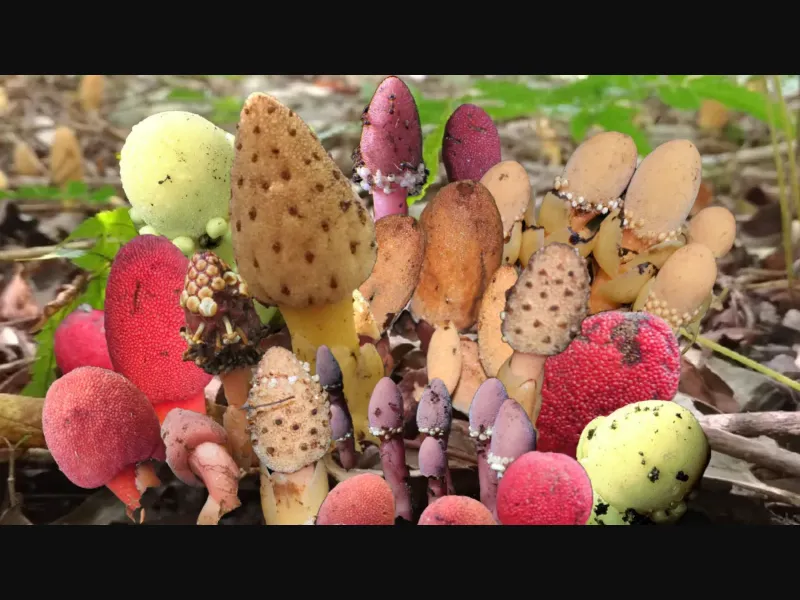
The asexual reproduction likely evolved multiple times independently across the group. That's the real puzzle—and the real advantage. In the patchy, isolated forests where Balanophora grows, finding a sexual mate or pollinator is unreliable. Plants that could clone themselves had a massive edge. Some species may have started with the capacity for asexual reproduction as a backup plan, then eventually abandoned sexual reproduction altogether as they spread across the Japanese archipelago and into Taiwan.
Camel crickets and cockroaches, of all creatures, played an unexpected role in this story—pollinating the plants that still reproduced sexually, while asexual species simply stopped bothering with the whole pollination game.
Why this matters
Barring a few exceptions, plants are supposed to need sunlight. They're supposed to need sex. Balanophora shows that "supposed to" is doing a lot of work in that sentence. These plants have rewritten the evolutionary playbook so thoroughly that they barely qualify as plants by the old definition—yet there they are, persisting in their dark forest niches, proving that life finds far more solutions than our textbooks predict.
Next, Suetsugu's team wants to map exactly what the Balanophora plastids are still producing—what metabolic work they're doing to keep these parasites alive inside their hosts' roots. The genomic story is only half the picture.





