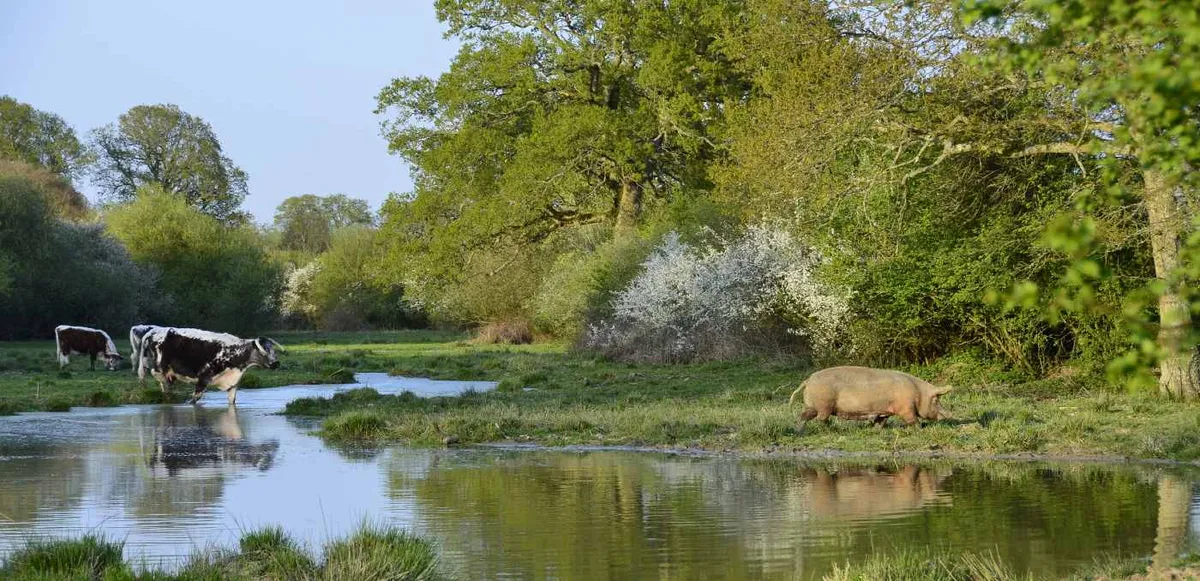
Twenty-five years ago, Charlie Burrell and Isabella Tree faced a choice on their 3,500-acre West Sussex farm: keep fighting the land, or let it fight back. They chose the latter. Now birdwatchers arriving at Knepp Estate need to steady their binoculars.
The breeding bird population has grown from 55 individuals across 22 species in 2007 to 559 individuals across 51 species in 2025. That's a 916% increase—not through reintroduction programs or careful management, but by stepping back and letting nature reassemble itself.
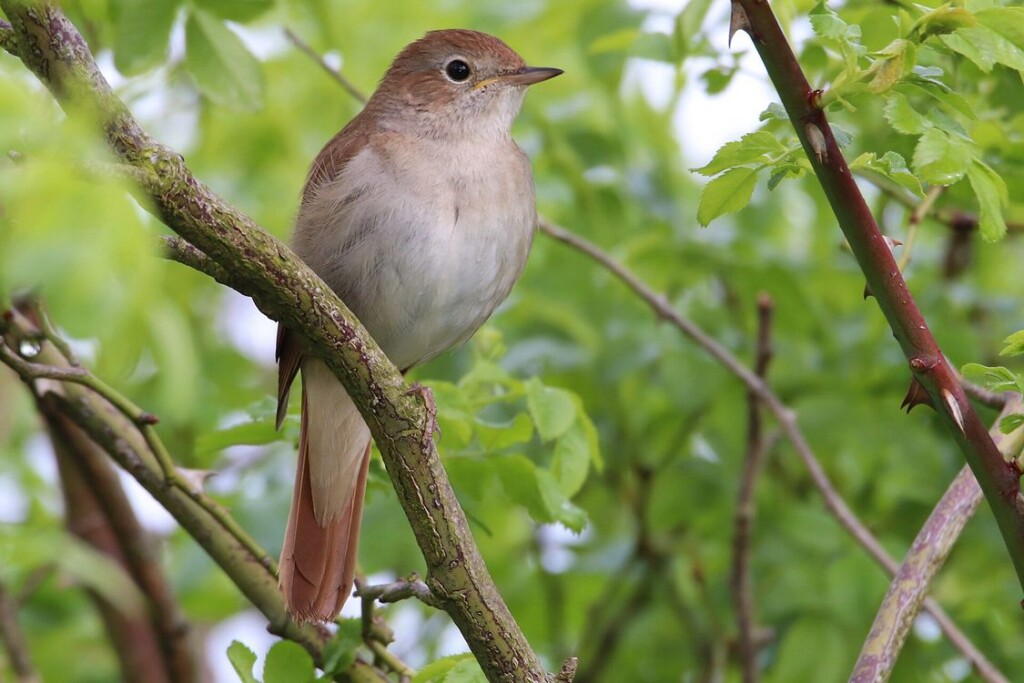
Common nightingale in Belgium – credit CC 4.0. Warrieboy
The scale of what's happened here is quietly staggering. More than a dozen of the species now breeding on the estate are nationally threatened with extinction. Knepp now holds 1% of Britain's entire nightingale population—on a single farm 41 miles outside London. Turtle doves, peregrine falcons, white storks, and all five species of British owls have moved in. One summer, the Butterfly Conservancy counted 87 male purple emperor butterflies on the grounds; by 2025, that number had jumped to 283 in a single day's count.
We're a new kind of news feed.
Regular news is designed to drain you. We're a non-profit built to restore you. Every story we publish is scored for impact, progress, and hope.
Start Your News DetoxThe turning point came in 2011 when the River Adur, which runs through the estate, was restored to its natural state. Four weirs were removed, agricultural drainage channels were filled in, and the river was allowed to meander again. The wetlands that formed around it became a magnet for wading birds, amphibians, water insects, and fish—including sea trout and endangered plants like black poplars. On any given day now, visitors describe encounters that feel like wildlife documentaries: white-tailed eagles being mobbed by kites, beavers crossing paths with wading storks.
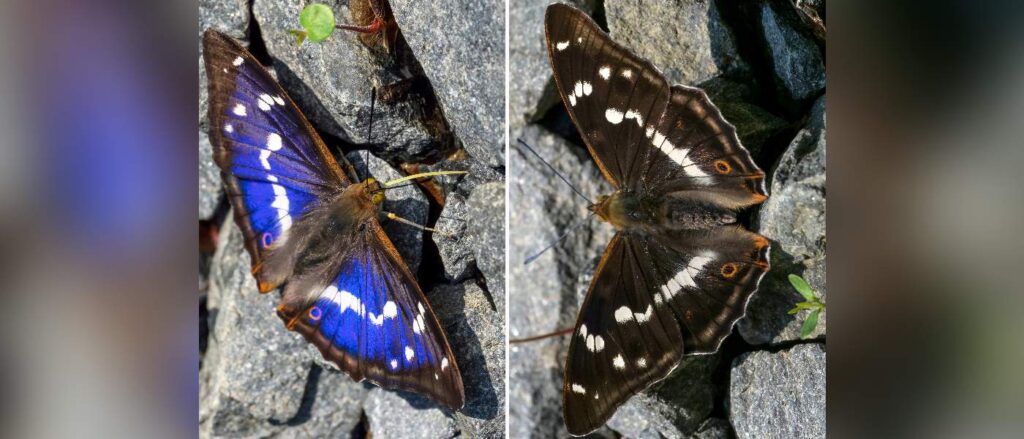
A male (left) and female (right) purple emperor butterfly – credit, SWNS
The numbers extend beyond birds. Dragonflies and damselflies increased 871% between 2005 and 2025, with species diversity up 53%. Red-eyed damselflies alone surged 2,000% over five years. The estate now hosts nearly all English megafauna, including the barbastelle bat—Europe's rarest mammal.
What makes Knepp remarkable isn't just what's returned; it's how. Burrell and Tree achieved this by, as Isabella put it, "taking our hands off the wheel." Rather than imposing a management plan, they removed the industrial agriculture that had kept the land locked in a single state. They control the herbivore population with free-range organic wild meat, which actually helps maintain the mosaic of habitats that different species need. The estate now funds itself through camping, glamping, safari tours, and rewilding courses—turning conservation into a viable business.
A quarter-century in, this recent bird survey reads like a postage stamp on a larger envelope: proof that even a small pocket of land, when allowed to return to its native state, can become a refuge for species teetering toward extinction. The question now is whether other landowners are watching.