Betty Parsons was, to put it mildly, a titan of post-WWII American art. She was the dealer with the uncanny eye, the one who took a gamble on names that now practically define modern art: Barnett Newman, Jackson Pollock, Mark Rothko. Within a year of opening her gallery in 1946, she had them all. Let that sink in for a moment.
She wasn't just a gatekeeper; she was a launchpad. Robert Rauschenberg? Ellsworth Kelly? Parsons gave them their first shows. And in an era when others wouldn't, she championed women artists like Lee Krasner, alongside queer artists and artists of color. She spotted talent like a divining rod finding water, and she stuck to her convictions, market trends be damned. Which, if you think about it, is both impressive and slightly terrifying.
The Artist Behind the Legend
Here’s the rub: for all her monumental influence as a dealer, Parsons's own artistic career has been largely overlooked. A familiar story for women artists, sadly. The irony is delicious: while she was busy making other artists famous, she never once showed her own work in her gallery or promoted herself during her six-decade career. Because apparently, that’s just how some legends roll.
We're a new kind of news feed.
Regular news is designed to drain you. We're a non-profit built to restore you. Every story we publish is scored for impact, progress, and hope.
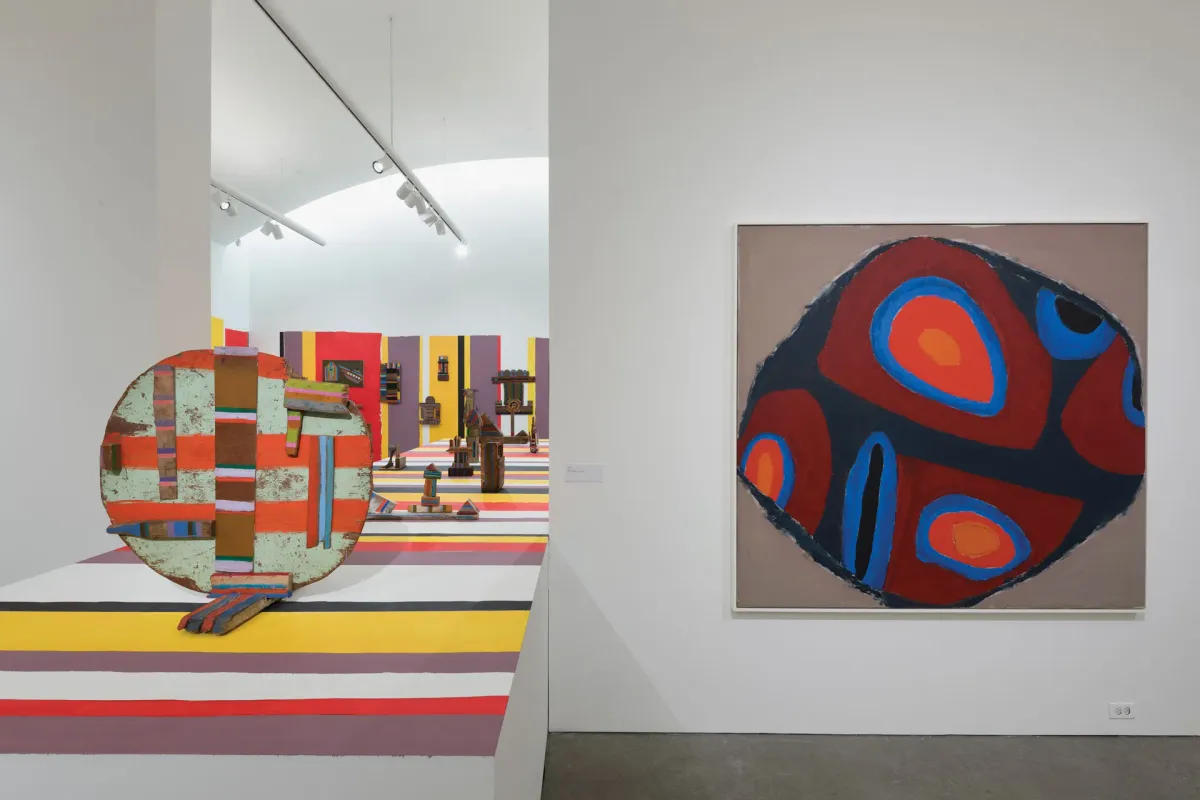
Start Your News DetoxBut now, the Hessel Museum of Art at Bard College is finally righting that historical wrong. “Betty Parsons: An Expanded World” is the first major exhibition to give Parsons her due as both an artist and a gallerist. Curated by Kelly Taxter and artist Amy Sillman, the show spans her entire creative life, from early 1920s watercolors to the driftwood sculptures she crafted in the 70s and 80s. Over 80 paintings and sculptures are on display, alongside a new documentary by G. Anthony Svatek and Kaija Siirala.
The film offers some crucial backstory. Born into a wealthy New York family in 1900, Parsons’s world shifted at 13 when she experienced the radical Armory Show. She called it "crucial," immediately understanding that art was her destiny. Soon after, she was studying sculpture with Gutzon Borglum – yes, the guy who carved Mount Rushmore. Talk about starting with a bang.
After a brief marriage at 20, she decamped to Paris, immersing herself in an expatriate lesbian community that included Gertrude Stein. She returned to the US in the 1930s, eventually settling in New York, where her first solo exhibition was a hit. She continued to show her work for two decades, even as her gallery career began to overshadow her painting and sculpting.
Her Canvas, Her Rules
As the Betty Parsons Gallery became a household name in art circles, she quietly stopped exhibiting her own art commercially. It made sense, in a way; people saw her as the gallerist. But this new exhibition proves that her creative fire never dimmed. It just moved to a different studio.
The show reveals Parsons's distinctive artistic journey. Her watercolors from the 20s and 30s, painted in France, are remarkably skilled. Landscapes and seascapes from Brittany and the Canary Islands hint at the abstraction she'd embrace later. Take Canary Islands (1932), with its rolling hills and a tiny building—a quiet precursor to the bold forms to come.
Her first abstract piece, Untitled (1948), was inspired by a rodeo, of all things, featuring U-shaped symbols and architectural forms. She embraced acrylic paint, a new, fast-drying medium, and made it sing with vibrant color combinations and a remarkably light touch. She painted stripes freehand, no tape needed, and set colorful shapes against stark backgrounds.
Parsons was a restless traveler, finding inspiration in her journeys and the quiet magic of morning light. African Dawn (1972) glows with pinks, blues, browns, and oranges, perfectly capturing a sunrise. UFO (1974) features a large red geometric shape flanked by blue triangles, with a deliberate white space in the middle, inviting the viewer to complete the image. The title suggests the otherworldly, but the shape itself is uniquely Parsons, not a cliché of flying saucers.
In her final decade, Parsons returned to sculpture, collecting weathered wood from the beach and assembling it into totemic, lighthouse-like forms, or purely abstract pieces. She painted them with muted stripes, respecting the natural grain of the wood. These later works show a shift from her earlier bright palette to more subdued tones, a contemplative reflection on aging and the enduring desire to create something lasting. A fitting final act for a woman who spent her life building legacies, only now truly revealing her own.