Plant-based milk alternatives are great, if you're into that sort of thing. But they often come with a bit of a nutritional catch: they're missing some of the good stuff found in cow's milk, like Vitamin B2. Well, scientists just found a rather unexpected solution buzzing around in bumblebees.
Researchers at the DTU National Food Institute in Denmark have figured out how to get certain bacteria to pump out more Vitamin B2 (also known as riboflavin) directly into soy drinks during fermentation. Because apparently, that's where we are now: tiny bee microbes making our oat lattes healthier.
The Buzz on Bee Bacteria
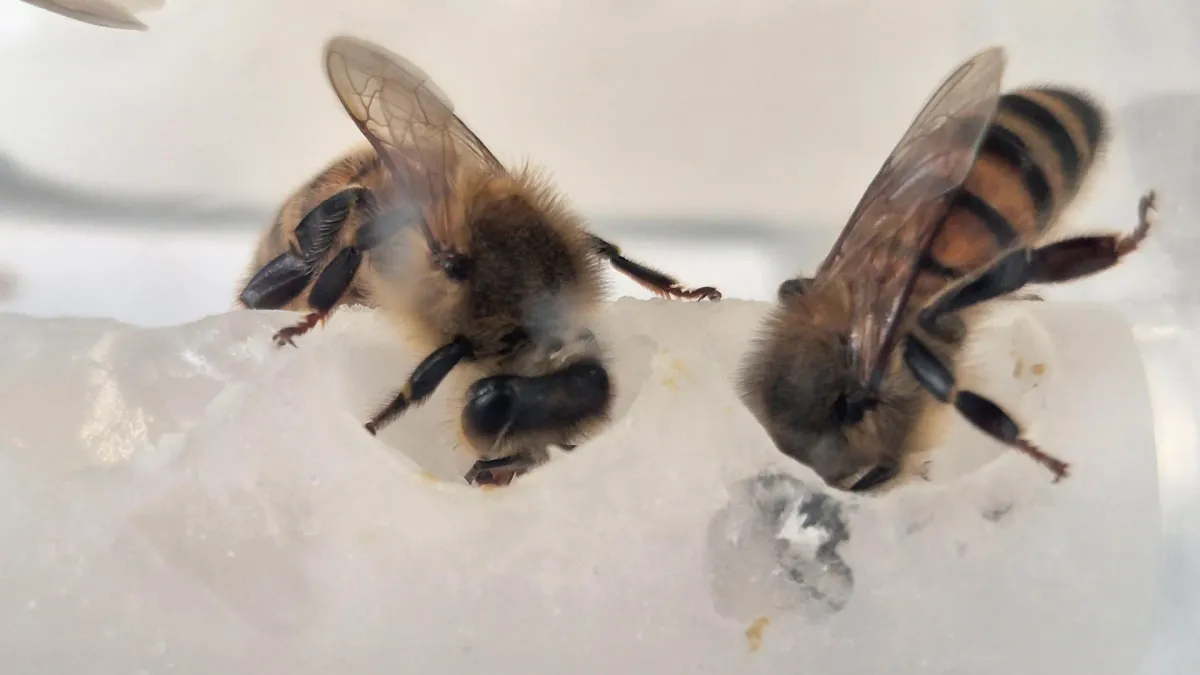
The team needed bacteria that could both ferment soy and produce B2. And where do you find a microbe that's used to a plant-rich diet? The gut of a bumblebee, naturally. "Bumblebees live near plants, and their guts contain many microbes already used to plant environments," explained Postdoc Hang Xiao. Which, if you think about it, is both impressively logical and slightly bizarre.
We're a new kind of news feed.
Regular news is designed to drain you. We're a non-profit built to restore you. Every story we publish is scored for impact, progress, and hope.
Start Your News DetoxTo find the right bug for the job, they developed a lightning-fast screening method. Instead of the old-school petri dish routine, they isolated individual microbes and put them into tiny droplets — each one a microscopic fermentation chamber. This allowed them to test millions of cells in a few hours, a process that used to take months.
They even made a special clear soy medium to get accurate measurements, because apparently, cloudy soy milk is a scientist's nemesis. Then, they exposed these mini-cultures to a compound that helps strong B2 producers thrive. The droplets that glowed the brightest (yes, glowed) were the champions.
The Golden Ticket: Lactococcus lactis
One particular strain of Lactococcus lactis emerged as the star. This little overachiever not only worked brilliantly in soy drinks but kept producing Vitamin B2 even when the levels were already high. It also munched on various sugars, making it quite the flexible fermenter.
There's a catch, of course: it didn't do so hot in rice, oat, or some almond milks. Turns out, our bee-derived bacteria need enough fermentable protein to really get going. So, maybe hold off on the bumblebee oat milk for now.
Still, this droplet-based screening method didn't just save months of lab work; it opened up a whole new way to find useful microbes from nature. Who knew that the secret to better plant-based milk was just a bee's gut away?