Nearly 7,000 memories from across three continents tell a story that datasets alone cannot: birds are getting smaller, and the shift has been happening for decades.
When researchers asked Indigenous and local communities to describe the birds of their childhood versus today, the pattern was unmistakable. Across 283 species and roughly eighty years of recalled observation, average bird body mass had dropped by an estimated 72%. That's not a marginal shift. That's ecosystems fundamentally reorganizing themselves.
Conservation science has always relied on measurement — population counts, habitat maps, trend lines. But there's a problem baked into that approach: most of those records only reach back a few decades. Long-term monitoring programs are expensive and rare. What happened before the first researcher arrived with a clipboard? The answer, it turns out, lives in memory.
We're a new kind of news feed.
Regular news is designed to drain you. We're a non-profit built to restore you. Every story we publish is scored for impact, progress, and hope.
Start Your News DetoxWhat Memory Reveals That Data Cannot
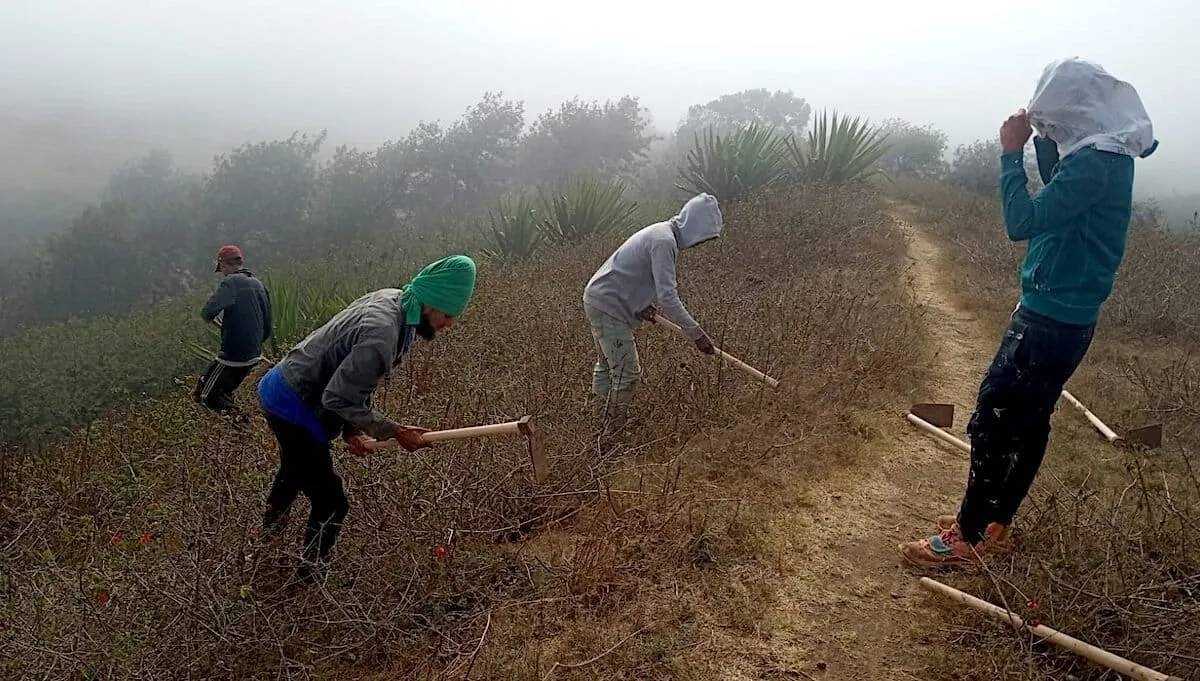
Indigenous and local communities have occupied their territories across generations, watching the same forests, wetlands, and grasslands shift and respond. That continuous presence creates a baseline that scientific institutions simply cannot match. When researchers worked with ten communities across three continents, they weren't just collecting anecdotes — they were accessing a form of long-term monitoring that predates modern ecology by centuries.
The finding aligns with what scientists have already documented in the literature: widespread avian decline, particularly in tropical forests. Capture rates in some Amazonian sites have fallen by roughly half over two decades. But here's what makes this research distinct. The signal emerges not from a single study site or a handful of institutions, but from lived experience accumulated across generations and geographies. It's a different kind of data, and it's revealing patterns that extend far deeper into the past.
The shift toward smaller-bodied birds matters because body size often correlates with resilience, reproductive capacity, and the ability to survive environmental stress. Smaller birds may indicate that ecosystems are becoming less capable of supporting larger species — or that the larger species are being selectively removed or displaced. Either way, it's a marker of profound change.
What's particularly valuable here is the method itself. This research demonstrates that conservation science doesn't have to choose between institutional rigor and community knowledge. When you take Indigenous memory seriously — not as color commentary but as data — you gain access to ecological timescales that Western science alone cannot reach. A researcher with ten years of data can measure change. A community with eighty years of intergenerational memory can reveal transformation.
This approach is already shifting how conservation works in some regions, with Indigenous land management practices increasingly recognized as essential to ecosystem health. The recognition that memory and language carry ecological information as valuable as any database is opening new possibilities for understanding how long these changes have been unfolding — and what might reverse them.