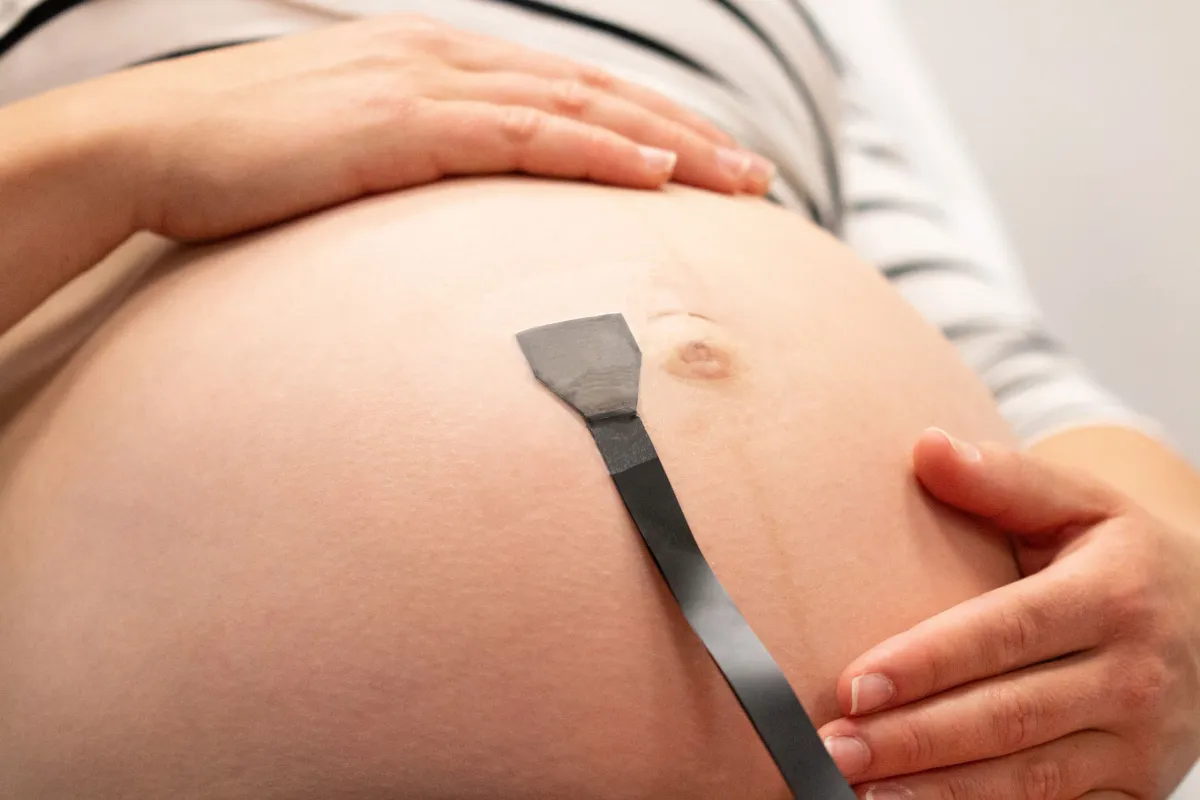
Imagine a tiny, flexible patch that sticks to your belly and can watch over a baby's health for hours, no matter how much they kick or somersault. Engineers at UC San Diego just made that a reality, and it could change prenatal care, especially for high-risk pregnancies.
This isn't your grandma's ultrasound. Most prenatal scans are like a quick peek – a snapshot. This new soft, wearable patch offers continuous monitoring, tracking blood flow and fetal anatomy in real time. It works reliably even as the fetus and umbilical cord do their own thing, which, if you've ever been pregnant or seen a scan, is a lot of moving around.
The Patch That Sees All
The magic here is in the autonomous tracking. The researchers developed clever algorithms that can automatically find and follow the umbilical cord as it zips around. This means the patch keeps collecting steady measurements, even if the mother shifts position or the baby decides it's time for an interpretive dance.
We're a new kind of news feed.
Regular news is designed to drain you. We're a non-profit built to restore you. Every story we publish is scored for impact, progress, and hope.
Start Your News DetoxWhy does this matter? Well, for high-risk pregnancies, complications like preeclampsia or abnormal fetal growth often need continuous oversight. Standard ultrasounds need a trained sonographer manually holding a probe, which isn't exactly a long-term solution. This patch, however, just… stays there. One clinical test even found abnormal fetal signals over a long period, leading to an early C-section that may have saved the baby's life. Let that sink in.
Geonho (Tom) Park, a lead author on the study, noted that this kind of continuous monitoring could improve pregnancy outcomes in ways previously impossible. It's a significant leap, especially for areas with limited access to specialists or equipment.
From Belly to Bluetooth
The team tested the patch on 62 pregnancies, including those with gestational diabetes, preeclampsia, and high blood pressure, and found its measurements matched standard handheld devices. This isn't just a lab curiosity; it's robust.
This breakthrough builds on a decade of wearable ultrasound research at UC San Diego, with Professor Sheng Xu's team previously developing systems for everything from blood pressure to heart activity. The next step? Shrinking the patch into a small, completely wireless electronic device. Because apparently, that's where we are now: tiny, smart patches that know more about what's going on inside than you do. Which, if you think about it, is both impressive and slightly terrifying.