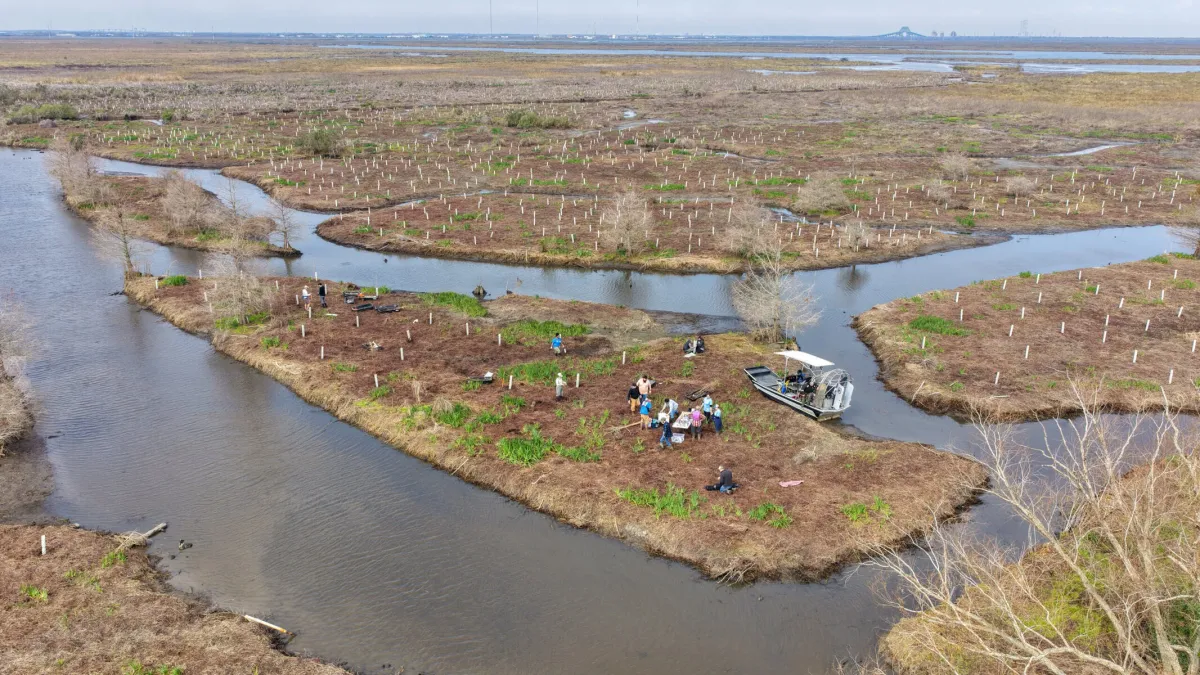
Bald cypress trees have been a part of Louisiana's landscape for thousands of years. These trees, with their feathery leaves, offer shade and thrive in wet areas where most other trees cannot. Blaise Pezold, an ecosystem restorationist, says the cypress brings comfort to Louisianans, like "warm bread at home." As the state tree, it is as legendary as the chestnut tree in Appalachia.
Now, the bald cypress is helping to restore Louisiana's wetlands. The state has lost 2,000 square miles of coastal land in the last century. Without action, this could increase to 5,000 square miles over the next 50 years. The cypress is central to efforts to reverse this land loss.
Bringing Back the Wetlands
Pezold and other environmentalists are working on a four-year project to plant 30,000 trees in Louisiana's Central Wetlands. This area, covering Orleans and St. Bernard parishes, has been severely affected by land loss. Logging and the Mississippi River Gulf Outlet (MRGO), a canal built in the 1960s, damaged the wetlands. The MRGO allowed saltwater into the freshwater ecosystem.
We're a new kind of news feed.
Regular news is designed to drain you. We're a non-profit built to restore you. Every story we publish is scored for impact, progress, and hope.
Start Your News DetoxDuring Hurricane Katrina in 2005, the canal brought a deadly storm surge into St. Bernard Parish and the Lower Ninth Ward. The MRGO was permanently closed in 2009. After its closure, the wetlands' salt levels returned to normal, creating a chance for restoration.
Since 2019, the Central Wetlands Reforestation Collective has been planting cypress trees. This group includes the Meraux Foundation, the Coalition to Restore Coastal Louisiana (CRCL), Common Ground Relief, CSED of the Lower 9th Ward, and Pontchartrain Conservancy. They are working to put cypress trees back and help stop rapid land loss.
For thousands of years, the Mississippi River naturally built up the delta. It carried sediment and deposited it along its banks, forming soil where plants could grow. This created thousands of square miles of swampy wetlands, home to bald cypress and tupelo forests.
However, after colonization, levees controlled the river, stopping new sediment from reaching the wetlands. Cypress forests were cut down for homes. Canals and shipping channels allowed saltwater to flood the wetlands, killing plants. Invasive animals like nutria and wild boar also destroyed vegetation. As sea levels rose, forests and land disappeared.
A Community Effort
Planting thousands of trees can help restore these wetlands. The trees stabilize the soil, protecting it from being washed away. James Karst of CRCL says, "Planting a tree is like an act of defiance here as we’re slowly being sucked away into the ocean." CRCL has planted over a million native plants since 2000.

CRCL has planted two-thirds of its 15,000 trees for the Central Wetlands project. Many volunteers, transported by airboat, help with the planting. Instead of buying seedlings, CRCL runs its own nursery. The seeds come from community members who collect them from cypress trees in New Orleans and nearby areas. This makes it a community-wide effort, centered around a tree deeply rooted in the region.
Andrew Ferris, who runs CRCL’s native plants program, says, "Our wetland ecosystems, which are the backbone of our economy and our culture and our livelihoods, are reliant on the bald cypress tree more than any other plant."
CRCL's seed-gathering campaign involves thousands of locals. The organization asks residents to send in cypress seeds from their yards or other locations, noting where they came from. Ferris and his team keep the seeds in cold water for a month to mimic their natural process. This helps them germinate and grow in the spring. Collecting seeds from the community ensures genetic diversity and trees suited to local conditions. It also helps more people connect personally with the issue of land loss and the hope of reforestation.

Last November, Aicha Keita and nine classmates from Tulane University’s Black Student Union gathered cypress seeds. They wanted to make a positive environmental impact. They found trees marked by a CRCL staffer near Tulane’s football stadium. The students collected seeds, feeling like they were nurturing the start of restoration. Keita said, "Any way that you can restore hope through actionable steps and making change, it feels great."

In the Central Wetlands, reforestation is progressing quickly. Pezold says the project has surpassed his expectations. "We’re seeing our success in real time," he noted. The collective is working to finish the Central Wetlands reforestation and is looking for other sites to continue their cooperative approach.
The trees in the Central Wetlands are still young, protected by white plastic tubes. But Ferris sees the future when he visits sites where CRCL planted trees a decade ago. He says, "These trees are massive. The land that they are holding in place is solid as a rock."
These moments inspire him to keep planting. He hopes to one day bring his grandchildren to see a thriving cypress-and-tupelo forest. He imagines telling them, "This area was a degraded marsh when I was in my twenties, and now we can sit in the shade of these trees." He looks forward to that experience.