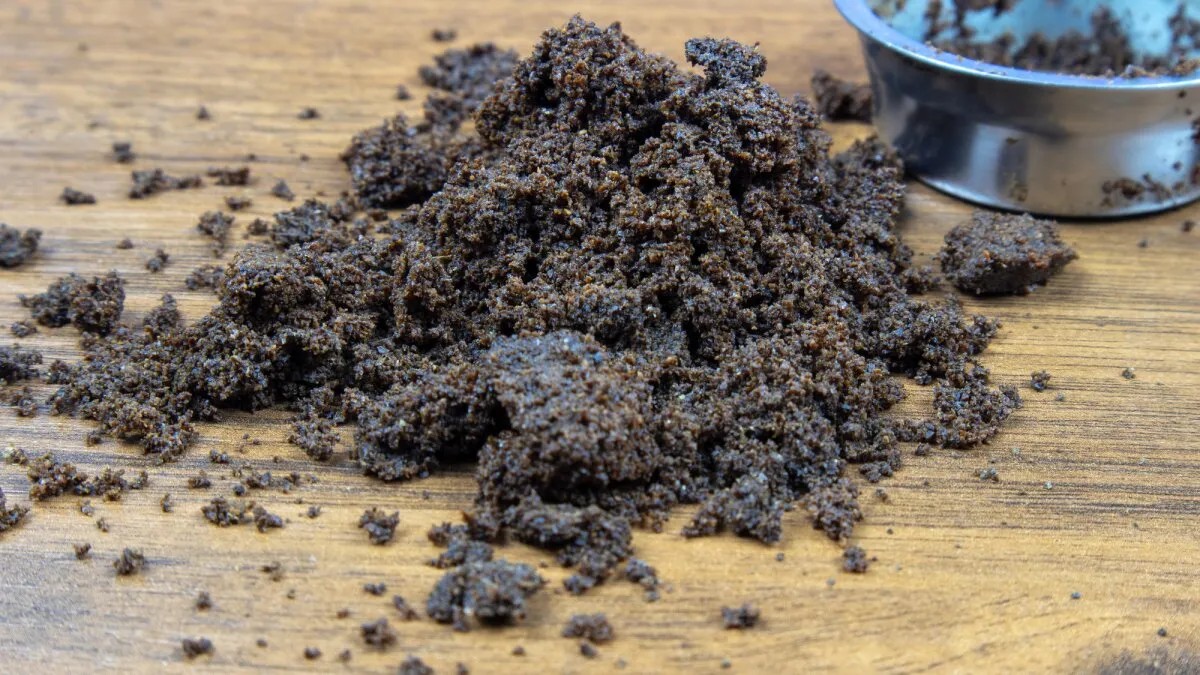
Every single day, humanity collectively downs over two billion cups of coffee. Which is great for morning routines, less great for the mountains of spent grounds we're left with. Most of these fragrant leftovers currently end up in landfills, where they do what all organic waste does: decompose, release methane, and generally make things worse. We're talking anywhere from 8 to 60 million tons annually. That's a lot of lattes going to waste.
But what if your morning brew could eventually keep your house warm? Because that's where we're headed. Researchers in China have figured out how to turn discarded coffee grounds into eco-friendly insulation, potentially replacing the petroleum-based stuff like Styrofoam.
From Landfill to Living Room
Scientists have been eyeing coffee grounds as a resource for a while now. They've been turned into biofuel, helped strengthen concrete by 30% (imagine a building that smells faintly of espresso), and even popped up in 3D printing materials. There's even talk of them protecting our brains from nasty microbes. Because apparently, coffee just keeps on giving.
We're a new kind of news feed.
Regular news is designed to drain you. We're a non-profit built to restore you. Every story we publish is scored for impact, progress, and hope.
Start Your News DetoxThe challenge with making insulation from coffee grounds has always been porosity. Regular grounds are only about 40% porous, which means they don't trap much air. And trapped air is the secret sauce for good insulation. So, the team at China's Shenyang Agricultural University (SAU) got creative.
They started by turning the grounds into biochar — basically, charcoal made from plants. They baked the grounds for a week at 176°F, then cranked up the heat to a scorching 1,292°F for an hour. This process dramatically boosted the porosity from 40% to a much more insulating 71%. Suddenly, those grounds were ready for their close-up.
Next came the really clever bit: a "pore restoration" method. They mixed the porous biochar with propylene glycol to fill all those new tiny holes, then added ethyl cellulose powder to give it structure. This mixture was pressed in a hot mold, then put in a vacuum oven. The vacuum removed the propylene glycol, leaving behind a solid material riddled with empty, air-trapping spaces. Think of it as a tiny, highly efficient sponge for heat.
The results? Impressive. The new material's thermal conductivity dropped six-fold compared to ethyl cellulose alone, making it as effective as commercial expanded polystyrene. They even tested it in solar panels, where it successfully prevented heat from escaping. So, not only is it good for the planet, but it's also genuinely good at its job.
As co-author Seong Yun Kim put it, this approach "contributes to a circular economy." Which is a fancy way of saying: your daily caffeine habit just got a whole lot more sustainable. Now, if only it could make the walls smell like a fresh brew, they'd really be onto something.