After nearly two years studying a peculiar landscape of ridges and hollows on Mount Sharp, NASA's Curiosity rover is wrapping up its deepest dive into what scientists call the boxwork unit — a geological formation that's been reshaping how we understand Mars's past.
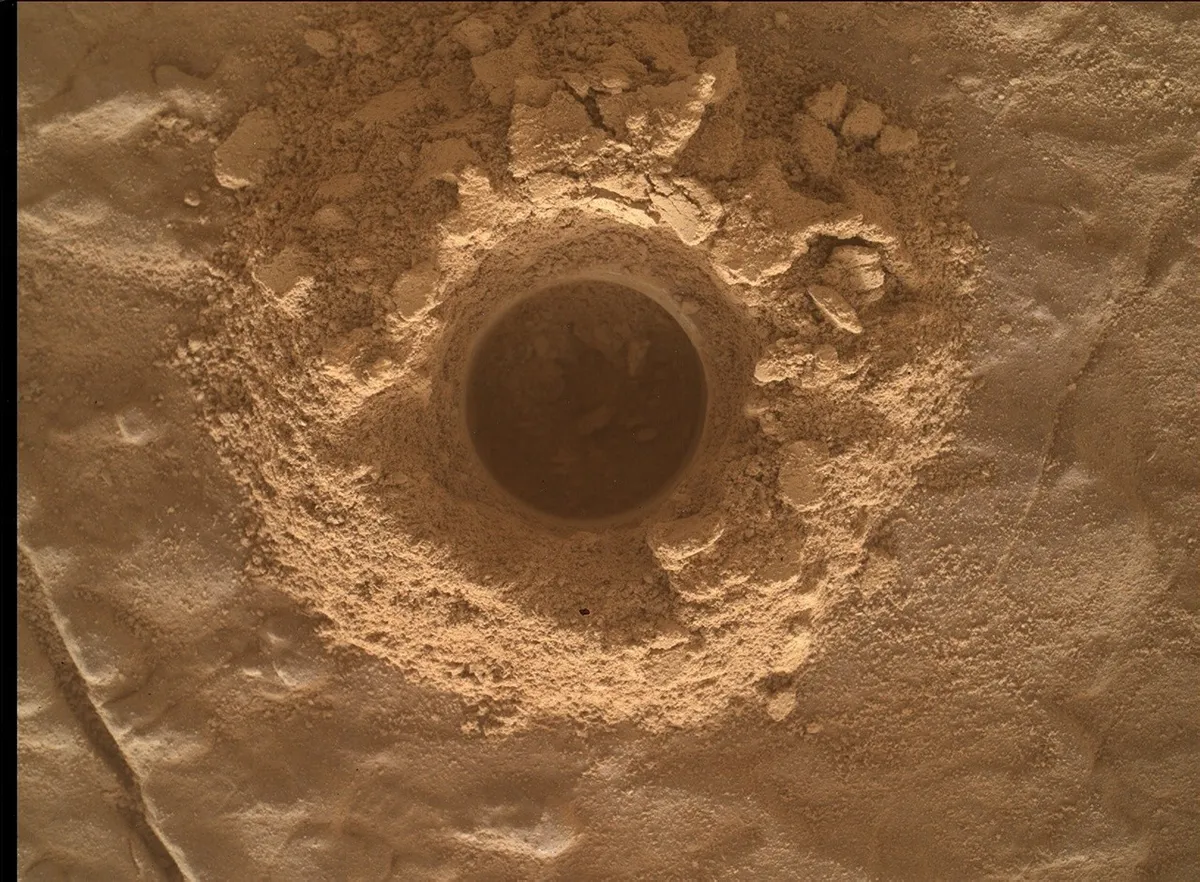
This week, the rover completed its last drilling operation at a site called Nevado Sajama 2, then pivoted northeast to begin Phase 4 of the exploration campaign. It's the kind of transition that might sound routine in a mission report, but it marks something significant: Curiosity is moving toward the final measurements of a landscape that's been revealing surprising clues about how water once shaped the Martian surface.
Four Phases of Discovery
The science team structured this boxwork campaign into four distinct phases, each building on the last. It started in early 2024 with initial observations that led to the first drill at Altadena. Then came a period of regional mapping, where the rover stopped to examine distinctive features like the ridge nicknamed Volcán Peña Blanca. The heart of the work — Phase 3 — consumed most of the past six months, with intensive study of the most well-defined ridges and hollows, including drill sites at Valle de la Luna and Nevado Sajama.
We're a new kind of news feed.
Regular news is designed to drain you. We're a non-profit built to restore you. Every story we publish is scored for impact, progress, and hope.
Start Your News DetoxNow, in Phase 4, Curiosity is hunting for final details. The team wants to understand the contacts where the boxwork unit meets adjacent geological formations to the east and south. These transition zones often tell the most complete stories about how landscapes formed and changed over time.
Right now, the rover is examining a hollow with interesting bedrock exposed on its floor, and a narrow ridge with small branching features that the team nicknamed Los Flamencos. These aren't random targets — they're chosen because they might reveal something about the chemical or structural conditions that created this unusual terrain.
The boxwork itself is visually distinctive: a network of ridges separated by hollows, almost like a giant grid carved into the mountainside. On Earth, similar formations appear in places like the Black Hills, often created by selective erosion of weaker rock layers. On Mars, understanding how and when this happened helps piece together the planet's climate history — specifically, whether liquid water was present in this region more recently than scientists once thought.
Curiosity has been climbing Mount Sharp for over a decade now, and each phase of exploration adds another layer to the geological story. Once this final boxwork phase wraps up, the rover will continue its upward journey through a recently named region called Valle Grande, carrying with it months of data that will take scientists years to fully interpret.
For now, the rover keeps moving, measuring, and collecting samples — patient, methodical work that's quietly rewriting what we know about Mars.