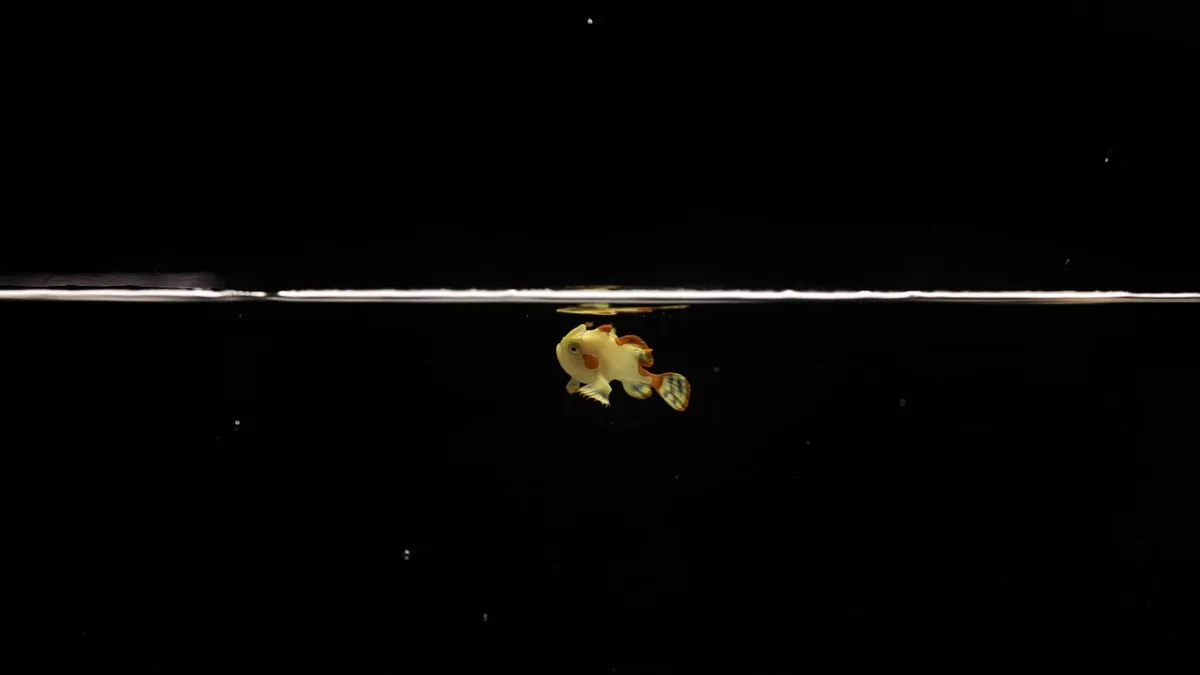
In Chicago, the Shedd Aquarium's Wild Reef exhibit houses two warty frogfish. These fish are about the size of a tennis ball and are yellow with red spots. They are covered in wart-like bumps, which gives them their name.
Jenny Richards, a senior aquarist at Shedd, describes them as "comically round" and "cute." However, these fish are also fierce hunters. They use a part of their dorsal fin as a lure, which looks like a small shrimp, to attract prey.
Raising Domino
Last year, the female frogfish in the tank became bloated. In September, she released tens of thousands of translucent eggs. The male then fertilized these eggs. Aquarists quickly moved the eggs to a behind-the-scenes area to try and raise them.
We're a new kind of news feed.
Regular news is designed to drain you. We're a non-profit built to restore you. Every story we publish is scored for impact, progress, and hope.
Start Your News DetoxThey successfully raised one warty frogfish, now a juvenile named Domino. Richards believes this is the first time a warty frogfish has been raised in captivity. She felt nervous but wanted to make the most of this rare chance.
Warty frogfish are not endangered, but they face threats from climate change, habitat loss, and collection by traders. Richards believes that raising Domino could teach them how to raise other marine creatures in the future. This is becoming more important as oceans change due to climate change.
Caring for Fragile Larvae
The Shedd Aquarium team had experience raising other fish species. However, each species has unique needs. They had to create an open ocean environment in a small 15-gallon tank for the frogfish.
Richards explained that marine fish larvae are very fragile. They behave differently from adults and float among zooplankton in the open ocean. The team needed to provide the right lighting, water flow, temperature, and diet.
The team carefully monitored the warty frogfish eggs. Within a few days, thousands of tiny larvae hatched. Richards said they looked like tadpoles. The aquarists rigorously watched them, ensuring the tank conditions were perfect before leaving each day. Leaving the larvae alone at night was very stressful.
They focused on 500 larvae. The larvae happily ate tiny crustaceans called copepods. Over time, the larvae changed dramatically. Their bones and fins shifted, and their muscles changed. Many larvae did not survive these changes, which also happens in the wild.
The team constantly adjusted the tank conditions. If the larvae seemed stressed by too much light, they lowered it. If they struggled to swim, the water flow was reduced.
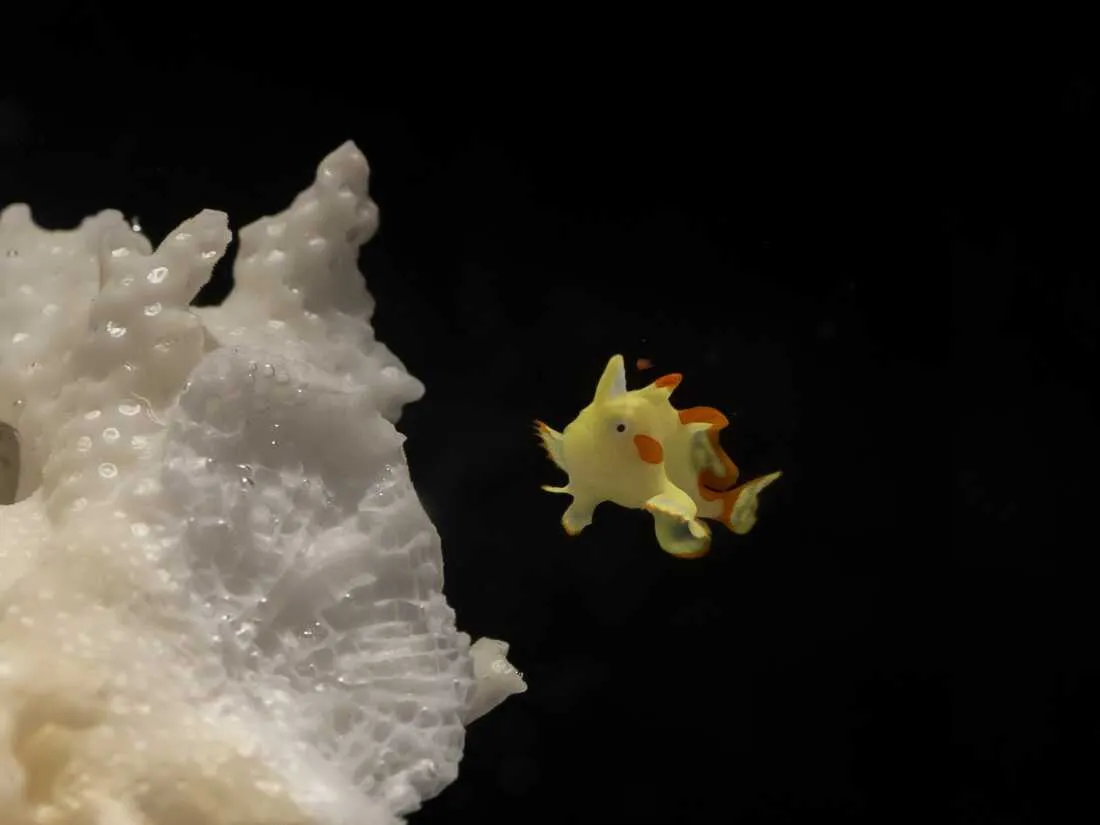
Around day 90, only one larva, Domino, became a juvenile. It was pea-sized, bright yellow, with orange freckles and a small lure. Richards described it as looking like a "little fishy Pokémon."
A Future for Fish
Other institutions, like the Mote Marine Laboratory in Florida, also work to raise new marine species. Dr. Nicole Rhody, a program manager there, was impressed by the Shedd team's success.
Rhody noted that recreating natural processes in captivity is difficult. She spent 15 years trying to raise the common snook, a sport fishing species, before succeeding. She believes the effort is worthwhile for conservation and to support aquaculture.
Back at Shedd, Richards is attached to Domino. She looks forward to the day Domino can be seen by the public, showcasing what is possible in marine conservation.