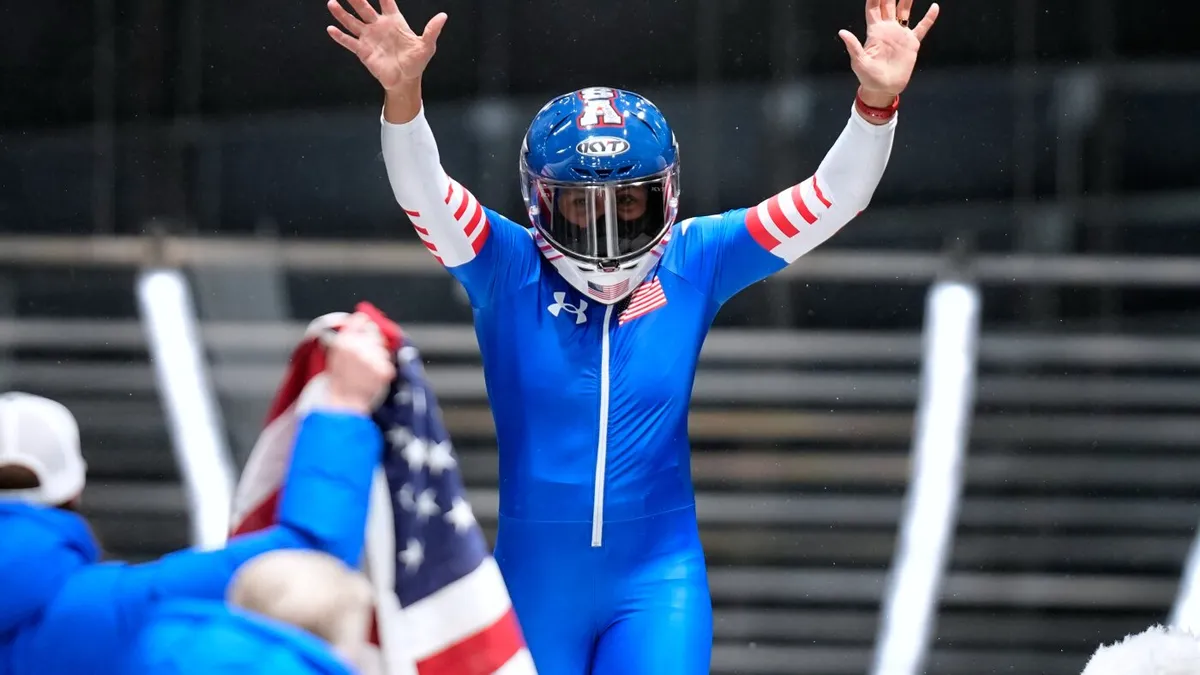
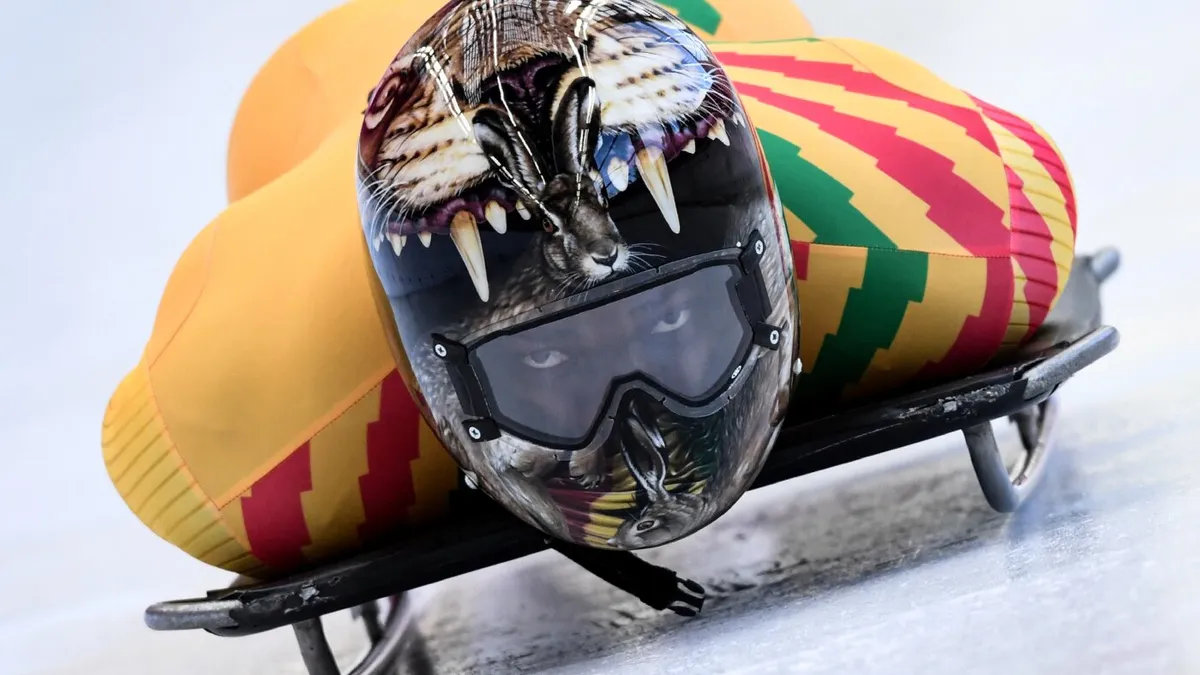
Akwasi Frimpong describes skeleton racing with the kind of honesty that makes you laugh and wince at once: "You're on a cookie sheet sled and it's like 'dude, good luck.'" Head-first down an icy track at 90 miles per hour. No steering wheel. No second chances.
It took him three sports to get there. Born in Ghana, Frimpong moved to the Netherlands at 8 as an undocumented immigrant. He eventually gained Dutch citizenship and threw himself into track and field, then bobsled, then skeleton. In 2018, he became the first male Black African skeleton racer to compete in the Olympics—the same year Simidele Adeagbo of Nigeria became the first female Black African skeleton athlete at the Games.
The path to skeleton
At 15, a track coach saw something in him—Olympic potential. Frimpong made the Netherlands pre-Olympic relay team for 2012 London, but a tendon injury ended that dream before it started. He moved to bobsled as a brakeman, made it to second alternate for Sochi 2014, but again: no injuries meant no shot.
We're a new kind of news feed.
Regular news is designed to drain you. We're a non-profit built to restore you. Every story we publish is scored for impact, progress, and hope.
Start Your News DetoxWhen skeleton came up, his first instinct was pure refusal. "Hell no, no please," he remembers thinking. "Bobsled was already crazy." But he tried it anyway. That first run down the track terrified him. He also couldn't wait to go back to the top and do it again.
Frimpong talks about fear the way someone talks about a training partner—something you don't fight, but learn to work with. "Fear is a big part of it. You have to learn how to embrace it."
The choice that mattered
When it came time to pick which country to represent, Frimpong chose Ghana over the Netherlands. The Netherlands had resources, infrastructure, a real support system. Ghana had neither. But Ghana had something else: a story that hadn't been told.
"My 'why' had to be bigger than myself," he explains. "I could compete for the Netherlands, where I would get more resources, more support, but I decided to compete for Ghana to do something that hadn't been done before, really teach people to come out of their comfort zone."
He qualified. He competed. He became the first Black male from Africa to compete in skeleton at the Olympics, representing 1.4 billion people. After 2018, he kept racing, becoming the first African to win an elite skeleton race in Park City, Utah.
When he didn't qualify for the 2026 Olympics, Frimpong discovered an unexpected mercy: shortly after, he had a ruptured appendix. Missing those games, he says, may have saved his life.
What comes next
Frimpong and his wife now run the Hope of a Billion foundation, traveling globally to teach kids about resilience and help them find what drives them. He's seen what happens when a young person discovers their passion—they show up differently at school, wake up earlier, move through the world with a different kind of intention.
He's retiring from skeleton, but staying in the sport as a mentor and coach. The cookie sheet sled is someone else's now. But the message—that comfort is optional and boundaries are mostly imaginary—that's just getting started.