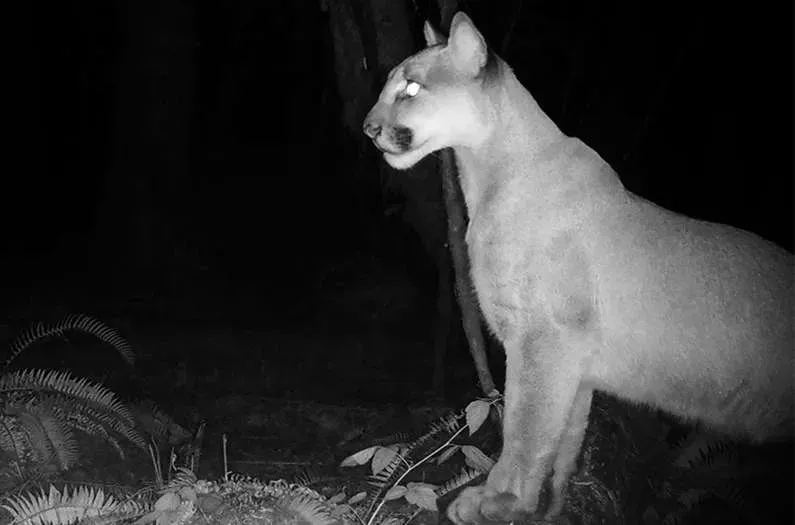
When you picture a mountain lion, you probably imagine something sleek, dangerous, and best avoided. Fair enough. But what if those stealthy predators were actually the unsung heroes of your morning commute, quietly saving you from deer-related fender benders?
Because, according to new research, that's exactly what's happening. Turns out, the biggest threat on the road isn't the cat; it's the deer.
The Unexpected Benefits of Big Cats
A study in Current Biology just dropped a bombshell: more mountain lions in an area means fewer car crashes involving deer. Ecologist Mark Elbroch, who worked on the study, put it simply: living with large carnivores isn't just about protecting wildlife. It's about the quiet, everyday benefits they provide.
We're a new kind of news feed.
Regular news is designed to drain you. We're a non-profit built to restore you. Every story we publish is scored for impact, progress, and hope.
Start Your News DetoxThink of it like the wolves in Yellowstone, bringing the whole ecosystem back into balance by keeping elk populations in check. Now, on Washington state's Olympic Peninsula, mountain lions are doing similar work, just with more crumpled bumpers and fewer insurance claims.
This isn't some quick-and-dirty finding. Native tribes on the peninsula have been tracking deer and mountain lion populations for years. Scientists from the Lower Elwha Klallam, Skokomish, Quinault, Makah, and Port Gamble S’Klallam tribes set up wildlife cameras in over 500 spots and GPS-collared 59 mountain lions. They basically had a full-time reality show following these cats and their hoofed snacks.
They then matched all that intel with nearly 1,000 wildlife-vehicle collisions on the peninsula between 2020 and 2025. These weren't minor incidents: we're talking over 80 injuries, two deaths, and a cool $14.7 million in car repairs and medical costs.
What they found was wild: the number of crashes couldn't be explained by just the number of deer or human traffic. But add mountain lion data? Suddenly, everything clicked. In areas with frequent mountain lion activity, the chance of hitting a deer dropped by a staggering 67%. Overall, a lot of cat activity meant a 76% drop in expected collisions over five years.
Deer Learn to Look Both Ways
So, how do the cats do it? It's not like they're putting up "Deer Crossing" signs. It's behavioral. Justin Suraci, the lead author, explained that deer change their habits when pumas are lurking. They spend less time near roads and are less active at night, which is precisely when most of those dangerous collisions happen.
Essentially, the deer are learning to look both ways – or, more accurately, to just stay out of the road entirely – because a much more effective traffic cop is on patrol. Suraci noted that better road safety is a benefit that large predators like pumas can offer human communities. Which, if you think about it, is both impressive and slightly terrifying.
Wildlife advocates hope this helps people see these animals in a new light. After all, mountain lions usually only make headlines when they're doing something bad. But the truth is, deer are far more deadly.
Consider this: a 2011 study found that at their peak in the 1990s, mountain lions caused about five injuries and one death per year in North America. Since 2020, only two deaths from mountain lion attacks have been reported. Meanwhile, in 2024 alone, over 200 people died in vehicles that hit wildlife, mostly deer.
So, the next time you're stuck in traffic, perhaps spare a thought for the big cat silently patrolling the woods nearby. They might just be the reason you're not calling your insurance company.