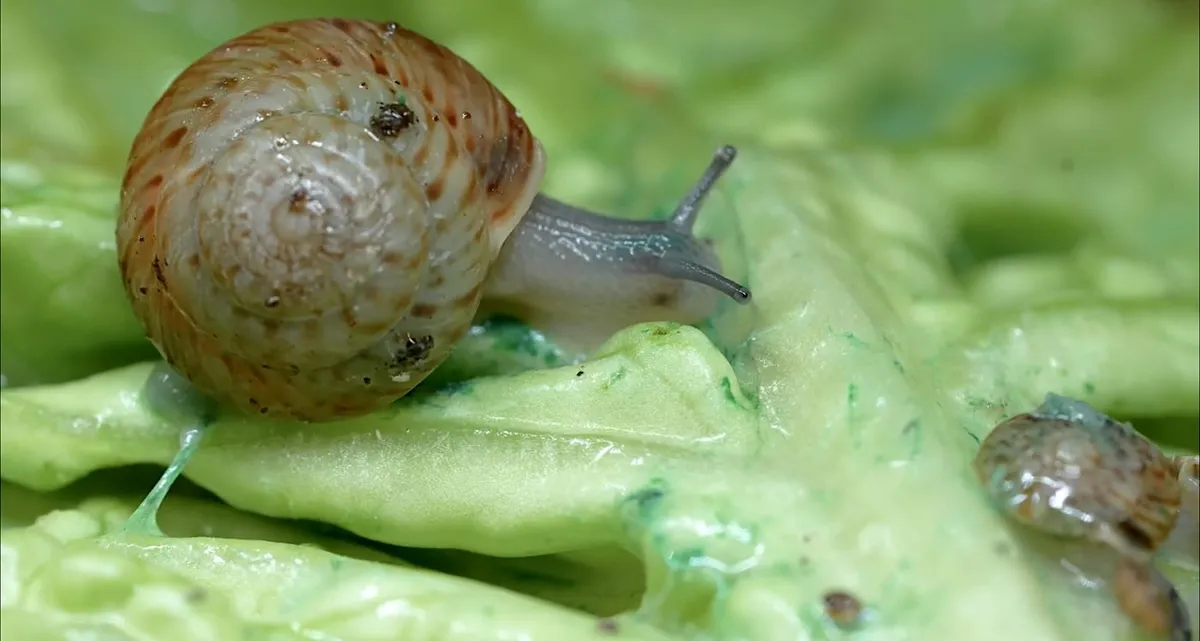
A button-sized snail that scientists had written off as extinct is now thriving in the wild again. The greater Bermuda snail (Poecilozonites bermudensis) was rediscovered a decade ago in an alleyway in Hamilton—a handful of survivors clinging on in the margins of the city. What happened next is the kind of moment conservation biologists dream about: a full species recovery.
Starting with fewer than 200 snails, an international team bred over 100,000 at Chester Zoo in England and carefully released them back into protected woodland habitats across Bermuda. Six separate colonies have now established themselves and are expanding, a success that's being published in Oryx, The International Journal of Conservation.
"It's every conservationist's dream to help save a whole species—and that's exactly what we've done," said Tamas Papp, an invertebrates manager at Chester Zoo. The team at the zoo worked with researchers from Canada's Biolinx Environmental Research and Bermuda's Department of Environment and Natural Resources to pull it off. Gerardo Garcia, the zoo's Animal & Plant Director, describes the fact that snails are now firmly established in six growing colonies as "massive."
We're a new kind of news feed.
Regular news is designed to drain you. We're a non-profit built to restore you. Every story we publish is scored for impact, progress, and hope.
Start Your News DetoxWhy a tiny snail matters
Snails barely register in most conversations about extinction. They're among the least studied animals on the planet, and among the most vulnerable to vanishing without anyone noticing. In Bermuda, the greater snail faced a perfect storm: habitat loss, climate change, and the arrival of predatory wolf snails and carnivorous flatworms that hunted the native species.
But snails aren't just background noise in an ecosystem. They're workers. They eat decaying vegetation and live plants, breaking down organic matter and cycling nutrients through the soil. They're prey for larger animals. Remove them, and the whole system gets a little quieter, a little less balanced.
"The snails function both as prey for larger animals and as consumers of live and decaying vegetation, so they are vital for turning over nutrients within their habitat," explained Dr. Kristiina Ovaska from Biolinx. That's why a button-sized snail in an alleyway mattered enough for three organizations across two continents to spend years on it.
The team knows climate change and other pressures will continue to pose risks to the newly established colonies. But they've also proven they can rebuild the population quickly if needed. "Being able to say the snails are now safe from extinction is something conservationists might get to say only once in their whole career," Garcia said. For this team, that moment is now.