Water keeps coming back to the Somerset Levels. It always has—medieval monks drained these wetlands seven centuries ago, and residents have been negotiating with rivers ever since. But something has shifted. The rainfall is heavier now. The intervals between storms are shrinking. And for the first time in decades, people are asking whether some homes might simply have to be left behind.
"At the moment it feels like a losing battle," Mike Stanton, chair of the Somerset Rivers Authority, said as Storm Chandra bore down on the region. "Intense rainfall is hitting us more often because of climate change. It may be that in the next 50 years, perhaps in the next 20, some homes around here will have to be abandoned."
The villages of Moorland and Fordgate know this story already. In 2014, they flooded catastrophically—the images circled the world. This week, as water levels climbed toward 7.76 metres at a monitoring point near the villages (flooding begins at 6.6 metres), the same communities braced for impact. Julian Taylor, who lives in Fordgate, moved his belongings upstairs again. "The water is advancing even faster than in 2014," he said. The Notaro family, local builders, did what they'd done a decade earlier: they dug earth and stacked stone to build an embankment around their home.
We're a new kind of news feed.
Regular news is designed to drain you. We're a non-profit built to restore you. Every story we publish is scored for impact, progress, and hope.
Start Your News Detox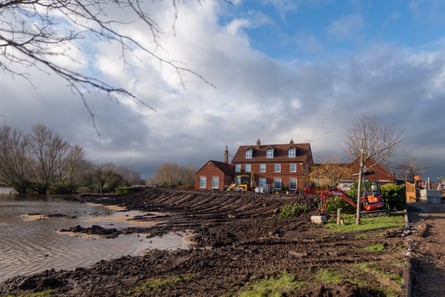
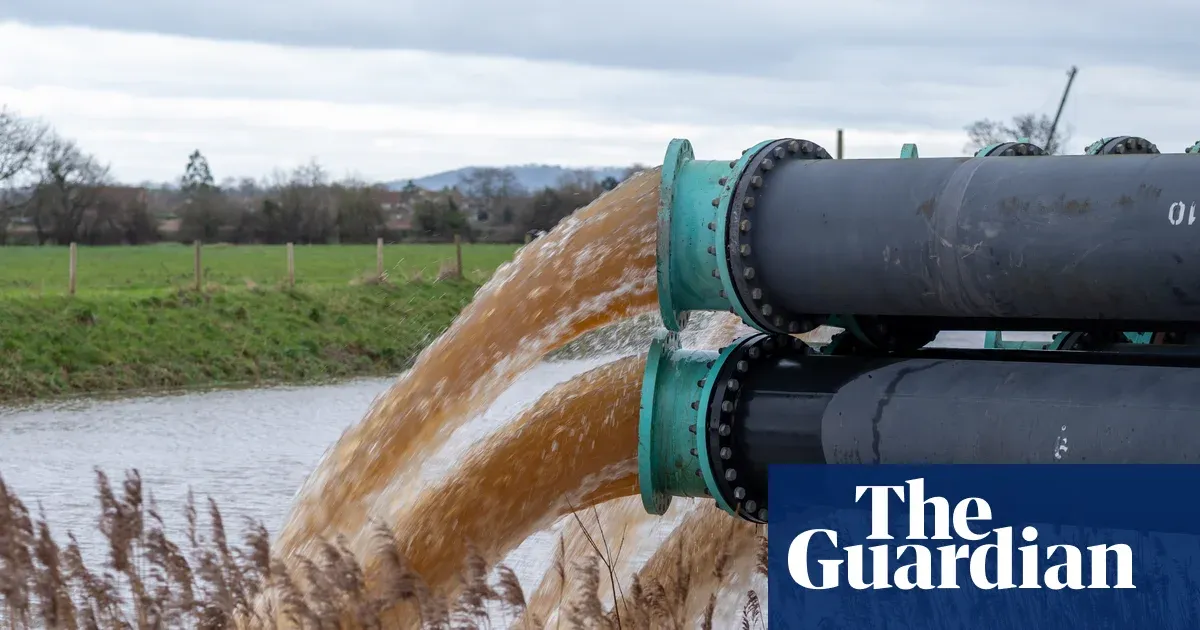
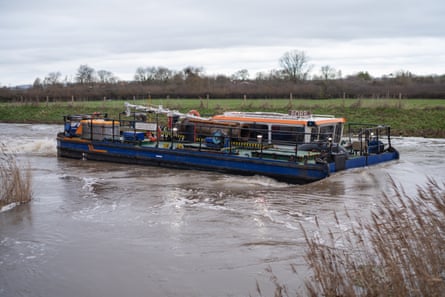
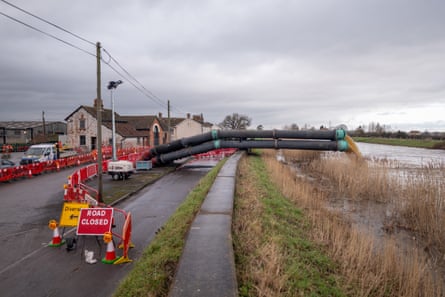
The response this time was faster. Emergency pumps were craned into position to back up the permanent ones, and a small Dutch dredger worked the Parrett River to clear silt. Residents praise the individual Environment Agency staff manning the pumps—they're the ones doing the immediate, exhausting work. But there's frustration too. The Flooding on the Levels Action Group accused the agency of moving too slowly, arguing temporary pumps should have arrived sooner. Jim Flory, the EA's environment manager for Wessex, countered that they'd actually acted ahead of schedule, deploying equipment before the agreed trigger points.
Millions of pounds have been invested in defenses—raised roads, improved drainage, boosted pumping capacity. Yet the scale of what's arriving now is outpacing those investments. In January alone, the catchment area for the Parrett and Tone rivers received 207% of the long-term average rainfall. This isn't a freak year; it's the new pattern. Climate change is making extreme rainfall more common and more intense across much of the world, and the Somerset Levels—low, flat, dependent on drainage systems designed for a different climate—are particularly exposed.
There's a harder conversation beginning here, one that other low-lying regions will soon face too. You can pump water out. You can raise roads. You can build embankments. But at some point, the question shifts from "How do we protect this?" to "What are we willing to let change?" For now, the Somerset Levels are still fighting. The next storm is always coming, and the defenses are holding—barely. But the math is getting tighter.