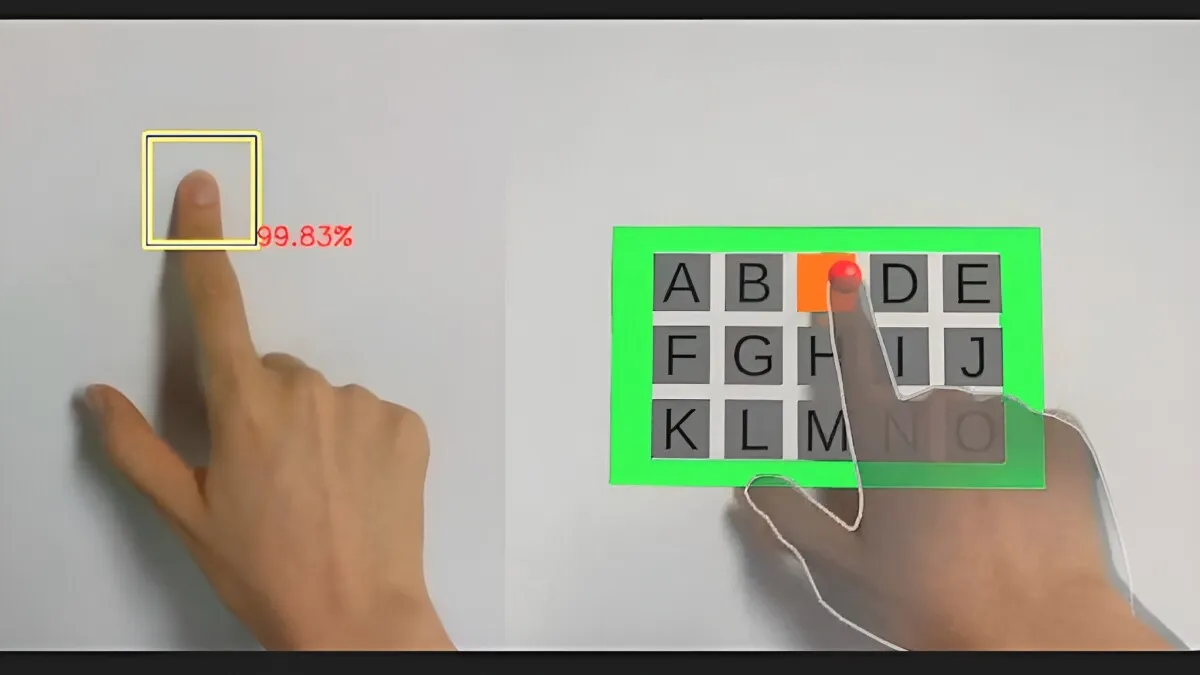
Remember when augmented reality promised a future where you'd be swiping through virtual menus in mid-air? Well, it turns out that's exhausting. And a little lonely. But what if you could just press a wall, and the wall would know?
Scientists in Japan have figured out how to turn any hard surface into a virtual touchscreen, using a trick your body already does naturally. It’s called blanching. No, not a cooking technique. It's that fleeting moment your fingertip turns white when you press it against something firm. Because apparently, that's where we are now: your biology is the user interface.
Traditionally, interacting with virtual buttons in AR meant donning special gloves or fumbling with controllers. It also meant holding your arms up in the air like you were constantly asking a very slow question, which sounds less like a sci-fi dream and more like a trip to the chiropractor.
We're a new kind of news feed.
Regular news is designed to drain you. We're a non-profit built to restore you. Every story we publish is scored for impact, progress, and hope.
Start Your News DetoxNow, Guanghan Zhao and his team at Japan's Tohoku University have developed a system that ditches all that extra gear. Instead, it uses the camera already built into your AR headset. This camera is trained to spot the tell-tale blanching effect when your finger makes contact with a surface.
Once the system sees that momentary whiteness, a bit of clever AI software kicks in. It pinpoints exactly when and where your finger touched down. This data then tells the AR software what to do with the virtual panel projected onto that surface. Need to type? Press the wall. Want to skip a song? Tap your desk.
Zhao put it rather plainly: everyday surfaces can now become touch input areas. And the best part? No extra sensors, no markers, no weird-looking gloves. Just your finger, a wall, and the quiet satisfaction of knowing you're subtly interacting with the future. Which, if you think about it, is both impressive and slightly terrifying. They shared these findings at the 33rd IEEE Conference on Virtual Reality and 3D User Interfaces in South Korea, presumably to a room full of people who immediately started poking their chairs.