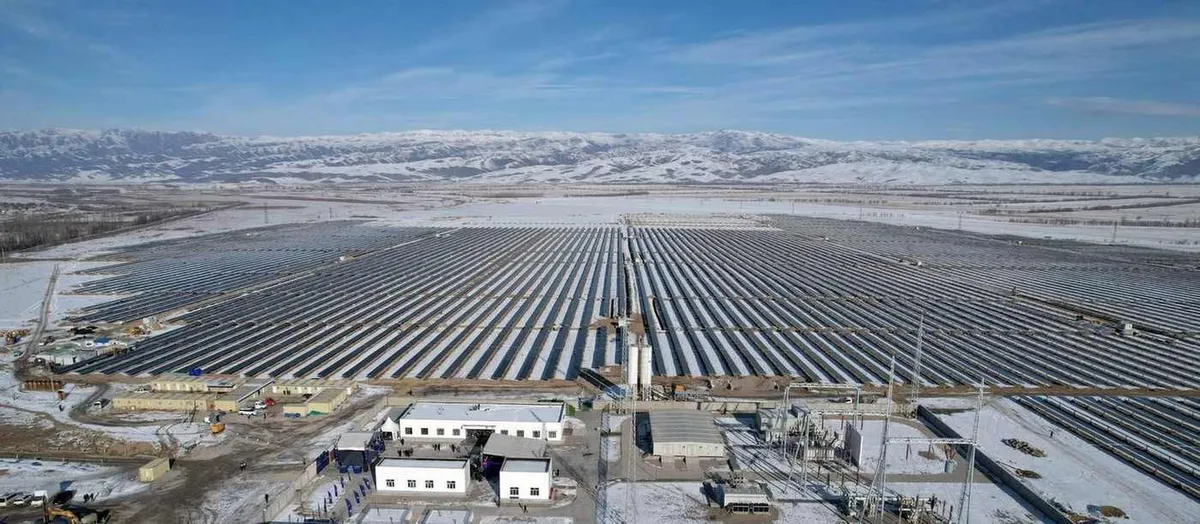
On Christmas Eve, Kyrgyzstan flipped the switch on its first large-scale solar power plant—a 100-megawatt installation that will generate 210 million kilowatt-hours of clean electricity annually. For context, that's enough to power a small city. It also means 120,000 tons of carbon dioxide won't enter the atmosphere each year.
The project matters partly because of what it says about Kyrgyzstan's energy picture. The country already runs on some of the cleanest power in the world—between 72 and 84% of its electricity comes from hydropower. But there's a catch: rivers lose flow during winter, and when demand climbs in the cold months, the grid has to lean on fossil fuels to fill the gap. A solar plant doesn't solve that entirely, but it chips away at the problem, especially in the warmer months when the sun is reliable.
The farm sits about 60 miles east of the capital, Bishkek, in the country's most densely populated region. That placement isn't random—it's designed to meet growing electricity demand right where people actually live and work. The investment also signals something bigger: this is one of the largest foreign investments Kyrgyzstan has attracted since independence, which suggests confidence in the country's renewable energy future.
We're a new kind of news feed.
Regular news is designed to drain you. We're a non-profit built to restore you. Every story we publish is scored for impact, progress, and hope.
Start Your News DetoxWhat comes next
President Sadyr Japarov called the opening "the beginning of an important stage in strengthening our country's energy independence." That's not just ceremony talk. The government has already signed 12 additional agreements for solar and wind projects that will add 5 gigawatts of renewable capacity over the coming decades—roughly 50 times the capacity of this first plant.
For a small Central Asian nation, that's a substantial commitment. It reflects a broader regional shift toward renewable energy, even in countries where fossil fuels have historically dominated. Kyrgyzstan's move also matters because it shows how countries with existing hydropower can layer on solar and wind without abandoning their current infrastructure—they're just making the whole system more resilient and less dependent on seasonal fluctuations.