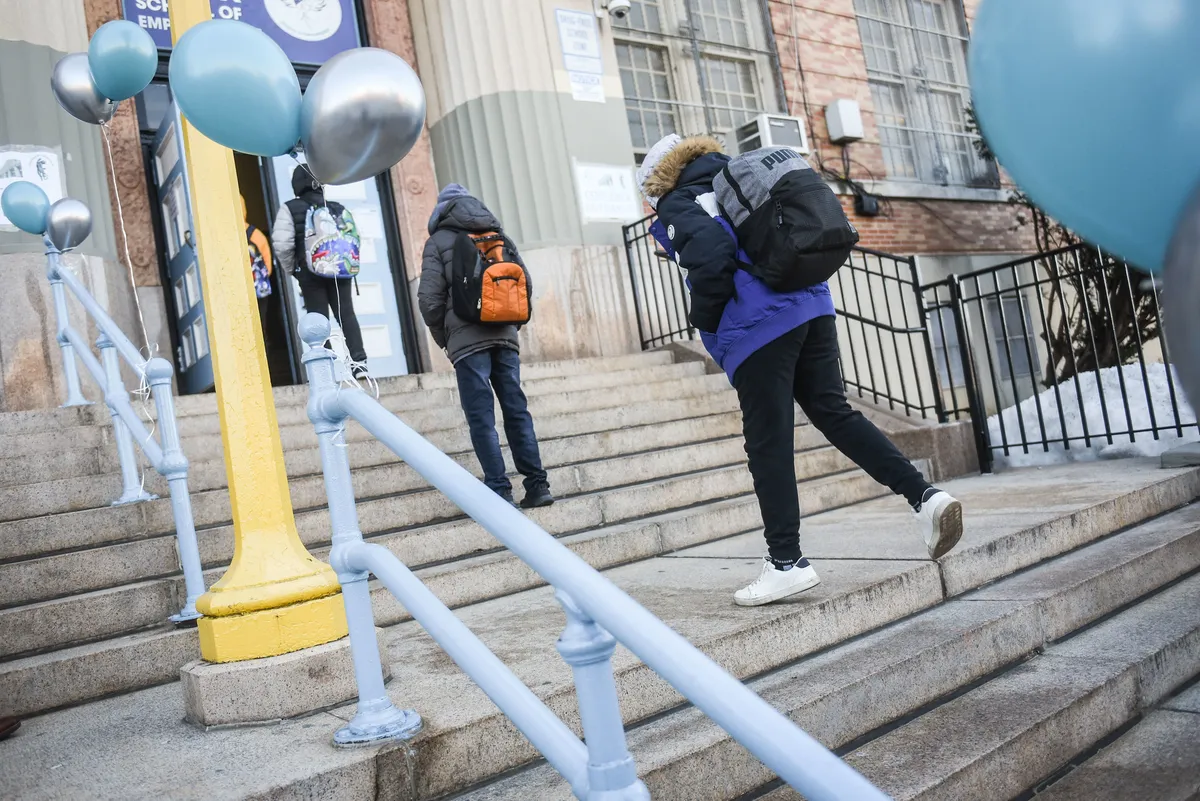

In November, St. Johns County residents did something increasingly rare: they voted to pay more in property taxes. Not for a stadium or a highway. For teacher salaries.
Sixty-eight percent approved the measure, which will generate $23.7 million specifically for educator paychecks over the next decade. Teachers with less than five years of experience will see a $4,500 raise. Those with more than 21 years will get up to $8,888. The money rolls out across the 2025-2026 school year.
It's a direct response to a problem that's become almost routine: teachers leaving the profession because the pay doesn't match the work. Kate Dowdie, who teaches elementary school and leads the St. Johns Education Association, has watched colleagues make that choice. "With such a low pay, having teachers say 'Okay, I can come back and serve my community' — that's huge," she said.
We're a new kind of news feed.
Regular news is designed to drain you. We're a non-profit built to restore you. Every story we publish is scored for impact, progress, and hope.
Start Your News DetoxCharlena Retkowski, president of the St. Johns Educational Support Professional Association, frames it plainly: "It's a difference between them staying and taking a job elsewhere." Retention matters. When teachers leave mid-career, schools lose institutional knowledge and continuity for students. When they don't leave in the first place, everyone wins.
What makes this moment notable isn't just that one county found the political will to fund teacher pay. It's that voters chose to do it themselves, without waiting for state or federal intervention. Florida's teacher salaries rank near the bottom nationally — a problem that's been baked into state policy for years. St. Johns County couldn't wait for that to change.
The measure passed in a county where school funding debates can get heated. That 68% margin suggests something deeper: a recognition that teachers are worth the investment. Not as an abstract principle, but as the people actually in classrooms with their kids.
Other Florida counties are watching. When one community proves a tax increase for education can pass, it shifts what feels possible elsewhere.