Our assumption that intelligence belongs to humans alone crumbles the moment you watch a wild animal solve a problem you couldn't. Across the planet, creatures are reasoning, planning, teaching, and navigating social worlds with a sophistication that keeps researchers rethinking what "smart" even means.
Chimpanzees: Social strategists with hands
Chimpanzees share 98% of their DNA with us, and it shows in how they think. They use tools, solve complex puzzles, and navigate social hierarchies that would make a corporate office look simple. A chimp doesn't just use a stick to fish termites from a mound—it selects the right stick, modifies it, and teaches younger chimps the technique. That's not instinct. That's knowledge being passed down.
Dolphins: Learning at speed

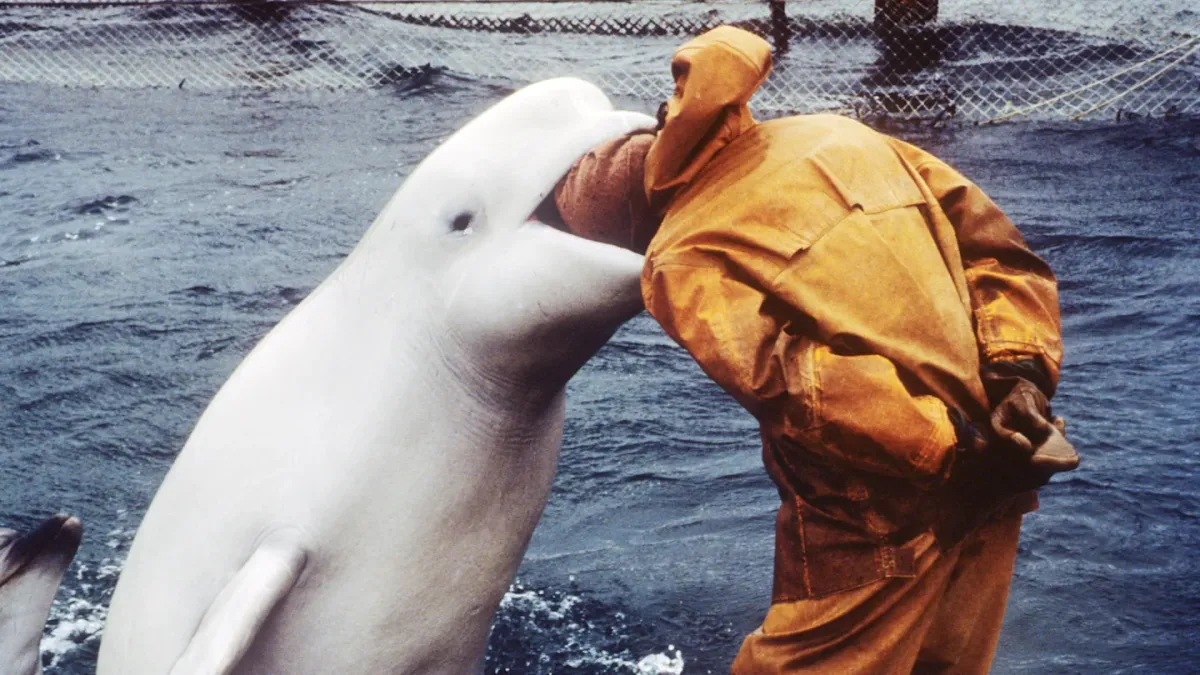
Dolphins learn new behaviors faster than most animals, and they do it through play. They communicate with each other using distinct whistles—essentially names for individuals in their pod. They solve problems collaboratively. And they do something most animals don't: they seem to enjoy the process. Scientists watching dolphins work together see not just coordination but something closer to joy.
We're a new kind of news feed.
Regular news is designed to drain you. We're a non-profit built to restore you. Every story we publish is scored for impact, progress, and hope.
Start Your News DetoxOctopuses: Eight arms, one brilliant mind
An octopus escaping from an aquarium tank isn't a fluke—it's a pattern. They open jars, navigate mazes, and recognize individual humans. Each of their eight arms can problem-solve somewhat independently, giving them a distributed intelligence that's genuinely alien to how we think. They're also curious in a way that seems almost purposeful: they arrange shells and objects outside their homes like outdoor decorations.
Dogs: Reading us better than we read ourselves
Your dog isn't just staring at you because they want a treat. They're reading your face, your posture, your tone with a precision that rivals human social intelligence. Dogs decode human cues better than almost any other species, which is why they work as service animals for people with epilepsy or PTSD—they sense what's coming before we do.
Orangutans: Patient teachers in the canopy
Orangutans move through Southeast Asian rainforests with deliberation. They plan meals weeks in advance based on which trees will fruit when. They teach their offspring complex skills over years—not months, years. Young orangutans stay with their mothers into their teens, learning how to survive in a forest that demands knowledge accumulated across generations. That's culture. That's something we thought was uniquely ours.
The broader picture
Crows plan for the future. African Grey parrots solve novel problems. Bumblebees navigate distances that dwarf their body size with precision. Gorillas communicate with nuance and emotional awareness.
The takeaway isn't that animals are "almost as smart as us." It's that intelligence isn't a single ladder we're climbing—it's a landscape with many peaks. A dolphin's mind works nothing like an octopus's, and neither resembles how a crow thinks. Each species solved different problems in their environment and developed the cognitive tools they needed.
What's happening now is that we're finally paying attention.