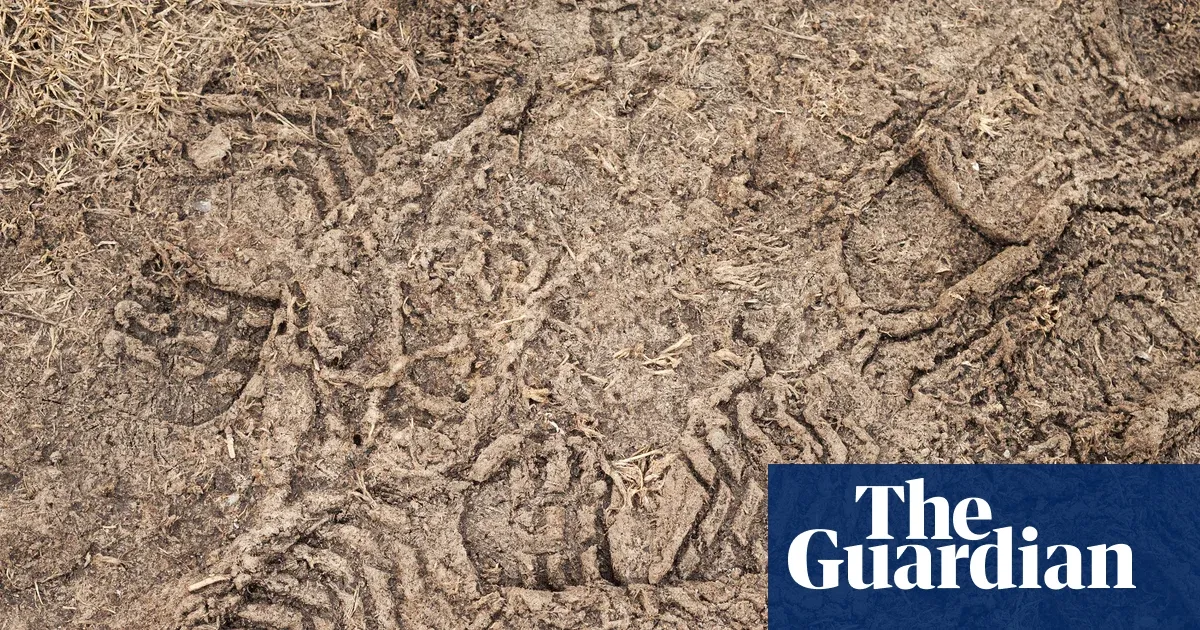
At the edge of the moor, birch trees root themselves in earth that's become a point of study—not for the trees, but for what the ground preserves. The path braids in different directions as walkers try to keep their boots from sinking into mud. Today, though, the earth is iron-hard. A week of freezing temperatures has locked the soil solid, and for the first time in months, you can walk anywhere.
Frozen soil does something almost magical: it becomes a time machine. Footprints pressed into the earth days ago stay intact—the deep hoofprints of red deer, the lighter tracks of smaller animals, the boot prints of other walkers. The author spots two red deer hinds in the distance, their breath visible against the cold air, living proof of the prints preserved beneath their feet.
But the real story isn't the tracks. It's what freezing does to the soil itself.
The invisible world underfoot
Gardeners know that hard frosts add structure to soil and kill unwanted pathogens. What's less visible—and far more important—is the complexity happening in a single handful of earth. Billions of single-celled organisms live there, representing tens of thousands of different species. Fungal threads weave through the soil; if you pulled them all out and laid them end to end, they'd stretch for kilometers. This network doesn't just exist in the soil. It is the soil. Without it, the system collapses. Without it, we follow.
We're a new kind of news feed.
Regular news is designed to drain you. We're a non-profit built to restore you. Every story we publish is scored for impact, progress, and hope.
Start Your News DetoxThe problem is that this network is dying. Climate change is part of the reason. We notice when flowers bloom at the wrong time—those visible shifts feel real and concerning. But we can't see rising temperatures reducing the diversity of bacteria in the soil. We can't watch it happen. And yet it is happening, quietly, in ways we're only beginning to understand.
We know far more about how freezing soil affects engineering projects—how it expands and contracts, how it destabilizes roads and buildings—than we know about its role in keeping soil microbiomes alive and diverse. That gap in our knowledge matters. Freezing soil isn't just a winter inconvenience. It's part of how soil stays healthy.
On a day when the ground is hard and the prints of animals remain visible for days instead of hours, there's something to notice: we need the cold more than we know. Not because it's pleasant, but because the systems that keep us alive depend on it.